


About local area coordination
All Australians have a right to a dignified and meaningful life. The National Disability Insurance Scheme (NDIS) provides funding to eligible people with disability to gain more time with family and friends, greater independence, access to new skills, jobs, or volunteering in their community, and an improved quality of life.
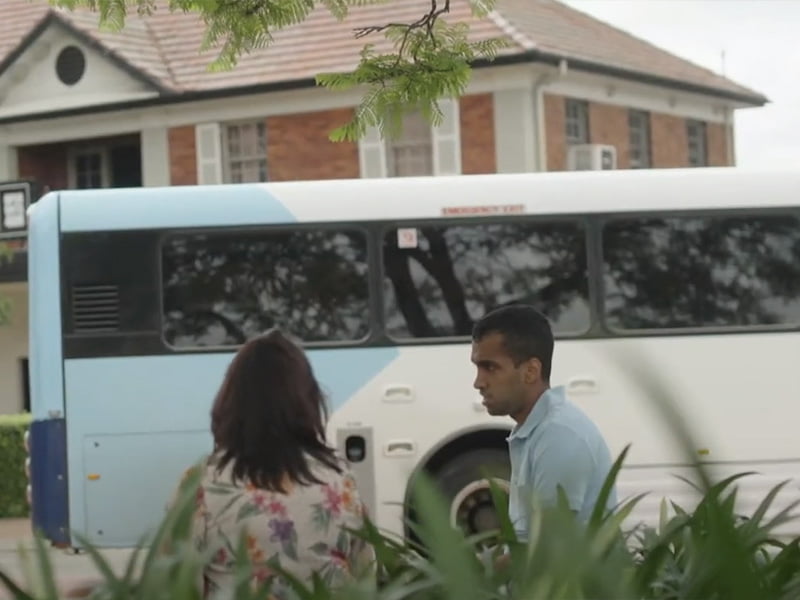
SSI partners with the National Disability Insurance Agency (NDIA) to deliver local area coordination services within two Sydney regions for people with disability 9 to 64 years of age, their families and carers. We are the first point of contact for people with disability to access the NDIS and other services and supports in the community. We also deliver community projects to support a more inclusive and equitable society.


How we help



Get in touch
SSI delivers local area coordination services to residents in:
Sydney (Burwood, Canada Bay, Canterbury-Bankstown, Inner West and Strathfield Local Government Areas (LGAs))
South West Sydney (Camden, Campbelltown, Fairfield, Liverpool, Wingecarribee and Wollondilly LGAs)
P: 1800 960 975
E: ssilac@ndis.gov.au
Ashfield office (head office)
Monday – Friday
9am – 4:30pm
Level 2/158 Liverpool Rd, Ashfield NSW 2131
Liverpool office
Monday – Friday
9am – 4:30pm
Level 1/45 Scott St, Liverpool NSW 2170
Bankstown office
Monday – Friday
9am – 4:30pm
Level 2/462 Chapel Rd, Bankstown NSW 2200
Fairfield office
Monday – Thursday
9am – 4:30pm
7 William St, Fairfield NSW 2165
Picton office (Old Picton Post Office)
Monday – Friday
9am – 3pm
26 Menangle St, Picton NSW 2571
Campbelltown office
Monday – Friday
9am – 4:30pm
Suite 2 Level 6/138-154 Queen St, Campbelltown NSW 2560
Narellan office
Monday – Friday
9:30am – 4pm
Narellan Library, Corner Queen & Elyard St, Narellan NSW 2567
If you have any questions or enquiries specifically about the NDIA and not LAC, please contact the NDIA Contact Centre on 1800 800 110.
If you are experiencing a medical emergency, please dial 000.
If you are having thoughts of suicide, please call Lifeline on 13 11 14.
If you need a language interpreter, call TIS National on 131 450. If you are deaf, hard of hearing and/or have a speech impairment, contact the National Relay Service.
Your feedback is important to us. Whether it’s a complaint, compliment or a suggestion on how we can improve our service, we want to hear from you.
FAQs
Does SSI have experience working with people from an Aboriginal or Torres Strait Islander background?
Yes. SSI has worked with Aboriginal and Torres Strait Islander people through initiatives, including Ability Links and the development of the organisation’s Reconciliation Action Plan.
SSI recognises the importance of engaging with Aboriginal and Torres Strait Islander people through a respectful and collaborative approach. The organisation will continue to seek first-hand guidance to build on our knowledge of First Nations communities to create sustainable, respectful and equitable service delivery.
Does SSI have experience working with people from culturally and linguistically diverse (CALD) backgrounds?
Yes. SSI has more than 135 bilingual guides and many bilingual staff. Collectively we speak over 100 languages and dialects and can often provide support – written and spoken – in the language of your choice when you need it. Where possible we aim to provide translated resources and can organise interpreters.
How can I find employment opportunities with SSI local area coordination?
We are committed to being an Equal Opportunity Employer and since we work with people from diverse cultural and social backgrounds with varied life experiences, physical abilities and skills we encourage applications from people of culturally and linguistically diverse backgrounds, including people from Aboriginal & Torres Strait Islander heritage and people with lived experience of disability.
If you are interested in applying for a position, please check current vacancies.
Am I eligible to receive NDIS support?
Check your eligibility on the NDIS website. For more information, you can contact the NDIS on 1800 800 110.
How can I make a complaint about LAC services?
If you wish to make a complaint about an issue arising out of, or in connection to LAC services, information on how to do so can be found on the NDIS Quality and Safeguards Commission website. You can also find more information about your rights as an NDIS participant via The Rights Path Project. Easy-to-understand resources are available in English, Khmer, Punjabi, Urdu and Vietnamese.
What if I have an NDIS enquiry for a child aged 0-8 years?
We suggest getting in touch with EACH (South West Sydney) or Lifestart (Sydney). You can learn more about Early Childhood Partners on the NDIS website.
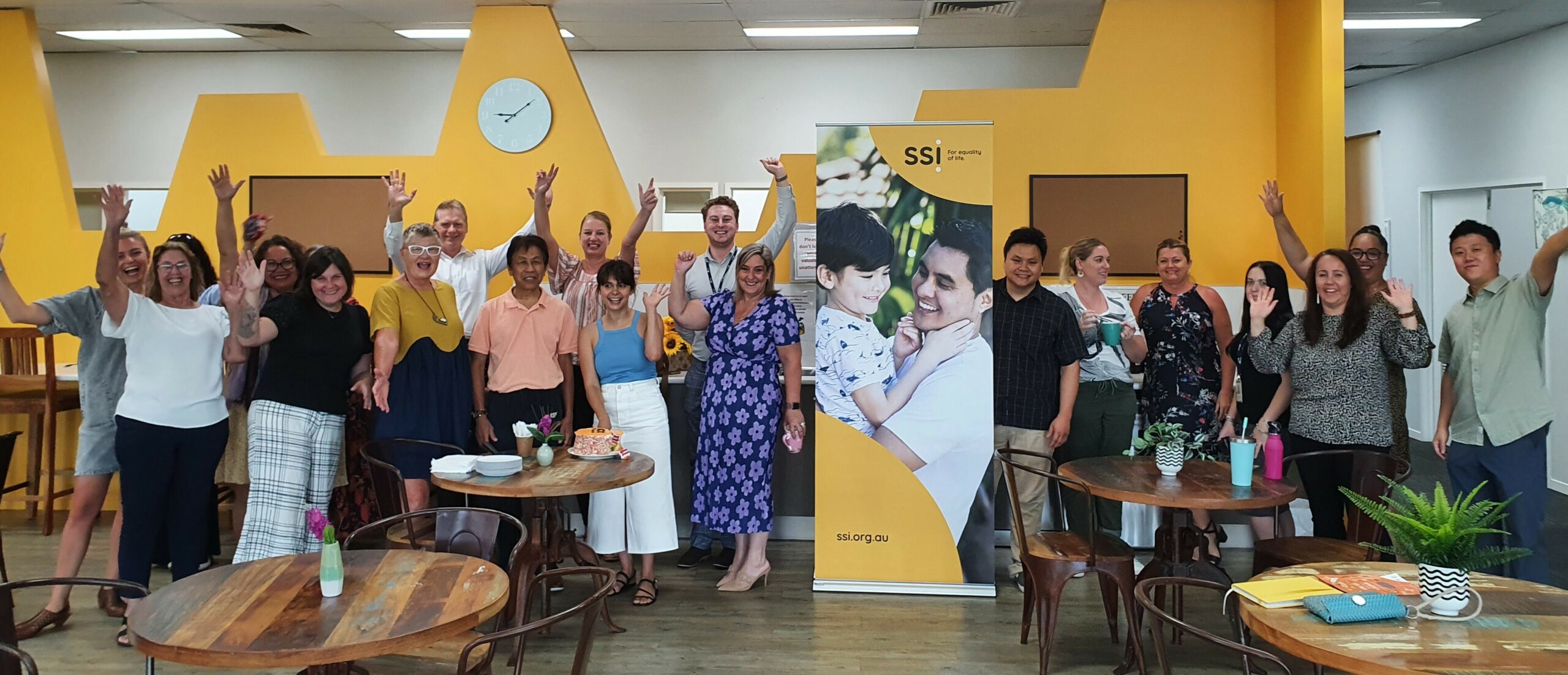
About SSI Gateway
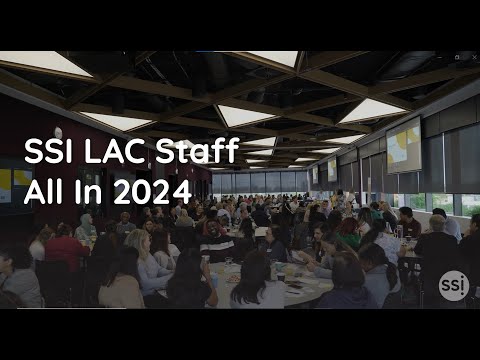
In 2016, we heard the voices of the community and introduced a Gateway community space for locals to drop in and receive information, advice or referral.
The Gateway continues to coordinate from an integrated response model, whereby local services outreach from the centre and collaborate on strategies around local community issues. We facilitate a number of internal programs for improving the economic and social participation of newly arrived communities. The SSI Gateway can be booked to run events and other community-focused work.
There are several large training rooms and small interview rooms available to hire via our external booking process.



Get in touch
To find out more about what’s on at SSI Gateway or to enquire about booking space for your next event/workshop/meeting, please either drop in, email or phone us.
SSI Gateway is located at 91 Wembley Road, Logan Central, QLD
E: acsl.gatewayofficer@ssi.org.au
P: 07 3412 8222
Monday – Friday 8.30am – 4.30pm

Start your own peer-to-peer support group
Peer-to-peer support groups are a powerful way to connect people with disability to information that can greatly improve their lives. They also play an important role in bringing the disability community together to advocate for themselves and others.
The best part about these groups? Anyone can start one. With the right tools and resources, you can create a safe space for people with lived experience of disability to connect with each other, access advice, learn skills and become more independent.
Read on to find out how to form a peer-to-peer support group in your community and what free resources and training SSI now offers for community organisations to upskill and run their own groups.
For more information on the Multicultural Peer Network, email community@ssi.org.au.
What success looks like: Multicultural Peer Network
In 2020, SSI created a successful model for running disability support groups in multicultural communities across NSW called the Multicultural Peer Network (MPN).
The MPN was a collection of impactful, peer-led support groups which promoted independence among people with lived experience of disability from multicultural communities, as well their carers and families.
The program was funded through the Department of Social Services (DSS).
During the MPN program, SSI found tailoring disability support groups to different cultures, languages and interests had a vastly positive impact on people with disability in these spaces.
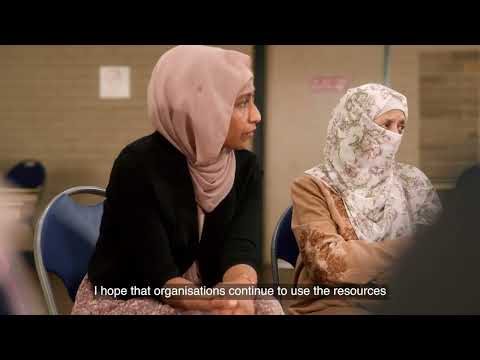
Watch the project wrap video to learn more and hear from the facilitators
Our results
71
community leaders
recruited and trained as peer group facilitators
1,000
program participants
supported across over 97 networks in 15 languages
92
of program participants
and 87% of family members and carers reported an increase in confidence
With a focus on guiding participants on advocacy and helping them gain new skills, 84% of participants agreed they were more knowledgeable about their rights and 85% felt they had new skills to help them achieve their goals.
With the resources from the MPN program now publicly available, community leaders and organisations can be empowered to start their own peer groups.
How to start your own peer-to-peer support group
Peer-to-peer support groups are an engaging way to help like-minded people with disability build their support networks.
The purpose of these groups is to bring the disability community together to talk about their challenges and goals. The groups meet on a regular basis to discuss chosen topics and skills, like finding employment or using NDIS services.
Each group is tailored to the needs of the people attending. They can be delivered in person or virtually, in varying languages or focus on a specific type of disability.
Peer-to-peer support groups are usually run by a facilitator who helps guide the conversation and keep it flowing.
The facilitator also plays an important role in making sure the support group remains a safe space for everyone to share their thoughts.
There are no set rules for running a support group, but our facilitator guides provide useful information to help you get started.
SSI offers its comprehensive facilitator training guidebooks for any organisation to use to train staff, members, or volunteers to run their own peer groups.
Guide Book 1 gives you the knowledge needed to set up a peer support group and develop the skills to take on a facilitator’s role.
Once you have set up a group, you can use Guide Book 2 as a template for running the conversations around important topics.
Guide Book 2 covers four suggested conversation areas with questions advice and examples to help the group learn more about each area. The topics include themes like ‘how to build a circle of support’ or ‘how to build your skills towards employment’ – all aimed at building capacity of the individual and group.
Download guide books
View the NEW Training Manual – a new, free interactive way to learn how to run peer led support groups.
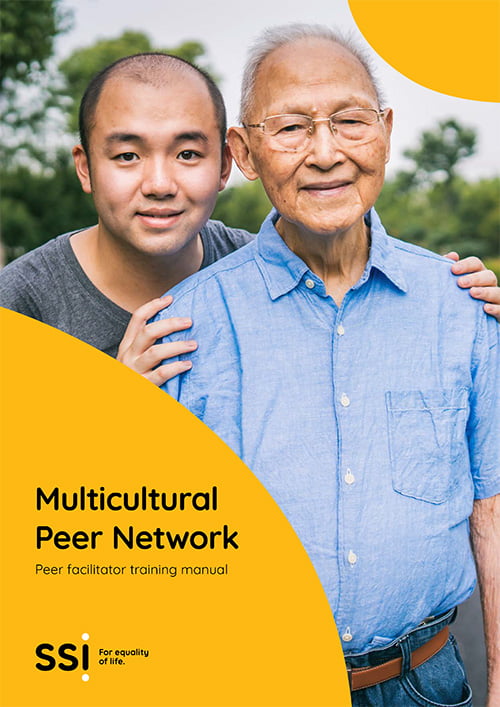
How to establish a group, basic facilitation skills, communication techniques, self-care and support systems.
View the NEW Training Manual – a new interactive page that designed to train facilitators how to run peer led support groups. It provides the knowledge needed to set up a group and develop the skills to take on a facilitator’s role in a visual and engaging way.
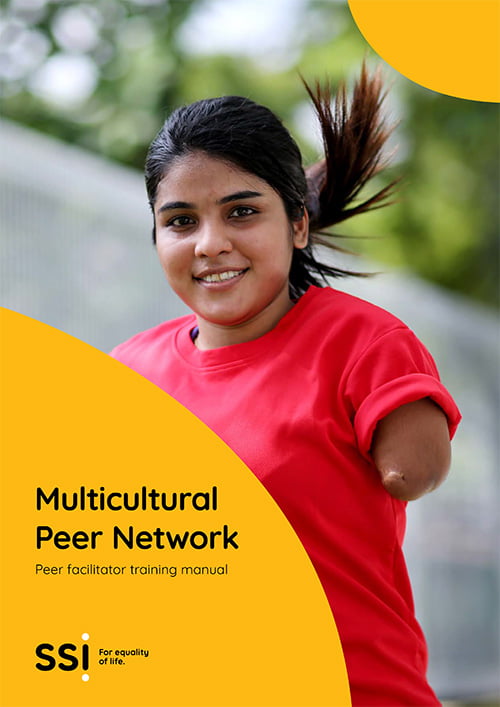
How to help people learn about self-advocacy, circles of support, volunteering, and employment.
In this video, hear from the MPN Program coordinator Susie who gives an overview of the two facilitator guides and how best to use them in discussion groups.
Free resources and facilitator guides
Facilitator training
SSI offers free facilitator training for community organisations and individuals interested in starting their own community peer groups deepening their facilitator skills.
To learn more about the resources on this webpage, facilitator training or other ways SSI supports community organisations, email community@ssi.org.au.
Facilitator guides
These facilitator guides are designed for community organisations to use as a handbook for workshop facilitation and to gain valuable skills in facilitating group discussions.
Book 1: The MPN Model provides an overview of the practice model for engaging with people of CALD backgrounds and disability, including an in-depth explanation of the key principles of the model, their outcomes, and capacity building in utilising this model. View the NEW Training Manual – a new, free interactive way to learn how to run peer-led support groups.
Book 2: This guide is a compilation of resources that can be used by peer facilitators to run a peer group, including how to help people learn about self-advocacy, circles of support, volunteering, and employment.
SSI disability support services
For more information about SSI’s disability support services in NSW, please visit our Local Area Coordination services page or email ssilac@ndis.gov.au.
MPN Supporter Kit – New available resource
How to run peer-to-peer support groups.
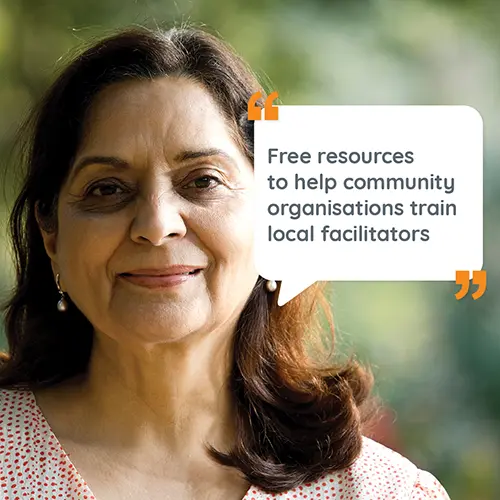
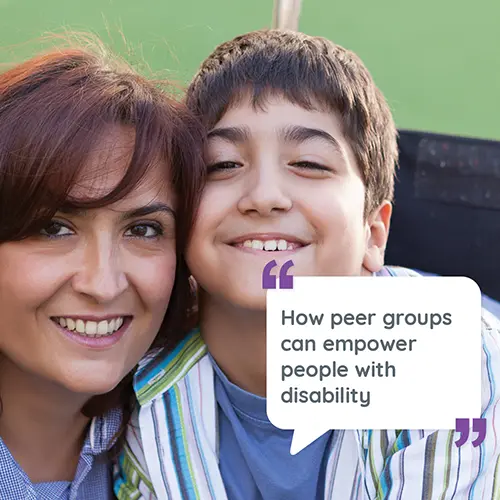
Social media tiles for facilitators – New available resource

Get in touch
About 99 Steps program
At 99 Steps our team of domestic and family violence practitioners provides culturally responsive and trauma-informed support to women from culturally and linguistically diverse backgrounds experiencing domestic and family violence in the Logan and Beenleigh area.
99 Steps is a specialised service for women from refugee/asylum seeker backgrounds or women living in community on a temporary visa. We understand the unique barriers faced by women in diverse communities, and our mission is to empower and support them on their journey towards safety and healing.
How we can help
99 Steps can provide tailored support to meet the specific cultural and linguistic needs of women experiencing domestic and family violence:
Emotional Support
- Building awareness of domestic and family violence
- Education around healthy relationships
- Empowering women to self-advocate
- Fostering resilience through trauma informed practice
Practical Support
- Safety/Exit planning
- Referrals to crisis services and emergency shelters
- Referrals to legal support services
- Referrals to housing services
- Referrals to case management services
- Referrals to health and counselling services
Get in touch
To make an appointment:
P: (07) 3412 8282
E: acsl.99Steps@ssi.org.au
Monday to Friday 8.30am – 4.30pm
If you need urgent assistance, please phone 000. If you are in need of immediate safe accommodation, please phone DV Connect on 1800 811 811.
About ASESS
We know that it can be hard for people seeking asylum to find a job that values your skills and experience. It’s important to have the right support to help you prepare for and secure lasting, skilled employment.
We can help you get a good job and succeed in Australia.
Our free 1:1 support helps you to set goals, get your overseas skills recognised, pay for work expenses, and find a good job. We make it easier for you to build a better future.
What makes us different

We understand your unique needs and we want to help you succeed. If you have qualifications from overseas, we can help you access information and financial help to get them recognised in Australia.
Language should not be a barrier to support. Our diverse team pairs you with someone who understands your language and culture, or we provide translation services.

As part of a large organisation offering many life-changing services, we can help you easily access other support to make life easier.
Planning your next step with ASESS
Asylum Seeker Employment Skills Support (ASESS) provides support to make it easier for people seeking asylum to join the workforce. We offer mentoring and support to help you:

Identify your employment goals and find opportunities.

Find and complete training and courses that will help you meet your goals.

Pay for work expenses such as licenses, equipment, and work clothing.

Get your overseas qualifications recognised in Australia, including help with costs.

Get help with transport – including driving courses.

Connect with other services that could benefit you and your future.
You can get help like…
Olena*
an accountant from Ukraine who has successfully resumed her career in Australia with our support. We helped her with career planning, getting her driver’s licence, resume writing, interview preparation, and job applications, and we covered the cost of having her bachelor’s degree recognised.

Stanislav
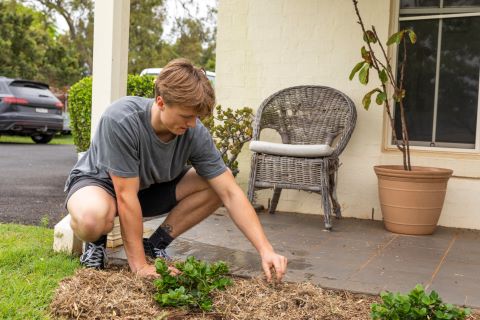
a university student from Ukraine who secured a job at a Ukrainian restaurant and later started his own successful lawnmowing business after we helped him with work expenses, driving lessons, and mentoring. He is now looking forward to expanding his business and finishing his degree online..
Sione*
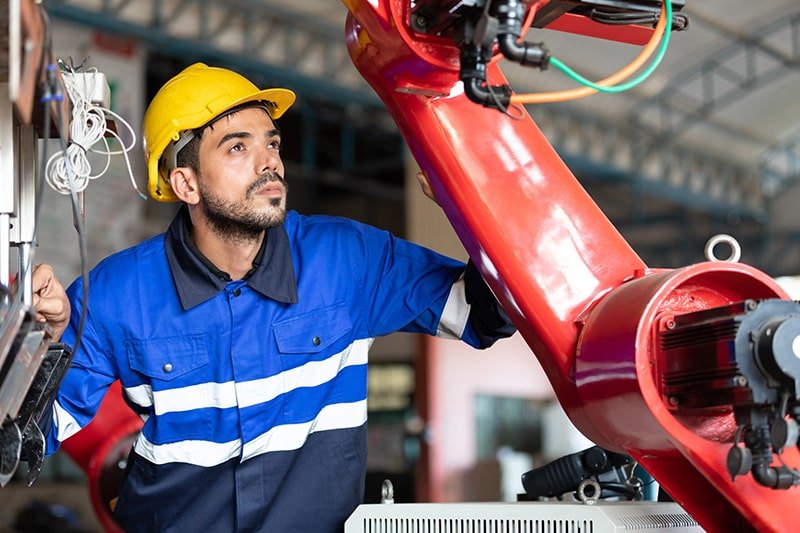
whose experience and Fijian mechanical engineering qualification was not recognised in Australia. After three months of support, including career planning, workshops, and qualification recognition guidance, he secured a full-time role as a trade assistant and has successfully resumed his career here.
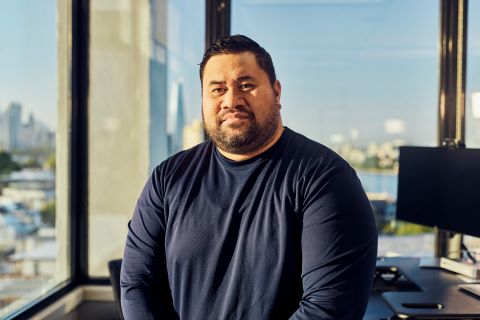
*Names have been changed.
Your journey
with us

1. Get in touch
Contact us directly by completing this form.
2. Goal setting
We meet with you, in person or online, to set goals for training, education, or employment.

3. Planning
Together, we create a plan that fits your needs and will help you reach your goals.

4. Activities
Follow your plan with activities that support your goals. We can help cover the cost of activities like driving lessons, equipment, and getting your overseas skills recognised.

5. Employment
We help you find a lasting job or prepare you to get one on your own.
Get in touch
Funded by the NSW Department of Education, SSI delivers ASESS services across NSW.
Email: asess@ssi.org.au
Liverpool
Address: Level 1/45 – 47 Scott Street, Liverpool NSW 2170
Phone: 02 9600 3100
Fairfield
Address: Ground Floor / 7 William Street, Fairfield NSW 2165
Phone: 02 8111 7000
About Regional Settlement
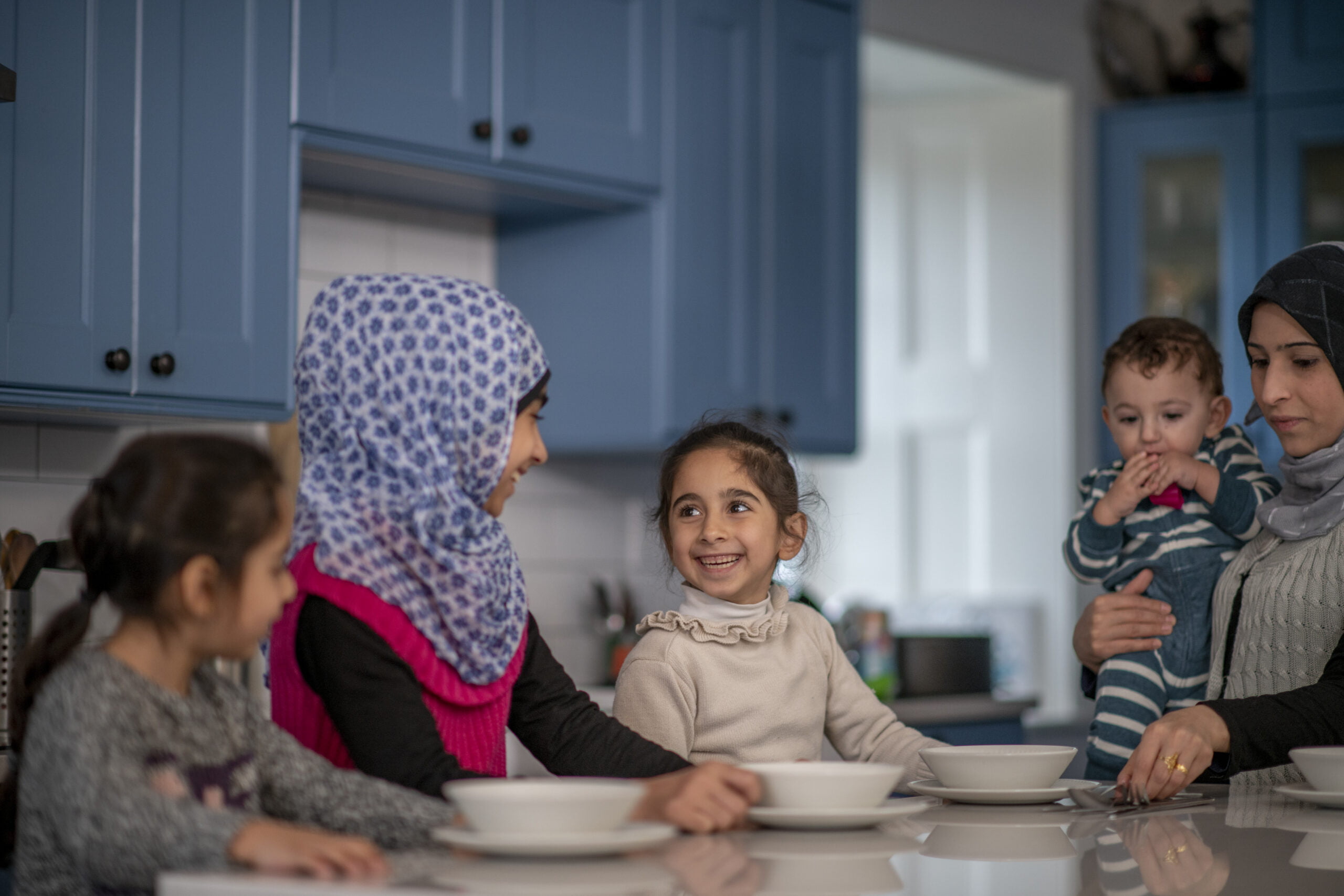
Settling refugees in regional towns and cities benefits newcomers and local communities alike. The refugees enjoy a more relaxed introduction to Australia and make important social, cultural and economic contributions to their host communities.
SSI provides regional settlement services in Coffs Harbour, Newcastle and Armidale. Working under the Commonwealth’s Humanitarian Settlement Program, staff engage refugees, humanitarian entrants and local stakeholders to ensure successful, long-term settlement outcomes.
How we help


Get in touch
SSI provides regional settlement services in the NSW towns of Coffs Harbour, Newcastle and Armidale.
Newcastle
Level 3, 3 Hopetoun Street, Charlestown, NSW 2290
02 4969 3399
Coffs Harbour
Suite 6, 1 Duke Street, Coffs Harbour, NSW 2450
0470 337 788
Armidale
1/86 Beardy Street, Armidale NSW 2350
02 9057 5673
About In My Voice
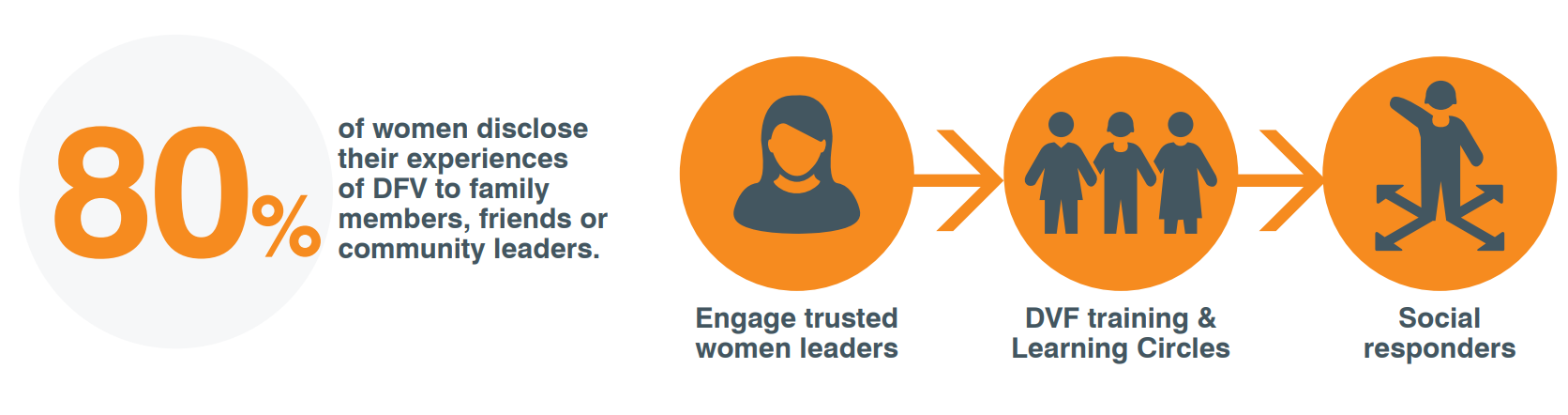
Domestic and Family Violence (DFV) can manifest differently in different migrant communities, highlighting the importance of culturally appropriate support services that recognise the diverse experiences of migrants and break down barriers to accessing support. In My Voice is a series of vignettes that tell the stories of DFV in different migrant communities in order to help start conversations amongst communities and service providers and inspire change.
Each vignette tells a different story by Supporting U women leaders, painting a diverse picture of DFV in migrant and refugee communities. By amplifying the voices and experiences of survivors and women leaders, In My Voice helps to empower women survivors in diverse migrant communities.
How we help


We invite you to hear the stories on DFV from Africa, East Asia, Middle East, South-East Asia, South Asia, and Regional Australia. The videos are provided in English and other languages for your viewing.
In My Voice vignettes
Showing 1 – of 6 program resources
Starting a conversation using the vignettes
After viewing the videos, we suggest using the prompts and questions in our In My Voice Training Package to start and guide discussions in communities and among DFV organisations.
The vignettes give us ice breakers and starting points for women who are not confident enough to start the conversation or those that need a softer way to deliver the message in a very clear manner” – Community Leader
If you feel triggered by this material or would like advice around urgent DFV response or for DFV related counselling, you can call 1800 RESPECT (1800 737 732).
If you would like general mental health or crisis support, you can call LIFELINE (13 11 14)
If you would like to use this material for commercial purposes, please seek permission from SSI.
Get in touch
NSW, QLD, VIC
Should you have any comments, feedback, or questions about the vignettes, please contact us.
P: 02 8799 6700
About Diversi-Ready
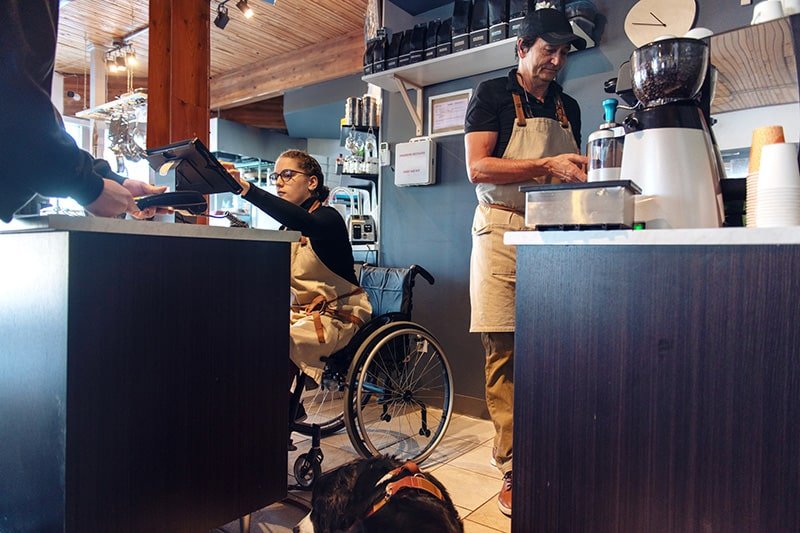
People living with disability have an enormous capacity to contribute to the community through work. Our Diversi-Ready program provides training and supports to employers in the retail, hospitality and aged care industries to build their confidence and capability to recruit and retain people with disability in their workforces.
Funded by the Australian Government Department of Social Services’ Information, Linkages and Capacity Building (ILC) program, Diversi-Ready supports greater inclusion and accommodation of people with disabilities at the workplace. We have co-designed the program with culturally and linguistically diverse (CALD) people with disabilities and have collaborated with industry bodies, employers, disability peak organisations and multicultural peak bodies and organisations.
How we help

Get in touch
Diversi-Ready is available in south-west Sydney, south-east Brisbane, south-east Melbourne and the Melbourne Peninsula region.
Level 1, 45-47 Scott Street, Liverpool NSW 2170
P: 02 9600 3100
About Community Education Program
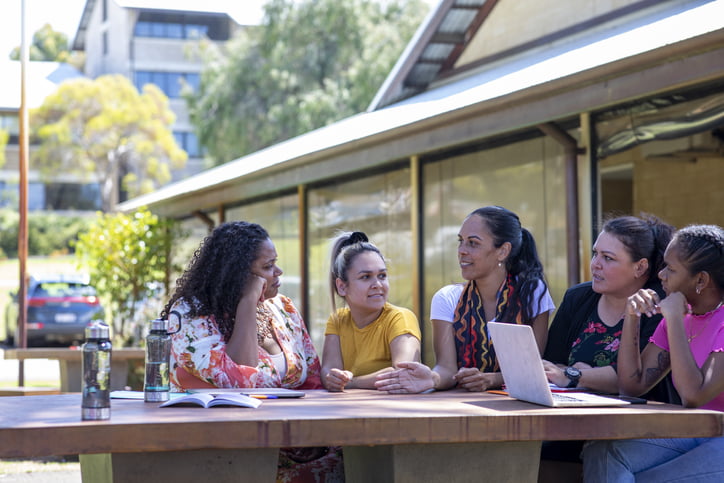
We understand that it can be challenging for refugees and humanitarian entrants to adapt to life in Australia. That is why we offer the Community Education program, which provides workshops and courses to help newcomers find their feet and engage with local communities.
Our courses aim to increase their knowledge of Australia and ability to navigate and access services. We offer courses such as driver literacy, public transport, housing, citizenship progression and support for exam preparation, and job seeking strategies. Join us and take the first step in making Australia feel like home!
How we help



Get in touch
Community Education is available in southern Queensland.
E: acsl.settlementsupport@ssi.org.au
P: 07 3412 9980
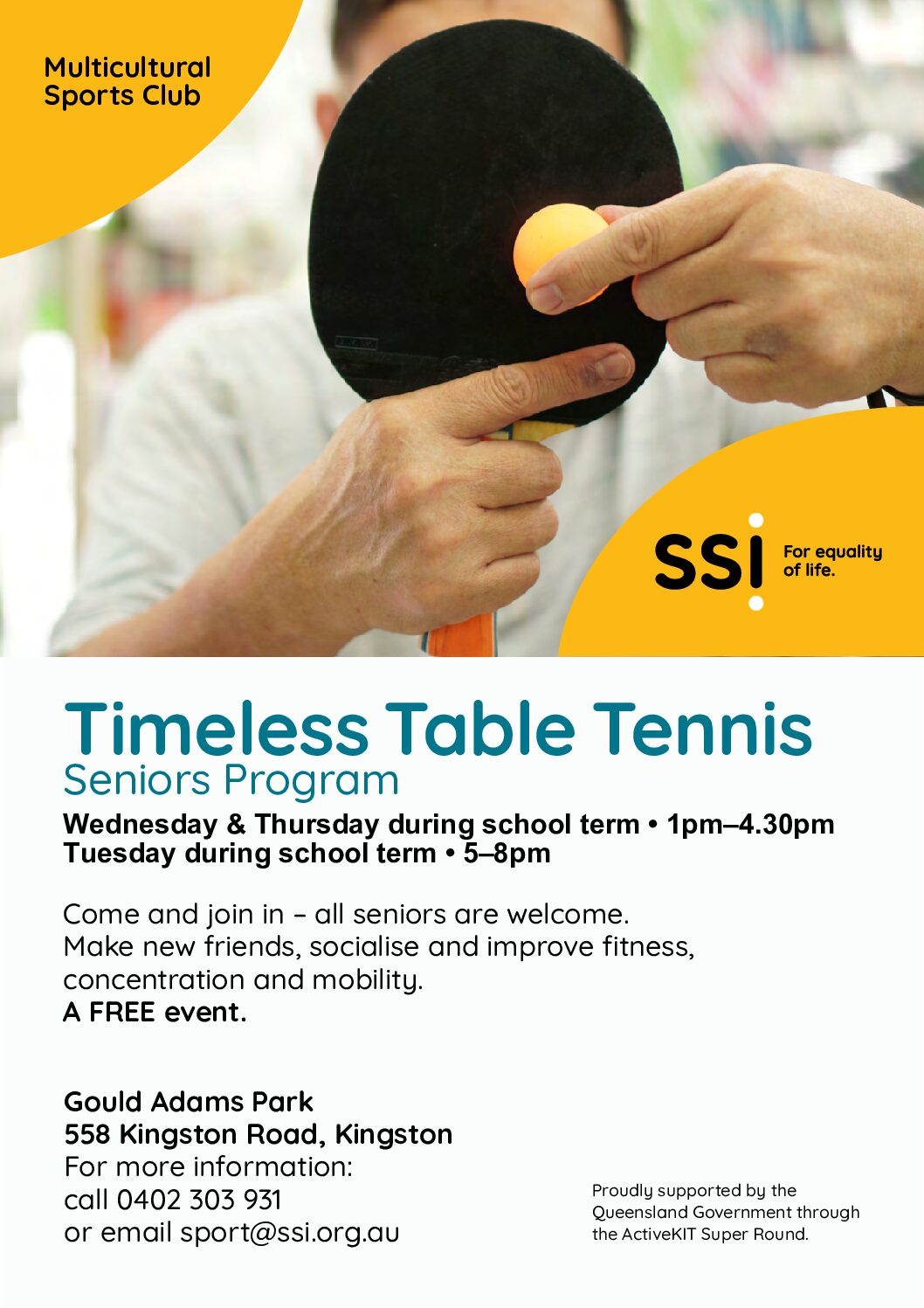
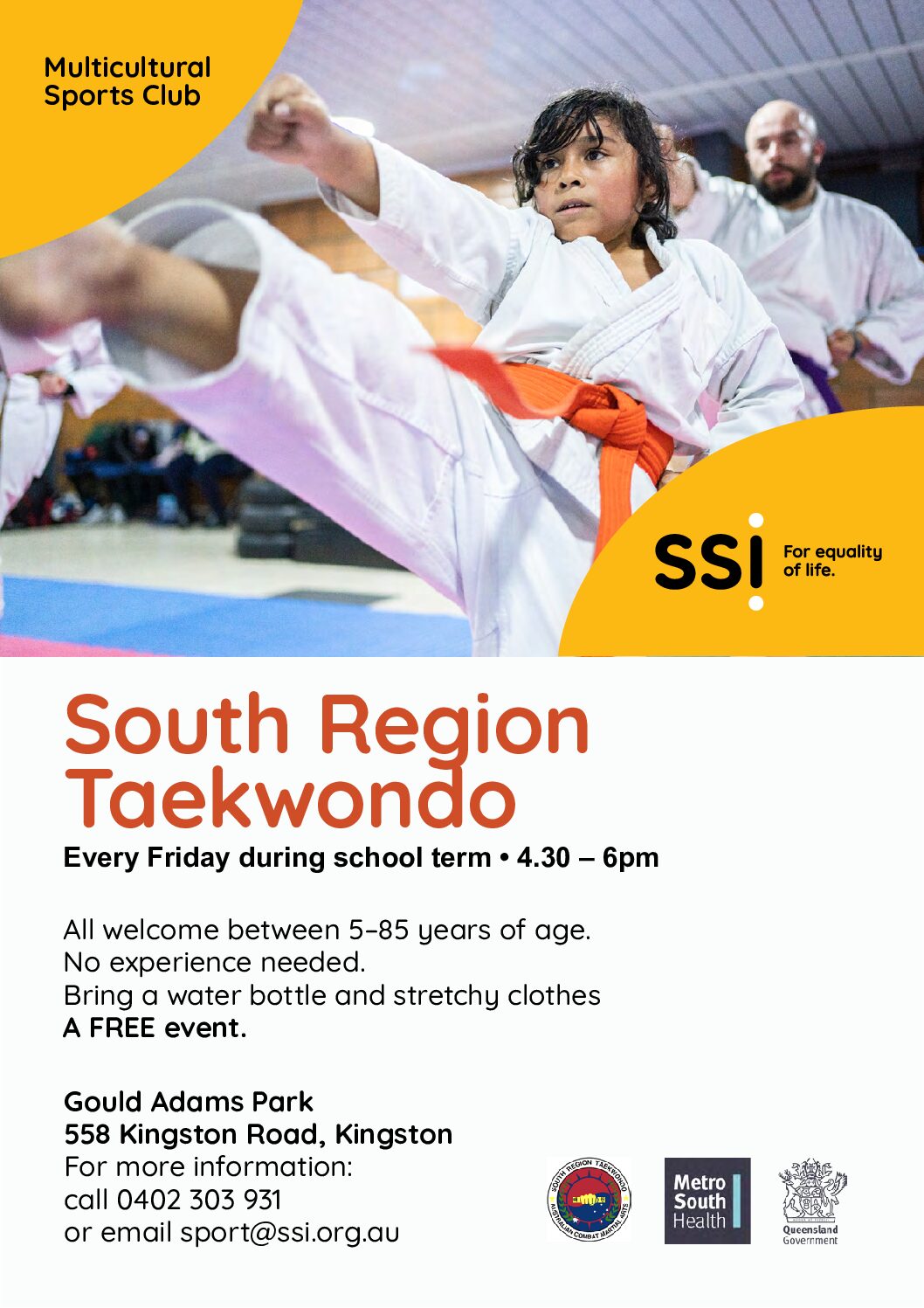
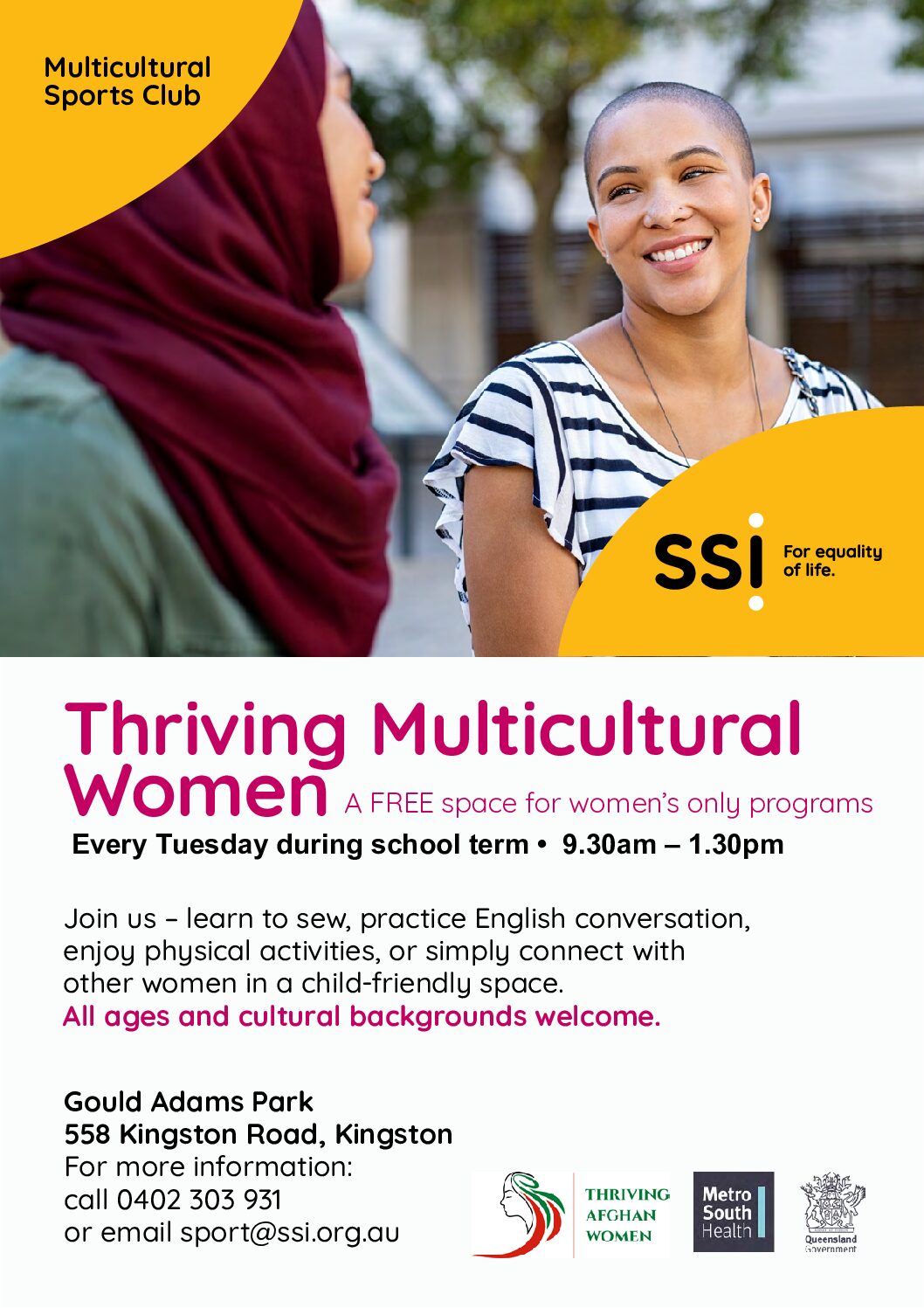
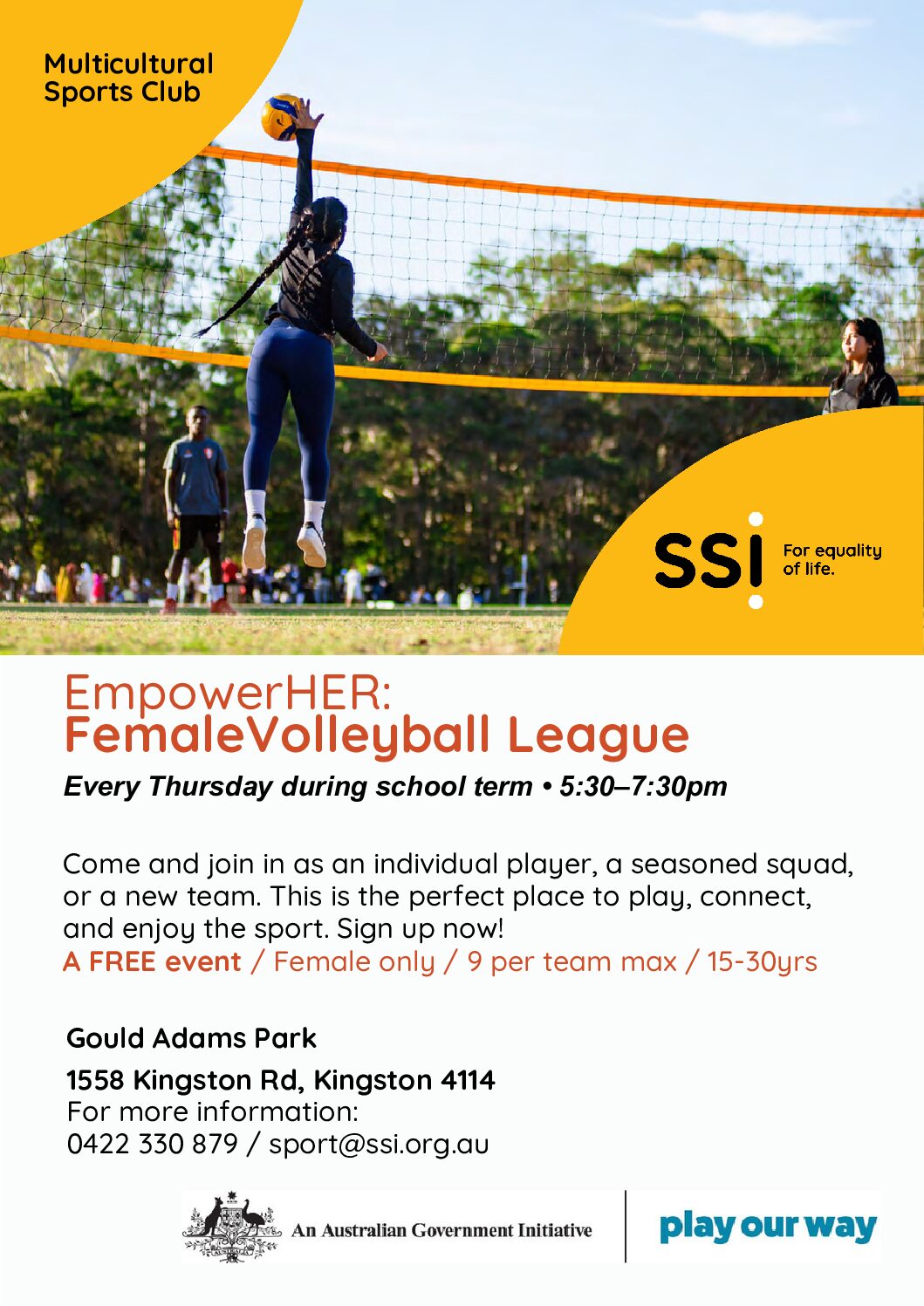
About Multicultural Sports Club (MSC)
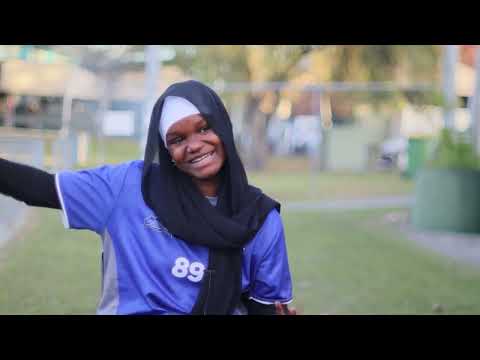
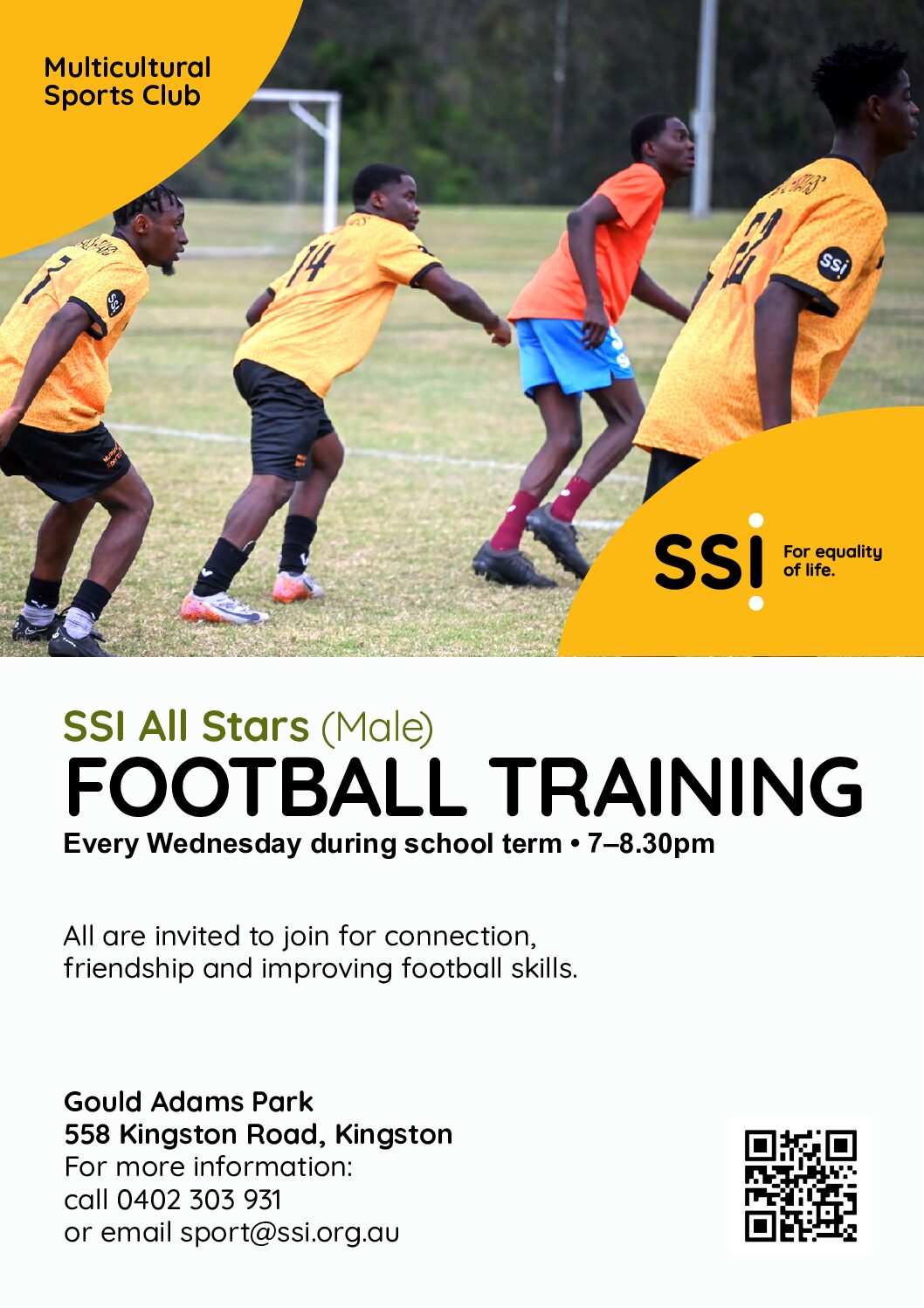
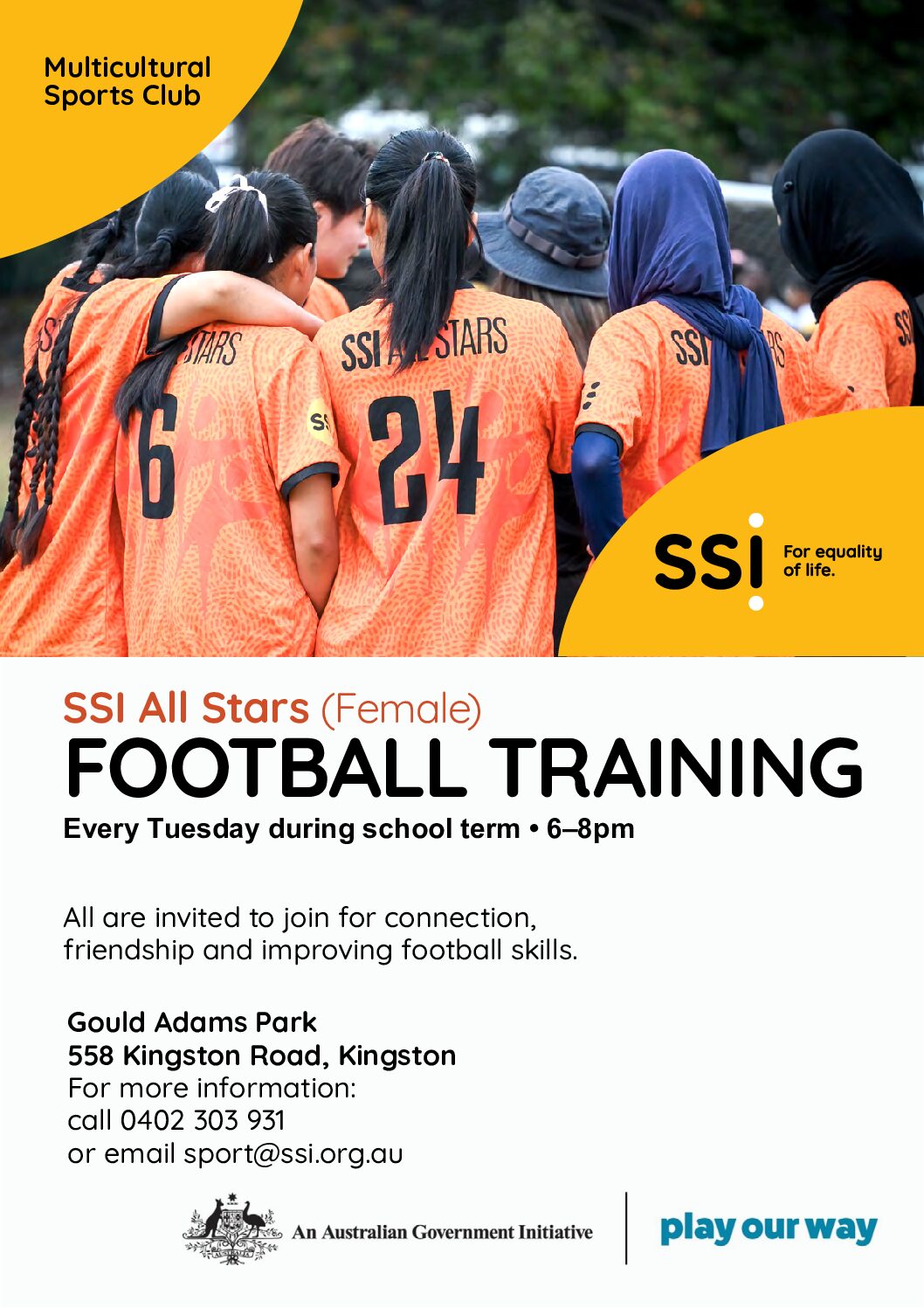
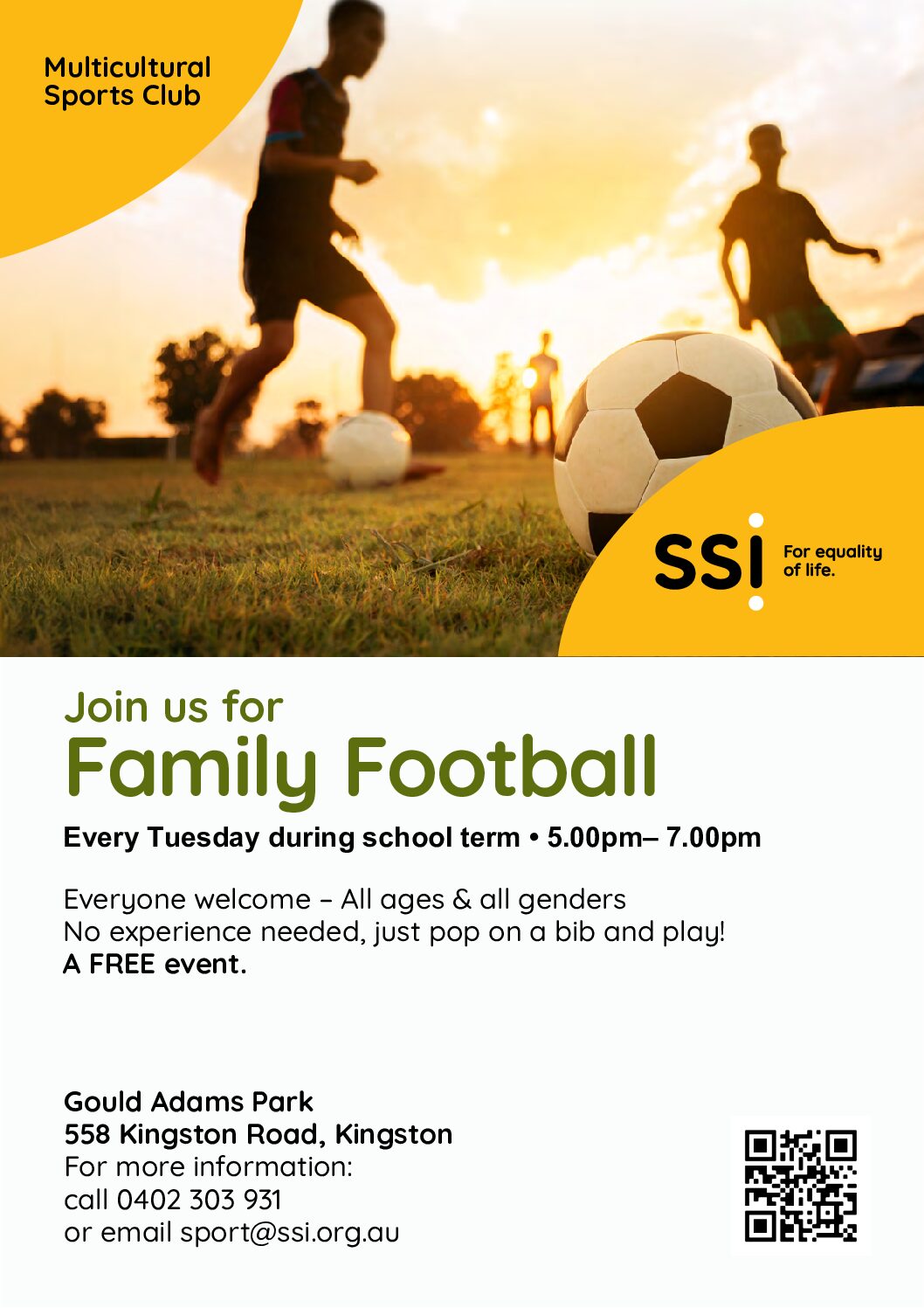
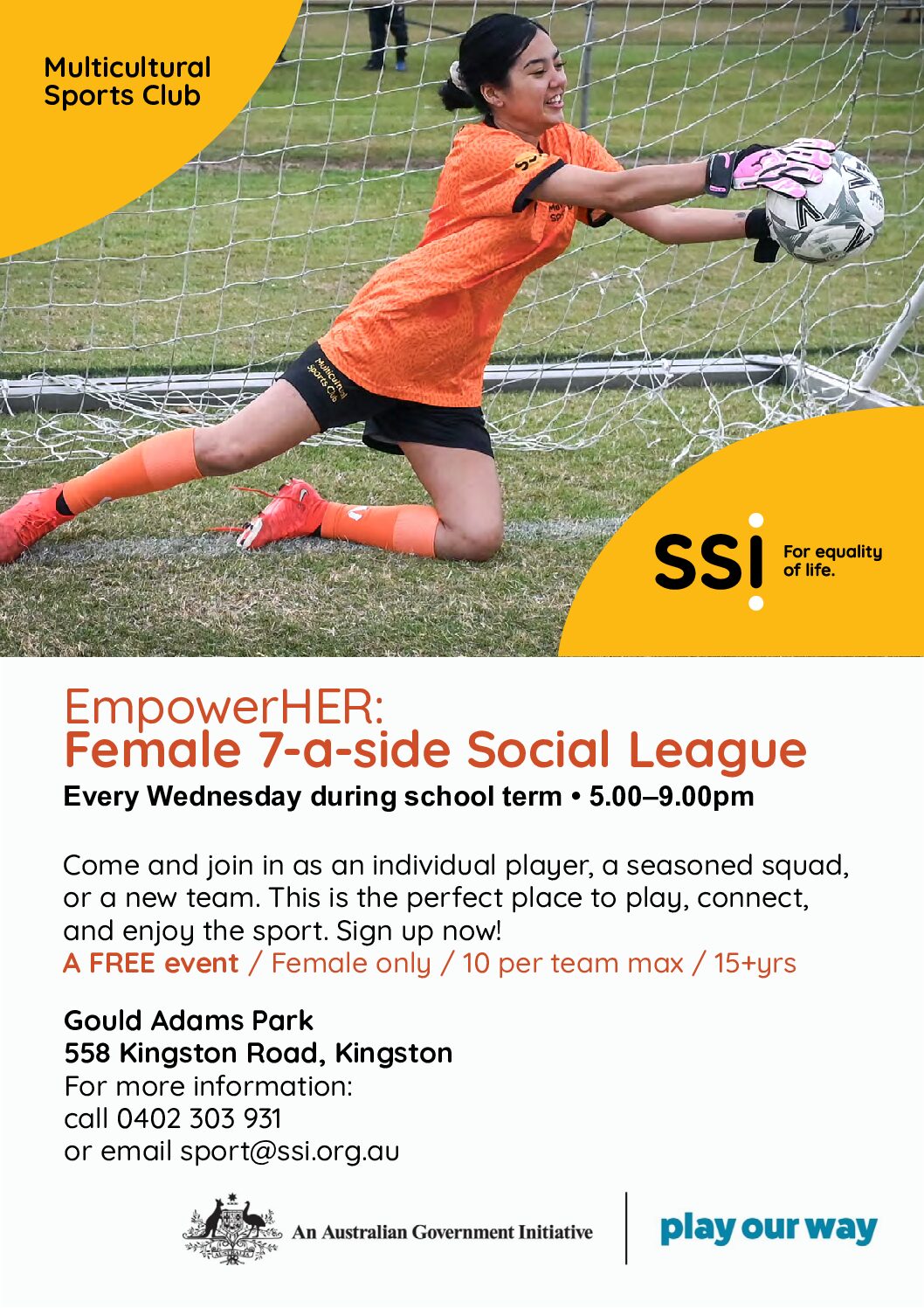
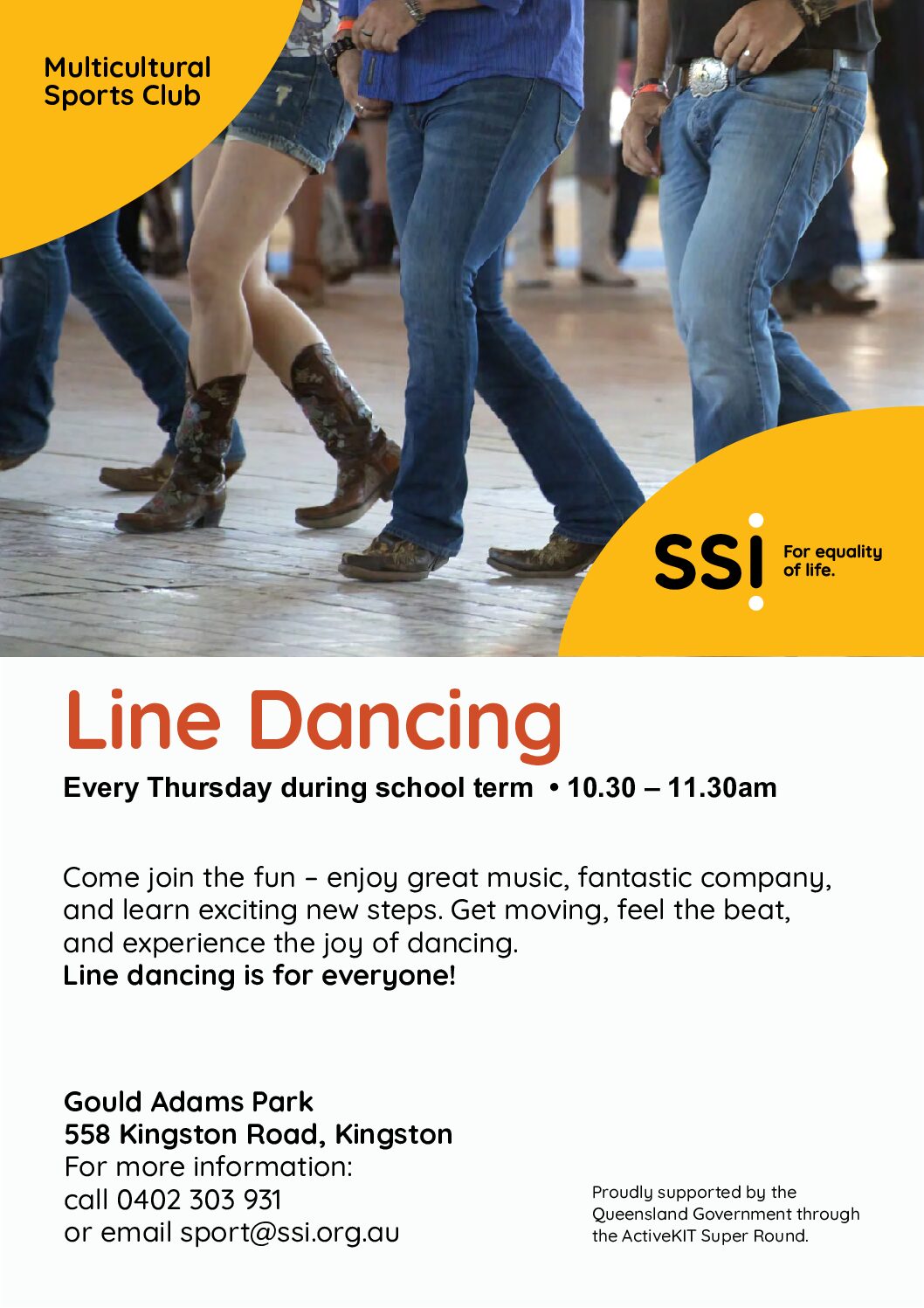
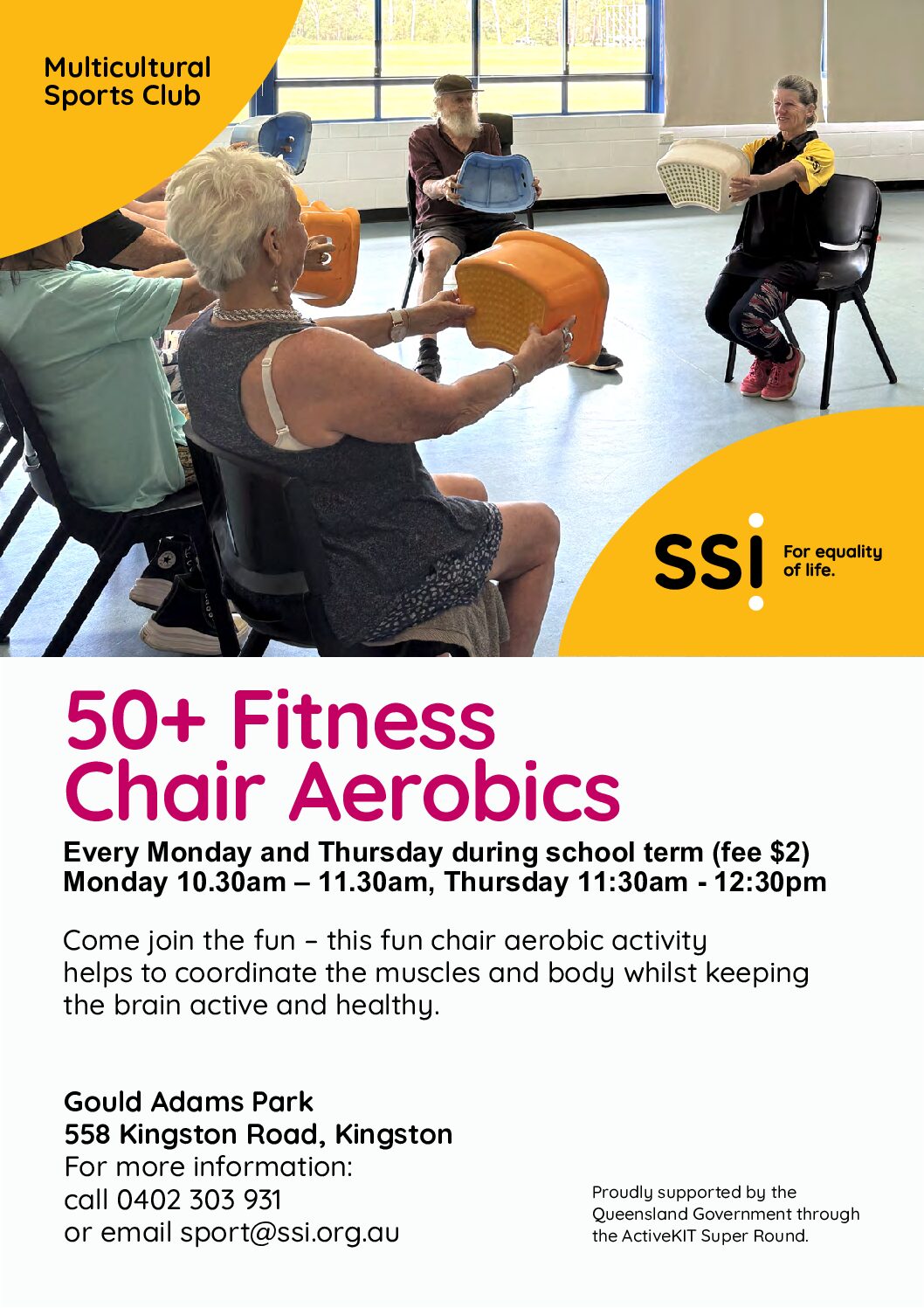
We believe sports and recreation are good for our health and can bring people together. Our Multicultural Sports Club in Logan has many activities for people from different cultures and backgrounds. We have activities like Family Football, Women’s Hub, Taekwondo, Youth Night, and more.
Everyone is welcome to join in the fun, including events like Learn to Surf, Paint and Chat, Talent Shows and Movie Nights. Our soccer groups are very popular, as well as other activities like martial arts, surfing and dance.
How we help


Get in touch
SSI’s Multicultural Sports Club is located at:
558 Kingston Road
Kingston, Queensland 4114
E: sport@ssi.org.au
P: 0417 256 343

