Accessibility & Language Icon

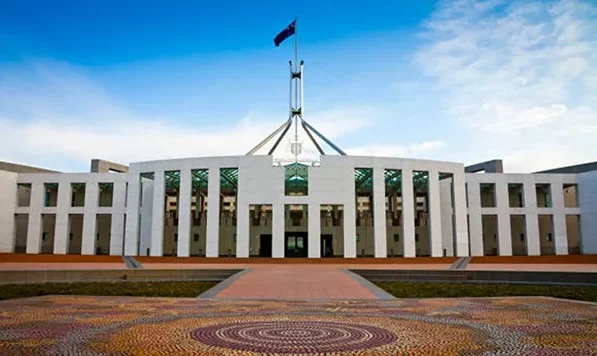
One year after the Australian Human Rights Commission launched the country’s first national roadmap to eliminate racism, 60 civil society organisations are calling on the Australian government to urgently fund and implement the National Anti-Racism Framework.

(more…)

One year ago, the Australian Human Rights Commission released the first national roadmap to eliminate racism in Australia: The National Anti-Racism Framework.

(more…)
The Beyond Borders exhibition in Sydney's CBD. Photography: Mojtaba Hakimi

Image: Mojtaba Hakimi

As Australia debates how to better integrate refugees, one settlement support program is quietly redefining what refugee support looks like by turning artistic talent into sustainable creative careers.

SSI’s Creative Compass program has seen participants sell more than $40,000 worth of artwork in less than 12 months through two unique exhibitions set up on easels in a busy Sydney CBD thoroughfare.

Participating artist Hosna Saif, 21, who came to Australia 12 months ago from Afghanistan, said Creative Compass had been an incredibly powerful part of her settlement experience.

“I still remember the first time I joined Creative Compass – it was just a few weeks after I arrived in Australia as a girl without hope, a girl once denied,” she said.

“When I met the SSI staff and the artists, it felt unreal. For the first time, someone valued me and my art. They gave us not only materials but encouragement, support, and hope. Since then, we’ve had exhibitions, workshops at the Art Gallery of New South Wales, and collaborations with other arts organisations. I’ve also sold many of my artworks, something I once only dreamed of.

“Creative Compass became more than a place – it became a family. Through art I found connection, confidence, and myself again.”

SSI General Manager Newcomers, Settlement and Integration Yamamah Agha said Creative Compass and the Beyond Borders exhibitions have been a huge success for the artists, proving settlement support comes in many forms.

“Not only have our refugee artists gained new skills, knowledge and connections through the program and exhibitions, they have proven they can augment their income in their new home by using their incredible creative talents,” Ms Agha said.

“The program really resonates with the new arrivals who participate, providing a comfortable settlement experience with other creatives they can relate to. To the artists, selling their pieces not only means economic independence; it means confidence, connections and a pathway to healing, integration and self-expression.”

Creative Compass invests in the artistic careers of refugee artists by offering tailored mentorship, skills development and pathways into the Australia’s arts industry. It aims to build sustainable creative careers, foster social inclusion through events, and celebrate cultural identity.

More than 200 newly arrived artists have taken part in the program since its inception, with artists from countries including Afghanistan, Syria, Ukraine, Congo, Myanmar, Pakistan, Palestine, Iran and Iraq taking part.

Ms Agha said SSI was extremely grateful to Macquarie Group for providing a space at Martin Place Metro Station at 1 Elizabeth, Sydney, for both Beyond Borders exhibitions.

“Thousands of passersby use this thoroughfare during their busy work week, and the exhibition provided a chance for them to pause and reflect on the stories told through the artwork,” she said.

“SSI is extremely proud of the 20 artists who have worked so hard on this project, and we congratulate them on the success of the exhibitions. We know this is just the start of their successful creative careers here in Australia and we can’t wait to hear what they achieve next.”

The unsold pieces displayed in the Beyond Borders exhibition can be viewed and purchased on the SSI website, where you can also find information on all the artists.

A national inquiry into racism in Australian workplaces would provide a long-overdue opportunity to expose systemic discrimination and drive meaningful reform across industries, according to national non-profit SSI.

(more…)

Leading provider of multicultural out-of-home care services SSI has welcomed a landmark report from the Australian Human Rights Commission that places children’s voices at the centre of national reform efforts.

The A Ground to Grow From report, based on consultations with over 500 children — including those with lived experience of care and children from culturally and linguistically diverse (CALD) backgrounds — offers a blueprint for a more inclusive and responsive care system.

SSI Executive General Manager, Service Delivery Eric Harper said it was heartening to see the consultations that formed the basis for this report use innovate ways to hear children’s voices within a child-centred approach, with particular recognition of the intersectional identities of Australia’s children, including First Nations and CALD communities. 

“This report is a powerful reminder that children’s voices must shape the systems designed to support them. We particularly welcome the emphasis on belonging, identity, and cultural connection as essential to children’s wellbeing in care,” he said. 

SSI supports many of the report’s recommendations and urges the Australian government and the Department of Social Services (DSS) to take them forward in the upcoming refresh of the National Standards for out-of-home care.  

In particular, SSI echoes the call for agencies to place child rights at the centre of policy and program design, including providing opportunities for meaningful participation and feedback by children on five key national government strategies. 

“We also encourage DSS to integrate children’s perspectives into the policy review and developmentof the National Standards in out-of-home care.  It is particularly important to ensure children with lived experience of the out-of-home-care system are involved in an advisory role,” he said. 

“We commend the AHRC on prioritising children’s voices, including in its recommendation to involve children in the development, design and measurement of their care plans, including cultural plans.” 

SSI’s own policy brief on the development, safety and wellbeing of Australia’s culturally diverse children also sets out a number of recommendations that we encourage DSS to consider during this period of reform. 

This includes a clear framework for a culturally responsive early intervention system to address harm and neglect among CALD families, and stronger policy and practice to uphold cultural connections for CALD children in care.  

Mr Harper said these priorities reflect SSI’s long-standing commitment to ensuring that children from diverse backgrounds are supported to thrive, with their cultural identity and lived experiences respected and upheld. 

“We look forward to working with incoming National Children’s Commissioner Deb Tsorbaris and government partners to ensure these recommendations are implemented in full, so that Australia’s children have a system that listens to them, values their identity, and supports their right to grow in safe, nurturing environments,” Mr Harper said. 

Female participant from CALD community works on a construction site in South Western Sydney using a measuring tape

Home Affairs Minister Tony Burke’s comments on solutions to fix Australia’s system for recognising overseas skills and qualifications marks a significant shift towards meaningful reform, according to the Activate Australia’s Skills campaign.

In yesterday’s National Press Club address, Minister Burke confirmed the federal government is exploring proposals to address long-standing skill recognition challenges for overseas-trained professionals, citing the proposal put forward by Activate Australia’s Skills for a Commissioner or Ombudsman to make the system faster, fairer and more efficient.

Minister Burke stated, “There are some good ideas that we are working through as to whether they can go forward or not. There’s the concept of whether you establish an ombudsman sort of role within Jobs and Skills Australia.

“This has been a wicked problem that no government has been able to solve in the lifetime of any of us. But it’s something that if we can unlock this, then everybody wins. The economy wins.”

Violet Roumeliotis, Activate Australia’s Skills spokesperson and CEO of campaign convener SSI, said “Minister Burke’s recognition today is a very welcome step forward, but it’s important that the government’s acknowledgement of the issue translates into implementation for reform.

“This is a widespread problem for Australia and, as the Minister acknowledged, successive governments have considered reforming Australia’s broken skills recognition system, but have resorted to ad-hoc tweaks rather than much-needed wholesale reform.

“Meanwhile, there are over a quarter of a million qualified professionals in Australia who are unable to work in their trained fields due to outdated, overly bureaucratic and expensive barriers to recognising their skills and qualifications. Our research shows that Australians could benefit from up to 50,000 more engineers, 20,000 more teachers and 16,000 more nurses who have trained overseas but are working below their skill level in Australia.

“All the while, communities across the nation are dealing with lengthy waiting lists and stretched services because one in three occupations has worker shortages. The skills we need are already here. We just need to activate them.

“Fixing our skills recognition system would put the Albanese Government on the fast track to productivity. Our modelling has shown this reform could deliver an estimated productivity boost of $42,580 per worker each year.

“As the Minister said himself – if we get this right, we all win.”

The Activate Australia’s Skills campaign is calling for four practical solutions to reform skills recognition and boost national productivity:

  • Establish one national governance system for all overseas skills and qualifications recognition, including an Ombudsman with regulatory power to provide independent oversight and transparency.
  • Create a more joined-up system that links skills recognition for migration purposes with licensing and accreditation for employment purposes.
  • Provide financial support for individuals to remove cost barriers and an online portal with all the information, so people know what they need to do.
  • Set up career gateways, or migrant employment pathway hubs, with skills recognition navigators to get qualified people working in their professions again.

The campaign is supported by more than 120 organisations across business, unions, community organisations and civil society.


Leading non-profit SSI has welcomed the Victorian government’s steps to strengthen multiculturalism and social cohesion across the state, following its decision to implement key actions from the recent Victorian Multicultural Review. 

The government’s response to the review, which engaged more than 600 Victorians and received more than 150 written submissions, includes the establishment of Multicultural Victoria — a new statutory body with an independent chair and expanded remit. 

SSI Victorian State Director Sonia Vignjevic said this marked a significant step forward in recognising the evolving needs of Victoria’s diverse communities and the emerging challenges they face. 

“As a leading provider of services to Victoria’s diverse communities, we also wholeheartedly support the decision to elevate multicultural affairs through a whole-of-government strategy, led by the Premier,” she said. 

“These reforms reflect a growing recognition that multiculturalism is not just a celebration of diversity, but a substantive policy framework that must be embedded across all levels of government. 

“We are encouraged by the Victorian government’s leadership in responding to the Review’s findings and taking concrete steps to build a more inclusive and cohesive society.” 

SSI also welcomes the recognition of language services as ‘essential services’, along with the new investment in community sector capacity-building. These measures align with SSI’s longstanding advocacy for culturally responsive services and equitable access for all communities, said Ms Vignjevic. 

“The Review’s findings echo national concerns about the erosion of trust in institutions and the need for stronger partnerships with multicultural organisations.  

“SSI’s submission to the Review highlighted the importance of secure funding for multicultural organisations of all sizes and the importance of ongoing targeted engagement with multicultural communities — from arrival — in areas including civic and political literacy,” she said. 

“Multiculturalism is a cornerstone of Australia’s identity and a key driver of social and economic prosperity. We look forward to working with governments to ensure that multicultural policy settings are fit-for-purpose, co-designed with communities, and responsive to local needs.”


Leading refugee resettlement and multicultural services provider SSI has condemned a wave of racist and Islamophobic incidents across Queensland, which have left the community scared for their safety.

A rise in racist attacks has followed two bomb threats on Islamic facilities in the past week, one at an Islamic school in Brisbane and one at a mosque on the Gold Coast.

SSI CEO Violet Roumeliotis said the two serious incidents were followed by reports of individuals from Queensland’s multicultural communities being followed and abused in the wake of the anti-immigration rallies held around Australia on August 31.

Ms Roumeliotis said the recent attacks and rallies point to an urgent need for the implementation of all 63 recommendations from the Australian Human Rights Commission’s National Anti-Racism Framework.

“SSI roundly and wholly condemns these attacks, and stands strongly with our multicultural communities, who are highly valued and very much supported by the vast majority of the Australian community,” Ms Roumeliotis said.

“These types of attacks have a serious impact on our communities , which is very distressing and totally unacceptable. There is absolutely no place for racism or Islamophobia in this country, and SSI is fully committed to helping address the issue not just in Queensland, but right across Australia.”

Ms Roumeliotis said it is incumbent on all Australians to nurture a positive climate around cultural diversity and debates around migration must be respectful and free from inflammatory language, scapegoating and stereotypes.

“The Australian Human Rights Commission’s National Anti-Racism Framework recommendations will go a long way to help affect change on this issue and nurturing a climate where cultural diversity, migrants and refugees are wholly welcomed into the broader Australian community.” 

The framework seeks to address the interpersonal, institutional, structural and systemic racism that occurs in Australia by providing a roadmap for governments, business and community organisations to address all forms of racism.

The framework, funded by the Australian government and released in November last year, includes 63 recommendations with proposed reforms across the legal, justice, health, education, media and arts sectors.

Child playing guitar with grandmother

Social isolation and a lack of digital inclusion are barriers to a smoother settlement for refugees with disability, according to new SSI research.

The latest phase of SSI’s signature research Foundations for Belonging (FFB) 2025: insights on refugees with disability in Australia, released this week, recommends that the Australian government provide much greater support to build social connections during their settlement period, and improve access to important digital services.

SSI CEO Violet Roumeliotis said FFB 2025 also found that stronger policy settings around integrated support were needed across the settlement and disability sectors to ensure greater coordination when helping refugees with disability settle into their new country.

Foundations for Belonging 2025 has identified that disability support in Australia is not truly inclusive,” Ms Roumeliotis said.

“To be accessible and effective, Australia’s disability services need to factor in the needs of refugees with disability. These people are currently being left behind due to a misalignment between refugee settlement policy and program delivery, and Australian disability policies and strategies.”

Ms Roumeliotis said FFB 2025 reported that while refugees with disability felt positive about their settlement experiences in Australia, they also faced significant challenges accessing suitable and affordable housing and finding employment due to a lack of specialised support.

The research also recommended governments review their digital services to ensure they were accessible for refugees with disability.

“The findings of FFB 2025 confirms just how important it is to take an intersectional approach when providing disability services in our country so that not one person is left behind,” Ms Roumeliotis said.

The Foundations for Belonging 2025 report is available on the SSI website.

woman working as mechanic

New economic modelling shows enabling underutilised migrants to work in their regulated profession could deliver an average annual productivity boost of $42,580 per worker impacted, putting Australia on the ‘productivity fast track’.

The modelling by Precision Economics, commissioned by the Activate Australia’s Skills campaign, also shows doing so would boost industries suffering from chronic skill shortages, enabling up to 20,000 teachers, 50,000 engineers, 16,000 nurses, 5,000 psychologists and 1,320 electricians to quickly get to work.

Precision Economics’ work shows that:

  • One-third of all occupations in Australia are in shortage, and two-thirds of these are in regulated or semi-regulated professions.
  • Around 253,000 permanent migrants in Australia with qualifications in regulated professions are working below their skill level, despite chronic skills shortages.
  • Enabling underutilised migrants to work in their regulated professions would deliver an average productivity boost of $42,580 per worker each year.
  • If underutilised migrants worked in their fields, it would substantially reduce shortages in critical services and industries. Australia would benefit from adding up to 20,000 teachers, 50,000 engineers, 16,000 nurses, 5,000 psychologists and 1,320 electricians.
  • Harnessing the skills of this untapped workforce would reduce class sizes, shorten waiting lists and improve services, with additional nursing staff alone enabling care for 22,800 additional hospital patients.

CEO of campaign convenor SSI, Violet Roumelioitis said the modelling builds on the consensus for overseas skills recognition reform achieved at last week’s Economic Reform Roundtable.

“This is yet more evidence of the significant benefits available for all Australians if we make our overseas skills recognition system faster and fairer,” Ms Roumelioitis said.

“Right now, there are more than 250,000 permanent migrants here in Australia who have skills and qualifications in regulated professions, most of which have severe workforce shortages.

“But Australia’s complex, overly bureaucratic and expensive overseas skills recognition system means they are working in jobs below their skill and qualification level.

“We need skilled workers for our future to tackle stagnating productivity, care for an ageing population, move through the energy transition and stay healthy.

“Enabling more people to fully participate in the economy would result in fewer skills shortages, shorter waiting lists, better services and a more productive nation.

“This modelling shows the industries that would benefit from the most additional workers would be professional services, education and healthcare – areas with key shortages.

“By fixing the system for recognising overseas skills and qualifications, we can put Australia on the productivity fast track,” Ms Roumelioitis said.

The Activate Australia’s Skills campaign is calling for four practical solutions to reform skills recognition and boost national productivity:

  • Establish one national governance system for all overseas skills and qualifications recognition, including an Ombudsman with regulatory power to provide independent oversight and transparency.
  • Create a more joined-up system that links skills recognition for migration purposes with licensing and accreditation for employment purposes.
  • Provide financial support for individuals to remove cost barriers and an online portal with all the information so people know what they need to do.
  • Set up Migrant Employment Pathway Hubs, or career gateways, with skills recognition navigators to get qualified people working in their professions again.

The campaign is supported by more than 100 organisations across business, unions, community organisations and civil society.

The Productivity Fast Track report is available on the Activate Australia’s Skills website.