

Learning and development in the early years of a child’s life sets the foundation for their future trajectory. The Productivity Commission’s final report on the Early Childhood Education and Care inquiry, released today, is a welcome step towards levelling the playing field for all children, particularly in reducing developmental disparities among culturally and linguistically diverse (CALD) children.
The report outlines a vision for a universal Early Childhood Education system that prioritises improved affordability, inclusion, and flexibility. This is key to securing Australia’s social, cultural, and economic future.
We know from our own work with communities across Australia that children from CALD backgrounds are more likely to be developmentally vulnerable when starting school and less likely to access early childhood education.
This is also highlighted in our Stronger Starts, Brighter Futures II research, conducted jointly with researchers at Education Futures, University of South Australia, which aligns with the Productivity Commission’s findings, particularly on the observations on developmental vulnerability.
Socio-economic disadvantage is a large driver of developmental vulnerability for all children. This plays a huge role in shaping the developmental outcomes of children from CALD communities in particular as they disproportionately experience socio-economic disadvantage, according to Stronger Starts.
Almost a third of children from CALD backgrounds living in the most disadvantaged socio-economic areas were developmentally vulnerable compared to 1 in 6 of their peers living in the most advantaged areas.
We are heartened that the Productivity Commission’s recommendations align with those from our research, particularly in calling for greater investment to support the inclusion of CALD children and their families.
We urge the government to consider these recommendations and prioritise investment in place-based services that have proven effective in supporting developmentally vulnerable children, which have been advocated for in both the Commission’s report and our research.
We also welcome the report’s specific recommendations to address both financial and non-financial barriers to participation for CALD children, and to invest in programs that enhance cultural safety and responsiveness in services, potentially through the use of bilingual and bicultural educators.
Culturally and linguistically diverse (CALD) women and children impacted by family, domestic and sexual violence (FDSV) will have better support with a new transformative project, led by non-profit SSI, in partnership with Federation of Ethnic Communities’ Council of Australia (FECCA).
(more…)PRONIA, SydWest Multicultural Services and Settlement Services International establish an alliance with RMIT University to link students with diverse communities.
A first-of-its-kind community co-design consortium, launched last week, will give RMIT engineering students the opportunity to shift the dial on some of the big challenges facing culturally and linguistically diverse communities in Australia.
Working at the intersection of engineering practice and community-led collaboration, the RMIT Humanitarian Engineering Research Consortium/Understanding and Leveraging Engineering with Society, or HERCULES for short, ensures students learn the fundamentals of engineering by solving real-world challenges through genuine engagement with culturally and linguistically diverse communities via not-for-profit organisations.
Last week, first year mechanical engineering student, Tahlia Torcasio presented four humanitarian-design prototype finalists to an audience of community leaders and RMIT University academics who comprise the first-of-its-kind community co-design consortium.
“My fellow humanitarian engineering students and I are motivated by the drive to move the needle on some of society’s most challenging problems, and being part of HERCULES will be a game changer for our education. Engaging with community via human service organisation to co-design solutions is a win-win for our understanding and community impact,” said Ms Torcasio.
Dr. Spyros Schismenos, lecturer in Humanitarian Engineering is the co-leader of RMIT’s Humanitarian Engineering Lab who’s passionate about the advancement of innovative teaching and research at the intersection of human-centered design, technology, and experiential learning.
“By forging alliances with organisations working at the coalface of complex social and human challenges such as Sydney’s Sydwest Multicultural Services, Melbourne’s PRONIA and national Settlement Services International, we will ensure students design solutions with, not just for, people,” explained Schismenos
The students’ prototypes ranged from a sustainable pest-resistant bamboo house designed for extended family lifestyles, to a sun-tracking solar panel built to be accessed by multiple households. The prototypes were created by a winning team of 18 first-year students in response to community consultation and as part of the RMIT SydWest Engagement Challenge.
The RMIT SydWest Engagement Challenge attracts more than 1000 students enrolled in RMIT’s Introduction to Professional Engineering Practice and guides students on community engagement and co-design practice, giving students first-hand experience to understand and work with Australia’s culturally and linguistically diverse communities.
Quotes:
Violet Roumeliotis, CEO, Settlement Services International (SSI)
SSI CEO Violet Roumeliotis said the partnership demonstrates a shared commitment to empowering engineering students and supporting communities to co-design solutions to some of our most pressing challenges.
“Diverse communities face numerous challenges, often punctuated by inequality and lack of opportunity afforded to other sectors of society. SSI supports refugees, people seeking asylum, culturally and linguistically diverse communities, people living with disability, Aboriginal and Torres Straits Islander communities, women, youth, families and LGBTIQA+ communities.
By working with RMIT University and HERCULES consortium partners, we’ll provide a unique engagement experience that supports students in their educational pursuits and helps communities co-create place-based solutions,” she said.
Elfa Moraitakis, CEO, SydWest Multicultural Services
SydWest Multicultural Services CEO, Elfa Moraitakis said the impetus to join the HERCULES consortium grew from the students’ response to the RMIT SydWest Engagement Challenge where she saw first-hand the impact of collaboration that comes from genuine engagement.
“Working from a strength-based perspective enables individuals and communities to provide insights and solutions to the challenges impacting them. This approach enables students to develop these skills early in their career and to design engineering solutions with the end-user in mind.
“The Western Sydney region is a diverse and vibrant area with a mix of unique challenges and creative insights and perspectives providing students with a rich learning ground,” said Moraitakis.
Nikki Efremidis, Interim CEO, PRONIA
PRONIA Interim CEO, Nikki Efremidis is passionate about identifying interventions for some of Australia’s priority communities and co-creating solutions for pressing real-world social and humanitarian issues.
“It’s a wonderful initiative to bring like-minded community organisations together to build a consortium that will harness ideas and opportunities to help students to combine engineering practice with social engagement skills.
“The humanitarian engineering program, through Dr Schismenos, who also works with UNESCO, will bring a unique perspective to community collaboration and co-design on topics that put community at the heart of innovation,” said Efremidis.
For more information on RMIT University Humanitarian Enginneering course visit https://www.rmit.edu.au/about/schools-colleges/engineering/news/humanitarian-engineering
Findings from a once-in-a-generation review released yesterday set a progressive vision for multicultural Australia, according to non-profit organisation, Settlement Services International (SSI).
SSI welcomed the release of the Multicultural Framework Review, Towards Fairness: A multicultural Australia for all, which drew on the voices of thousands of Australians to undertake the first comprehensive review of multicultural policy in Australia in more than 50 years.
SSI CEO Violet Roumeliotis said multiculturalism was a core part of Australia’s national identity and while multiculturalism as a policy had evolved from strong foundations, it needed a reset to advance a multicultural Australia.
“We commend both the Federal Government and the review panel for delivering this comprehensive roadmap that will build on Australia’s strong multicultural foundations,” she said.
“It has been decades since we’ve seen a review of this nature. If implemented, these changes would offer a reset so that multiculturalism and multicultural policy reflect the Australia of this century, not the last.”
Ms Roumeliotis said it was particularly heartening to see this review acknowledge the need to work to strengthen multicultural communities’ understanding of and engagement with First Nations communities.
“The report reflects a modern, nuanced understanding of what multiculturalism means in 2024 and beyond, with a clear national framework and a proposed set of reforms at the Ministerial and departmental levels to support implementation including the establishment of an Australian Multicultural Commission.”
In December 2023, SSI was part of joint advocacy led by the Federation of Ethnic Communities’ Councils of Australia and more than 80 other community organisations that recommended these changes so that multicultural Australia is fit for purpose for the 21st century.
Ms Roumeliotis said SSI welcomed, among other things, the review’s recommendations on strengthening support for refugees with disability through the establishment of a formalised partnership between NDIS and the Department of Home Affairs.
The report also recommended changes to bridge the digital divide for multicultural communities to create culturally responsive digital infrastructure, which is especially important to improve access to essential services that we all rely on in times of need.
“It was particularly heartening to see a strong focus on integrating lived experience and ensuring the voices of multicultural Australia are involved in the co-design and development of these initiatives,” she said.
SSI looks forward to working with the Federal Government, communities and our peers in the community sector to implement this progressive vision.
Refugee students have today received vital funds to pursue their education, under a scholarships program that nurtures the aspirations of refugees like scientist Simon Issa, who is changing lives after receiving a scholarship back in 2016.
The key to easing Australia’s skills shortages could be closer to home than anticipated, with new research commissioned by non-profit SSI showing more than 620,000 migrant workers already in the country do not have the opportunity to fully use their skills.
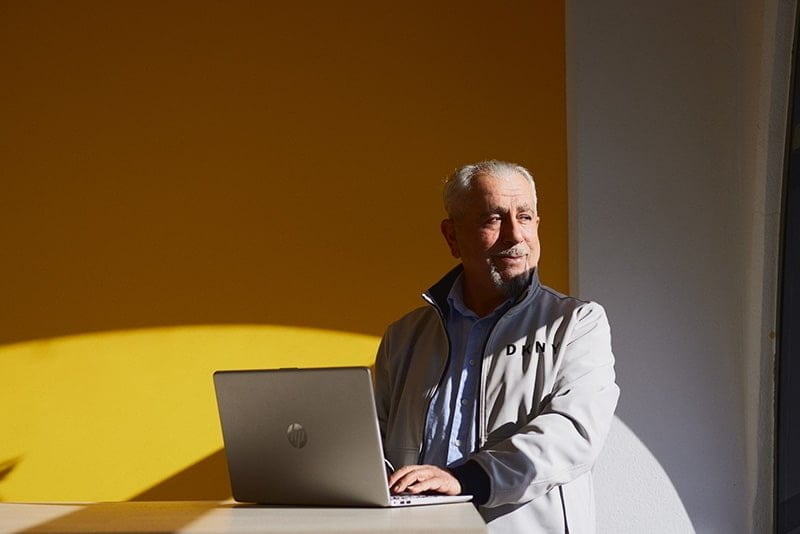
As the humanitarian catastrophe in Gaza, and specifically Rafah, reaches a crisis point, SSI reiterates our call for an immediate ceasefire in Gaza and urgent re-establishment of safe border crossings to enable civilians with visas to reach safety.
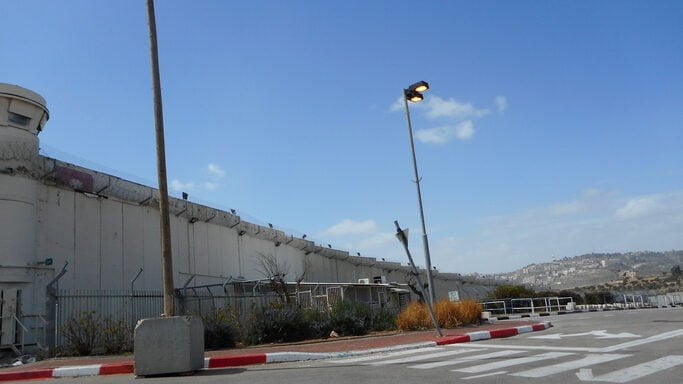
New funding announced in this week’s Federal Budget will offer some support to families fleeing the conflict in Gaza, many of whom are currently at risk of homelessness and poverty, according to non-profit organisation, Settlement Services International (SSI), which provides human services to around 50,000 people a year.
SSI welcomed the Federal Budget announcement of a $900k injection to extend Medicare eligibility to 30 June 2025 for Bridging Visa E holders arriving from affected areas of Israel and Palestine.
SSI CEO Violet Roumeliotis said families had escaped the crisis in Gaza only to arrive in Australia and find themselves largely reliant on charities like SSI, which is currently supporting close to 70 families.
“The situation in Gaza has worsened and worsened. With no hope of return, families are now navigating the process of applying for asylum in Australia, but in the meantime, their visa types mean they are mostly unable to work and ineligible for government support.
“At a time of rising costs of living, this has translated to families sleeping in cars, or living with 14 people in two-bedroom apartments,” she said.
“We welcome the extension of Medicare eligibility, noting however that most of the families we work with are currently not on visa types that are eligible for this support. More needs to be done so that refugees from Gaza receive the same support as people fleeing conflict in places like Ukraine.”
Ms Roumeliotis said it was encouraging to see broader measures to support people who are building new lives in Australia, such as a $120.9 million investment to strengthen the settlement sector and enhance outcomes for refugees and migrants.
“Robust on-arrival and settlement support is critical to ensuring newcomers are positioned to realise their full potential in Australia. It was welcome to see measures to this effect, including a modest increase in funding for some of the core settlement programs that support these outcomes,” she said.
“Disappointingly, the humanitarian intake will remain static at 20,000 places, despite record-breaking global numbers of people who are currently forcibly displaced from their homes by violence, conflict and persecution.
“A scale-up of our humanitarian intake is needed to meet the massive shortfall in resettlement places globally. It would also open up more opportunities for refugees already settled here to be reunited with family and, critically, allow Australia to demonstrate its credentials as a strong global citizen.”
Ms Roumeliotis said a strong theme of the budget was women’s safety, ranging from economic security to targeted violence prevention measures and more.
“It is a scary time to be a woman in Australia. An average of one Australian woman is violently killed every week, a significant portion of which occurs in intimate and family settings. There is no panacea for this, but this budget includes significant investment to make women’s lives safer and more equitable,” she said.
Ms Roumeliotis said SSI welcomed a number of other budget measures designed to improve access and equity in Australia, including:
- $27 million over three years to extend targeted support for Youth Transition Support services, which assist refugee and migrant youth to access education, employment and government services.
- $253.6 million over five years to reform employment services and supports for people with disability.
- $468.7 million over five years to support people with disability and get the NDIS back on track.
$925.2 million over five years to improve financial support, safety assessments and referrals to support services for victim-survivors leaving a violent intimate partner relationship.
Media enquiries:
Hannah Gartrell, Head of Executive Communications and Media
M: 0423 965 956 E: hgartrell@ssi.org.au
Celebrate the artistic vibrancy and diverse cultural expressions of multicultural Australia
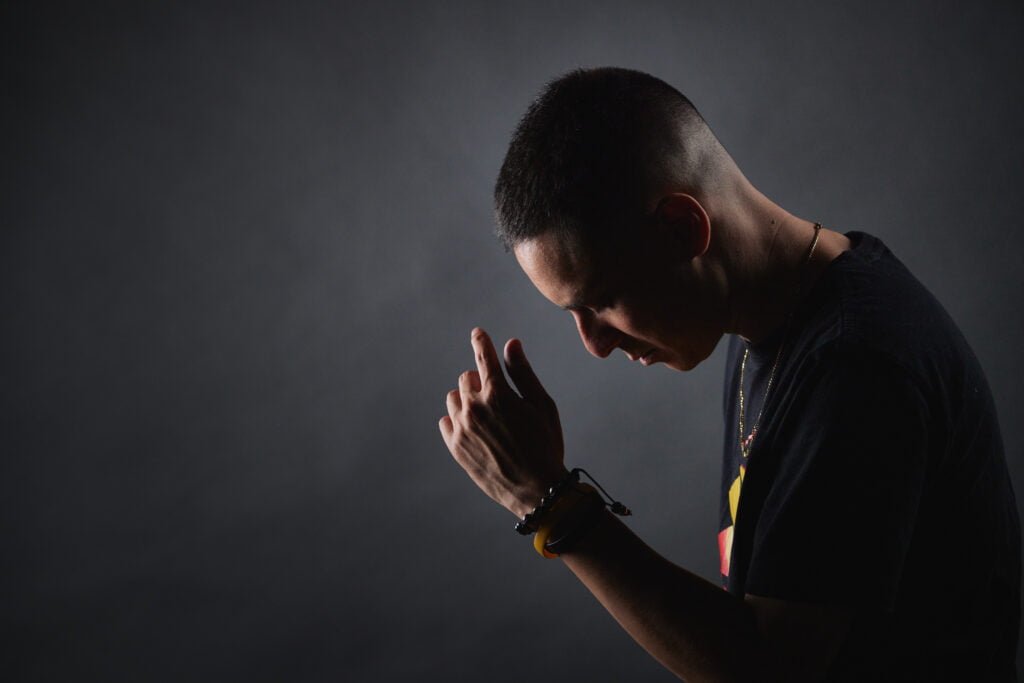
Filipino, Murrawarri and Ngemba artist, DOBBY will be joined by special guests, Aussie hip hop legend, L-FRESH The LION, and hard-hitting Palestinian-Australian creative, Sereen Omran, for a one-of-a-kind performance at New Beginnings Festival 2024.
The festival, produced by non-profit SSI, is being held on the wharves of the National Maritime Museum on Saturday, January 27, at 3 -11pm.
DOBBY is set to perform unique collaborations with the duo, as well as his latest release ANCESTOR as a headliner at Sydney Festival’s most iconic celebration of Refugee, Migrant and First Nations artists.
An electrifying storyteller, whose 2020 single, ‘I Can’t Breathe,’ became an anthem for Australia’s Blak Lives Matter movement, DOBBY is expected to play unreleased tracks from his highly anticipated album, WARRANGU; RIVER STORY.
“I played New Beginnings Festival in 2022. That show was special for me, it marked a new stage in my career, and became one of my favourite shows I’ve played. I’m so excited to join the wholesome, vibrant and joyous array of acts again at this year’s New Beginnings Festival!
“I’m also really excited to have my good friends L-FRESH The LION and Sereen joining me on the stage for this special show!”
DOBBY is co-headlining the festival with rising Afro-Caribbean, Arrernte RnB and neo-soul artist SOLCHLD, alongside a lineup of Aussie artists from 15+ cultural backgrounds.
SSI Arts and Culture Producer Raphael Brasil said, “As one of the most multicultural countries in the world, Australia’s creative industry is home to a melting pot of ideas, cultures, and talents. New Beginnings Festival embodies our diversity by showcasing an eclectic mix of music, dance, art, culture, and food from Australia’s leading culturally and linguistically diverse artists and entrepreneurs.”
SSI’s New Beginnings Festival began in 2014 as a platform to use arts and culture to build bridges between refugee communities and wider Australia. From its origins, the event has evolved to include strong representation of both migrant and First Nations artists in recognition that true inclusion can only be achieved by acknowledging and celebrating diversity.
Other New Beginnings Festival performers include:
- East-African pop band, Chikchika, which draws upon the rich traditions of both Tigrinya and Oromo music, with a healthy influence from contemporary Australia.
- DJ Deepa from Kerfew, an Australia-wide creative collective of South Asian musicians, designers and broadcasters who use art as a vehicle to explore, reimagine and celebrate the cultures and stories.
- Reggae Powerhouse, The Strides, whose music builds on the foundations of classic roots reggae with a hip-hop edge, forging a sound that brings together modern dance hall, dub beats and reggae-pop.
- Internationally acclaimed musicians, Avaye Rood, presenting a blend of Persian-inspired original music, combining English and Persian poems by Rumi.
- Ghana Road Show, an engaging combination of circus, dance, and music that will take you on a journey through West Africa.
- The Curious Works Showcase, an exhibition featuring visual art photography, and digital art that provides insight into the experiences of three refugee artists.
After a turnout of nearly 6,000 Sydneysiders in 2023, New Beginnings Festival is again featuring as one of Sydney Festival’s major events, enabling underground artists and hidden gem stall holders to display their talents to an even wider audience.
Guests can explore food stalls featuring cuisine from Jamaica to the Pacific Islands, to Sierra Leone, and market stalls with entrepreneurs selling wares from First Nations, refugee and migrant backgrounds.
Mr Brasil said, “Now in its eighth year, New Beginnings Festival has showcased more than 363 performers and artists from across 80+ cultures – giving the public the opportunity to discover creatives often outside of their circle of understanding.”
How to join
The free festival takes place on Gadigal Land, at the wharves of Australian National Maritime Museum in Darling Harbour, on Saturday, January 27, 2024, at 3 -11PM and is open to people of all ages.
The festival is proudly presented by non-for-profit organisation SSI and its partners, the Australian National Maritime Museum; Mundo Institute and BUZZ Speaker Hire; with Stage Partner Allianz Australia, and Experience Partner Smartraveller.
Find out more
For venue details, registration and full lineup, see New Beginnings Festival webpage.
Media enquiries
Jordan Wood – SSI Senior Communications Officer
Phone: 00403 082 926
Email: jwood@ssi.org.au

Settlement Services International (SSI) has launched a new learning program to train aged care workers on culturally safe service for seniors from diverse backgrounds as a proven way to boost health outcomes and quality of life.
The offering is a response to feedback from aged care providers that there is a need for practical training directly addressing the real-world challenges faced by workers. It also offers solutions to the recommendations in the government’s Aged Care Diversity Framework, which has called for better training to support providers in accommodating the diverse characteristics and life experiences of seniors, such as arriving in Australia as a migrant or refugee.
With a target of training 14,600 people within 18 months, SSI aims to help unlock the proven benefits of this person-centred approach for Australia’s ageing population by significantly raising the skill level of direct care workers in interacting with culturally diverse seniors. In doing so, it will reduce barriers for seniors accessing healthcare, increase customer satisfaction and business performance for aged care providers, and improve retention of direct care workers within the short-staffed industry.
About the diversity e-learning modules
The online program is delivered in seven accessible e-learning lessons, which can be completed on any laptop or mobile device in approximately 90 minutes. The content is aimed at supporting direct care workers and covers the following topics: ‘what is culture’, ‘caring for people from culturally diverse backgrounds’, ‘culturally responsive support’, ‘communication’, ‘getting to know your client’, ‘understanding trauma’, and ‘self-care’.
Iggy Pintado, Head of SSI’s Home Care Workforce Support Program, says the learning program will support new and existing workers in providing the highest level of support.
“The feedback from seniors is that they want access to support from carers who understand and have respect for their culture, and we know that culturally responsive care leads to better health outcomes. The sector has been crying out for a practical training program like this,” Mr Pintado said.
The program is available free of charge to participants in the government-funded Home Care Workforce Support Program, with a flexible paid option for aged care providers. A variety of customisable plans are available for small and large teams, organisations, or providers seeking ‘blended’ learning with in-person workshops to further extend learning outcomes.
Inclusive support approach for Australia’s ageing population
Working Future, a 2023 Australian government white paper, identified that migrant workers will be key to filling worker shortages in the aged care sector in the coming decade, with a total of 110,000 additional home care support workers needed by 2030 to meet the unprecedented demand from Australia’s ageing population. Approximately 37 per cent of Australians aged 65 and over were born overseas, further emphasising the need for all workers to learn about navigating cultural contexts and nuances to avoid cultural misunderstandings in a care setting, which is viewed as a key challenge for the aged care sector in the coming years.
Janet Irvine, SSI Diversity Training Manager, says equipping our workforce with the confidence and capability to understand and work inclusively with different cultural perspectives is central to any worker in Australia. “Aged care workers are working in culturally diverse teams and with clients from a range of backgrounds. This e-learning will take people beyond the compliance level training to something more practical and relevant to their everyday work. They will increase their awareness of how culture influences them and their work with clients and equip them with information, tools and resources to tailor the care they provide to all their clients.”
SSI’s new learning program has been informed by their more than 20 years of experience, reaching approximately 60,000 people from diverse cultural and social backgrounds each year. Their workforce of industry-leading experts in multicultural engagement collectively speak more than 100 languages. Preview the program for the aged care sector here.
SSI’s learning management system also includes tailored e-learning solutions for local government, with NGO and corporate diversity training solutions added in early 2024.
Media inquiries
Tom Hines
Phone: 0423 328 050
Email: tom.h@think-hq.com.au