

For refugee artists, creative practice is more than a profession — it’s a lifeline that bridges past experiences with new possibilities.
The artists featured in this exhibition are part of our Creative Compass program, a unique initiative that helps newly arrived refugee artists to develop their careers and build connections here.
Having been in Australia for only a few months, they come from diverse backgrounds including Afghanistan, Syria, Ukraine, Congo, Burma, and Iraq, and their work is pathway to healing, integration, and self-expression.
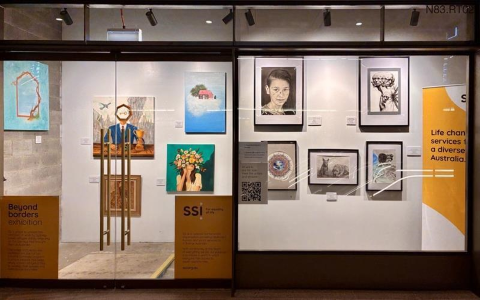
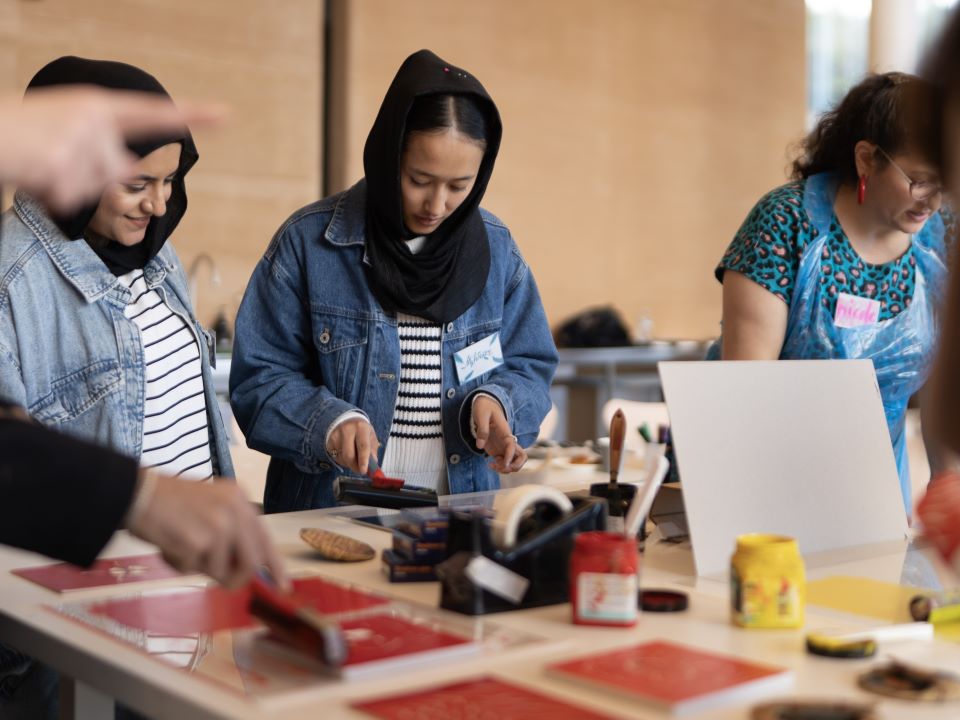
Exhibition catalogue
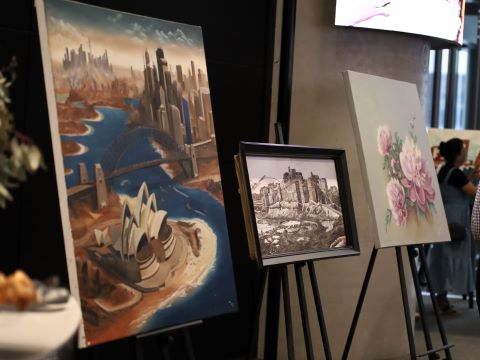
The Peace Offering, Setara Shafaie, Oil on Canvas, 60x81cm, $1,200
Marionette, Rodaba Qureshi, Oil on Canvas, 100x80cm, $1,500
Three Birds, Wai Yan Minn, Photograph Print, 42x59cm, $350
About Wai
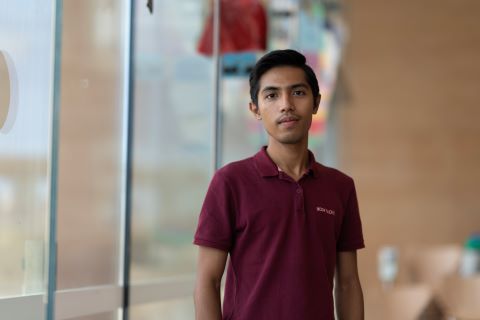
Wai Yan Minn, born in 1996, is a self-taught photographer from Burma (Myanmar). He captured striking images on his mobile phone that bridge his Burmese heritage with his life abroad. Originally from a small town of Pyay (also called Prome), Wai’s work explores themes of identity, belonging, and cultural memory. His photography captures the landscapes and faces of Burma with a deep sense of nostalgia, while his newer work reflects his experience as part of the Burmese diaspora in Australia.
Wai’s first show was the inaugural SSI-1 Elizabeth Beyond Borders exhibition in 2024.
Wai’s artist statement
I capture these moments to explore and amplify the stories of resilience, dignity, and humanity that often hide at the back of injustice. As a photographer, my goal is not only to document moments but also to create a space where the audience can connect with these stories according to their own perspectives. Each photograph serves as a reminder of our shared responsibility to uphold justice, equality, and compassion for all. By focusing on moments that capture both vulnerability and resilience, I hope to inspire reflection on what it means to be human—and what we must do to protect that humanity.
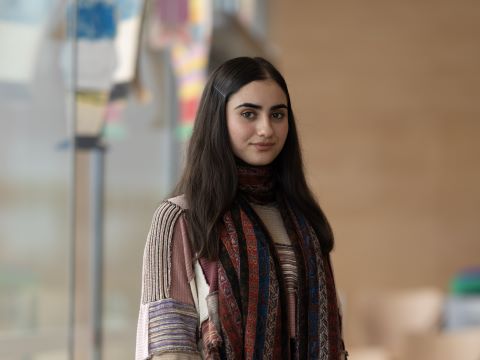
About Hosna
Hosna Saif’s journey is one of resilience and hope.
Born and raised in Kabul, Afghanistan, she grew up surrounded by challenging circumstances that made pursuing her dreams difficult. Though she discovered a deep passion for art, drawing, and painting, her dreams of higher education were shattered under the Taliban’s rule, leaving uncertain about her future.
In search of freedom and new opportunities, Hosna left Afghanistan and moved to Pakistan, where she won a prize for a drawing titled “Gender Equality”. This experience reinforced her commitment to advocating for women’s rights through art.
Eventually, Hosna and her family moved to Australia, where she found a chance to rebuild her dreams. Now settled in her new home, she is determined to pursue a law degree, aiming to make a positive impact while continuing her artistic journey.
The hardship she witnessed in her homeland became a powerful inspiration for her art. Her art, which includes a powerful collection of charcoal works, tells her story of perseverance and growth. Hosna’s journey is about rediscovering her aspirations and finding her voice. She hopes her story and her arts will inspire others who face similar struggles, showing that even in difficult circumstances, it’s possible to rise and thrive.
This is Hosna’s second Australian show. She is also part of the CuriousWorks’, SSI’s and Sydney Opera House’s Holding Space: Rituals of Welcome program.
Hosna’s artist statement
I use my work to explore themes of freedom, women’s rights, resilience, and identity. Inspired my journey from Afghanistan to Australia, my art includes both symbolic pieces and portraiture. Each reflects both personal and universal struggles, often highlighting the strength with vulnerability. Art is my voice, speaking for those who can’t.
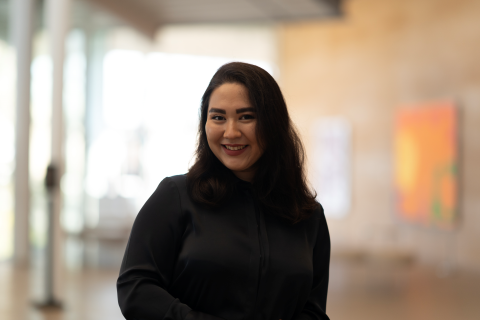
About Maryam
Maryam Hosseini (b. 1994) is an Afghan artist who has dedicated over 15 years to visual arts. Her work spans various styles, including Realism, Surrealism, Abstract, and Impressionism, employing diverse techniques such as oil paint, watercolor, gouache, colored pencils, and charcoal. Maryam’s art primarily focuses on abstract themes, with each piece conveying a profound message to her audience.
Maryam honed her skills at several esteemed art institutes, including the Azhang Visual Arts School, Kaghaz-e-Kahi Visual Arts School, Taranom-e-Mehr Visual Arts School, and the Persian Miniature Association. Additionally, she led the Refugee Artists’ Working Group in the city of Shahriar, Iran under the auspices of the Ministry of Culture and Art. Maryam is studying fine arts at TAFE and is part of CuriousWorks’, SSI’s and Sydney Opera House’s Holding Space: Rituals of Welcome program.
Her artwork has been featured in numerous exhibitions, such as the Beyond Borders exhibition at 1 Elizabeth and the World Refugee Day exhibition at Parramatta Police Station in 2024. She has also participated in group exhibitions in Tehran in 2023, 2015, 2014, and 2012, and showcased her work at the ECO Cultural Institute in Tehran in 2021. Maryam has received official recognition from the Afghan Embassy and the General Directorate for Refugees and Immigrants Affairs in Iran. Her work has been featured in international exhibitions at the University of Tehran, Payam Noor University (2014), and Kharazmi University (2013).
Throughout her career, Maryam has garnered multiple awards, including second place nationally in the 2015 Art Competition and first place in local art competitions in 2014, 2013, 2011, 2010, and 2009 in Shahriar. She was also a member of the Refugee Scholars and Artists Association in Iran in 2014.
Maryam’s artist statement
Art is my primary mode of creative expression and an outlet for my feelings.
My work is about human rights—especially women’s rights. I continue the Afghan tradition of miniature painting. I also use oil, acrylics, watercolour and charcoal to express how in Afghanistan there is no such thing as women’s rights.
Women are also human, and we deserve respect. As women, we have our own beauty and power. Our beauty cannot be hidden.
Symbols are very important in my art to show women’s beauty and to also challenge stories that blame women. In one work, women have angel wings because we are a gift from God. I believe every woman is an angel. In many countries, there is a false belief that Eve caused the downfall of Adam and humanity with the forbidden apple. I disagree with this: Apples are a sweet fruit, which look like a heart and represent love.
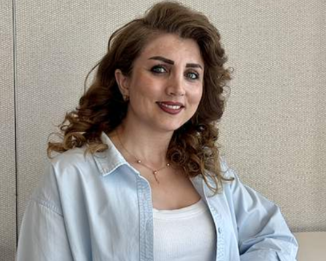
About Josephine
Josephine is a Syrian-born artist from As-Suwayda whose work is deeply shaped by memory, place, and the natural landscapes of her homeland. Growing up in the mountainous south of Syria, she developed a strong connection to nature, which continues to influence her artistic practice today.
A graduate of the Syrian Institute of Art, Josephine has worked as both an artist and art educator, inspiring children through art and creative expression for over a decade. She organised and participated in numerous exhibitions in Syria, including A Touch of Soul (2016) and There Is Still a Part of the Dream (2018), and continued her artistic development through studies in painting and sculpture at the Fine Arts Centre in As-Suwayda. Her work has also been featured in exhibitions in Syria and Lebanon, with pieces acquired by cultural and arts institutions.
After relocating to Australia in 2026, Josephine embraced the opportunity to rebuild and further develop her artistic practice in a new environment. Drawing on personal experiences of displacement, resilience, and renewal, her work explores themes of identity, belonging, memory, and the enduring connection between people and home.
Jospehine’s artist statement
My art explores the depths of human emotion, resilience, and transformation. I am particularly interested in the often unseen emotional experiences of women, expressed through colour, movement, and symbolism.
Painting allows me to examine the connection between our inner worlds and the experiences that shape us. Inspired by moments of struggle, hope, and growth, I create works that invite viewers to pause, feel, and reflect.
I believe art does not always need to provide answers. Sometimes its greatest power lies in asking questions and making emotions visible.
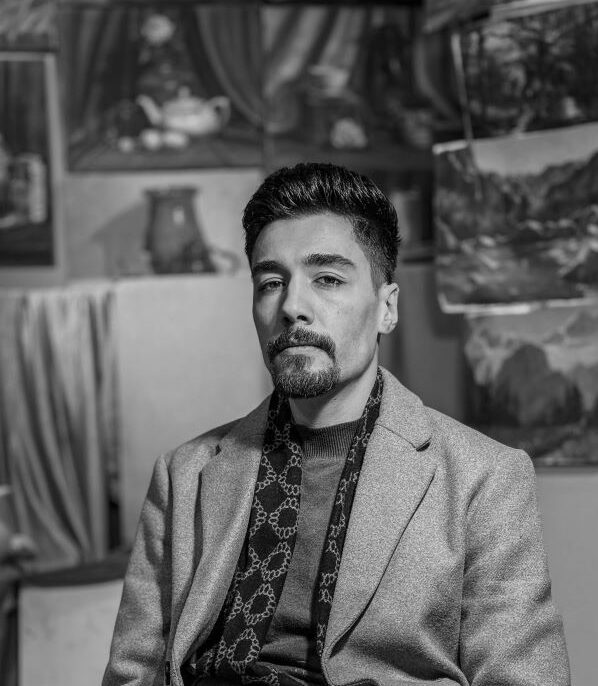
About Ahmed
Ahmed Abunada was born in the Gaza Strip (Palestine) in 1996. He holds a Bachelor’s degree in Business Administration from Al-Quds Open University in Gaza.
His artistic style is defined by hyper-expressive realism, often blending classical techniques with modernist elements. Ahmed works across various mediums—including traditional oil painting, charcoal, comic illustration, and digital art, choosing materials that best suit the concepts he explores.
In 2016, Ahmed worked as a drawing trainer with World Vision International. Since 2017, he has been active as a freelance digital artist, and in 2023, he taught art at the British International School in Gaza.
He has exhibited his work in numerous art exhibitions in Palestine, Italy, France, and Egypt. Between 2023 and 2024, he was a member of the Hawaf Art Group. He is a member of the 2025-2026 PAS Granville Studio Program. His latest exhibition was at Stirrup Gallery, Marrickville.
Due to the ongoing genocide in his homeland, Ahmed was forced to flee multiple times. He eventually sought refuge in Egypt and now resides in Sydney, Australia.
Ahmed’s artist statement
My artistic practice is rooted in the contemplation of memory, identity, and displacement. I draw from both personal and collective experiences. My work blends realism and impressionism and spans a range of media including classical oil painting, charcoal, comics, and digital art. I am particularly inspired by portraiture.
I gravitate toward the silent details that are often overlooked in dominant narratives. For me, art serves as a space for reflection and confrontation. Art is a form of testimony and a means of healing. In moments of fracture, I see art as a vital tool for survival and for preserving what remains of memory. I am currently developing a series of oil paintings as part of an ongoing project titled Displacement. Displacement explores the traces of personal experience through an intimate and testimonial visual language.
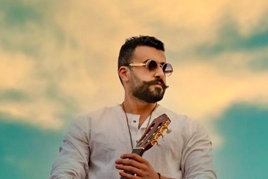
About Ali
Ali Sayouh (b. 1991, Tartous, Syria) is a visual artist whose work spans portraiture, abstract expressionism, and surrealist compositions.
A graduate of the Faculty of Fine Arts at Damascus University and an original member of Syria’s Syndicate of Fine Artists, Ali’s art delves into themes of identity, resilience, and the human experience, often incorporating hands and human figures to convey layered meanings and emotions. Known for his innovative use of frames and dimensions, he invites viewers to explore the boundaries of self.
Guided by the belief, “You presume you are a small entity, but within you is enfolded the entire universe,” Ali has had work exhibited at solo and group exhibitions in Syria, Iraq, and Australia. Ali was 11 years old when he was part of his first group show, The Pioneers, in Syria. At the Vagabond Art Gallery and Studio, he had a solo exhibition between 2012-2013. He has been in several group shows at the Cultural Center in Baniyas, Syria in 2016, at the NSW Police Force Headquarters in 2023 and 2024, and in the 2024 SSI-1 Elizabeth Beyond Borders exhibition.
Ali is member of CuriousWorks’, SSI’s and Sydney Opera House’s Holding Space: Rituals of Welcome program.
Ali also engages diverse audiences through community exhibitions and workshops. He is committed to mentoring emerging artists and fostering cross-cultural dialogue through his art.
Ali’s artist statement
My work delves into themes of identity, resilience, and the human experience, drawing from my heritage and the journey of displacement. I create expressionist portraits and abstract compositions that often feature hands, figures, and frames to convey complex emotions and explore perceptions of self. Inspired by surrealism, I integrate symbolic elements like frames replacing heads, questioning identity and inviting viewers to confront their own perspectives.
Through my art, I strive to reflect the stories of marginalised communities and my journey. Nature also permeates my work, particularly the sea, symbolising vastness and connection—a reminder of the quote, “You presume you are a small entity, but within you is enfolded the entire universe.”
My use of dimensions aims to provide a sense of immersion, allowing the viewer to experience the ambits of each piece. Ultimately, my art bridges personal and universal experiences, fostering a dialogue on resilience and the intricate beauty within our shared humanity.
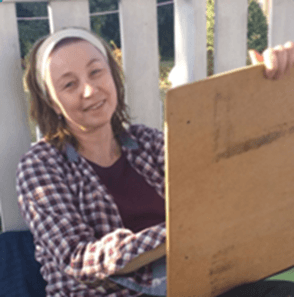
About Halyna
Halyna Morkovkina was born in November 1959 in Kyiv, Ukraine. She graduated from high school in 1977 and earned a degree in systems engineering from Kyiv Polytechnic Institute in 1985. In 1981, she married and later became a mother to two children, born in 1983 and 1989.
In 2022, due to the onset of war, Galina and her family left her beloved Kyiv and relocated to Australia to ensure her granddaughter could grow up in peace and safety. Tragically, in 2023, her husband passed away, leaving a profound void in her life.
Amid these challenges, the opportunity to participate in an art exhibition became a source of solace and joy.
Although Galina does not have formal artistic training, she rediscovered her passion for art five years ago, inspired by the work of American artist Steve Hanks. Her move to Australia deepened her longing for her native Kyiv and led her to embrace traditional Ukrainian art forms, including Petrykivka painting, recognized as UNESCO cultural heritage in 2013.
Today, Galina continues to explore her creativity through acrylic, oil, and digital painting, blending tradition with modernity in her artistic journey.
Halyna’s artist statement
My artistic journey began as a return to myself, a way to process the profound changes in my life. Each brushstroke reflects my connection to Ukraine, my love for its culture, and my longing for the vibrant streets of Kyiv.
Art has become my refuge and a way to cope with grief. After the loss of my husband, creativity offered a path to healing, allowing me to channel emotions that words could not express. Inspired by the rich tradition of Petrykivka painting, I weave together Ukrainian heritage and contemporary techniques, exploring the interplay of color, form, and emotion.
Through acrylic, oil, and digital mediums, I aim to capture fleeting moments of beauty and remind viewers of the enduring power of art to heal, inspire, and connect across borders.
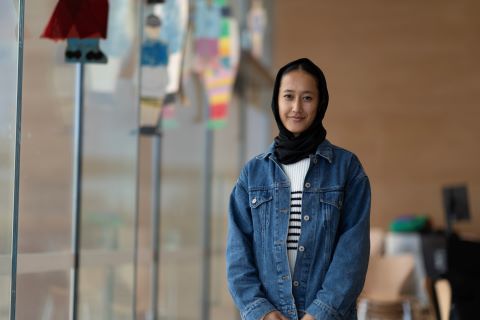
About Mahnaz
Mahnaz (b. 2008, Kabul, Afghanistan) is an artist, educated in Pakistan through free courses and a school for refugees. She received a scholarship from the Government of Pakistan to study art at the International Art College in Rawalpindi, Islamabad after her first exhibition. Mahnaz left college to move to Sydney, Australia in 2024.
Mahnaz has shown her work in the Afghan Girls Hopes Art exhibition in Islamabad, and at the United Nations Higher Commissioner for Refugees (UNHCR). She sold her art in the 2023 UNHCR and Inspire Pakistan event for #16 Days of Activism against Gender-based Violence. She also won a certificate from Inspire Pakistan for Women’s Day recognising her contribution to the arts.
Since moving to Sydney, Mahnaz showcased her artwork in a couple of exhibitions, including SSI’s Beyond the Borders 2024, and she received Western Sydney Refugee Week Youth Awards 2025in recognition of outstanding performance in category of creative Arts & Performance from ADSI and CMRC. She also received a certificate form NSW government for successful completion of Art Smart.
She works in acrylics, oils, watercolour, gouache colour, pencils, colour pencils and charcoal. Mahnaz’s art is realism and visions, which covers themes such as human rights and violence.
Mahnaz’s artist statement
I always draw realistically and emotionally. I like this realistic and emotional style because it conveys good feelings.
My drawings are mostly colourful objects. I use oil pastels and coloured pencils, and sometimes I sketch in charcoal. Sometimes I mix oil with charcoal. These three mediums define my art.
One of my drawings is about children in Afghanistan who cannot attend school and face the dangers of poverty. They either work outside or are orphans.
Another drawing of mine is about freedom in Australia. Freedom is symbolised by the bright, traditional native trees.
Another piece is about the freedom of girls around the world. They are showing that they can embrace their passions, creativity and independence.
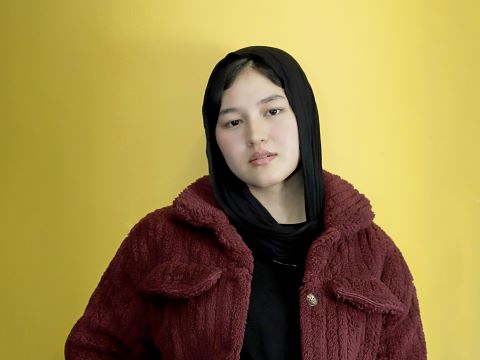
About Setara
Setara Shafaie, was born in 2007, is a passionate artist with a profound love for painting, pyrography, drawing, clay, watercolor, and miniature art. Her journey began in her homeland, where she and her family faced challenging circumstances that prompted their migration to India in search of a brighter future, at the age of 10.
Her passion for art has always been immense, she devoted herself entirely to her art, attending classes which were held in a home with an Afghani teacher, starting in 2021. Her mother, her biggest supporter, stood by her side, nurturing her dreams and providing unwavering encouragement.
The year 2023 marked a significant turning point in Setara’s life when she moved to Australia. This new chapter opened up incredible opportunities for her artistic career. With the support of SSI, Setara’s first exhibition in Australia was at Police HQ, Parramatta. She is confident of one day becoming one of the most renowned artists in the world. Currently, she started her final year of high school. Away from school, Setara continues to paint as it is her passion.
Setara’s artist statement
I am inspired by the future and how human actions affect our environment. Echoes of Tomorrow shows a futuristic view of Sydney, Australia, and covers several important things. I imagine a future where famous landmarks like the Sydney Opera House and Harbour Bridge remain strong despite big changes in the environment.
The desert-like scene suggests a world after a major disaster, making people think about the results of our actions today. This piece highlights the serious issue of climate change and how it can change our cities and nature.
I use realistic techniques, oil painting, and muted colors to create lifelike and detailed artworks. These methods help me capture the essence of my subjects, adding depth and emotion to each piece. By combining these techniques, I aim to create powerful and expressive art that connects deeply with the viewer.
Symbol of Strength explores the strength and majesty of the bald eagle. By focusing on the eagle’s intense gaze and detailed feathers, I aim to highlight its power and beauty. The close-up view helps you appreciate the eagle’s impressive presence and the intricate details of its appearance. Through this artwork, I hope to convey the eagle as a symbol of freedom, authority, and natural wonder.
I used fine brushwork for detailed feathers, layering to create depth and color gradients, careful attention to light and shadow, detailed work on the eye for a lifelike look, and a muted background to keep the focus on the eagle, resulting in a realistic and striking artwork.
About Muhammad
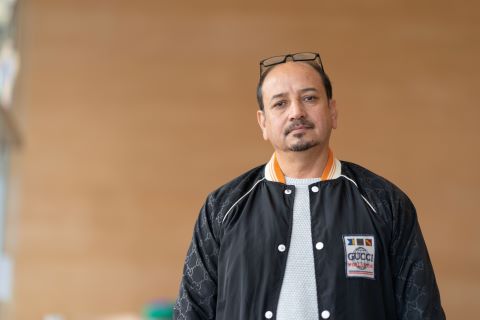
Muhammad Akbar Farhad is an Afghan artist whose creative career spans more than three decades. Born in Kabul in 1971, he pursued his passion for art alongside his medical studies, developing a distinctive artistic practice rooted in both traditional and contemporary techniques.
Following the outbreak of civil war in Afghanistan, Akbar relocated to Pakistan in 1996, where he continued his artistic practice and taught art to Afghan children. Throughout his career, he has created more than 2,500 artworks across a range of mediums, including miniature painting, wood painting, contour art, and calligraphy.
His work has been exhibited internationally in Pakistan, India, and Australia, with exhibitions across more than 24 galleries and recognition through several prestigious awards. After relocating to India in 2018, he held seven solo exhibitions, including his first exhibition at the Embassy of Afghanistan, while continuing to mentor and teach emerging artists.
Now based in Sydney, Akbar remains an active contributor to Australia’s cultural landscape. In 2026, his artwork Refugee Birds was selected by the City of Sydney from hundreds of submissions for its Refugee Week campaign and displayed across prominent public locations throughout the city. This significant achievement reflects his growing recognition as an artist and his ongoing commitment to storytelling through art.
About Fatima
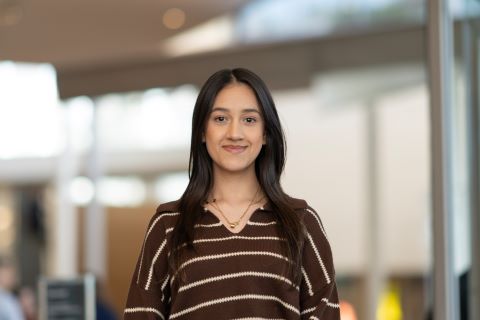
Born in 2004 in Afghanistan, Fatima Farhad is an emerging artist with a passion for miniature and contour art.
In 2018, she and her family migrated to India to pursue a brighter future amidst challenging circumstances back home. It was here that her artistic journey flourished, supported by the unwavering encouragement of her father, Mohammad Farhad.
In India, Fatima’s talent and dedication have earned her recognition through numerous art exhibitions, where her intricate and expressive style has captivated audiences. Her work has been honored with several awards, underscoring her position as a promising young artist.
Through resilience and creativity, Fatima continues to use her art as a means of expression and connection, bridging cultural experiences and artistic traditions.
Fatima’s artist statement
I draw inspiration from the style of the esteemed art teacher, Kamaluddin Behzad. I strive to capture the intricate beauty and detail that defines his work.
About Tiba
Tiba is an emerging artist whose creative journey began at the age of five. Born in Iraq and later relocating to Jordan at the age of 15, she discovered art as a powerful form of self-expression, comfort, and connection. Drawing became a way for her to explore her imagination, tell stories, and navigate life’s challenges.
In Jordan, Tiba completed a wood-burning art course with CRP, where she developed her skills in pyrography and exhibited and sold her artwork. This experience strengthened her confidence as an artist and encouraged her to continue sharing her creative voice.
Now based in Australia, Tiba continues to create through pencil drawing and wood-burning, using her art to share personal stories and experiences. Beyond Borders marks her first exhibition in Australia and an exciting new chapter in her artistic journey.
Tiba’s artist statement
Art has been part of my life since childhood. It is how I express myself, tell stories, and connect with the world around me.
Through pencil drawing and wood-burning, I explore memories, emotions, people, and everyday moments. I enjoy capturing details and transforming simple subjects into visual stories that reflect my experiences and imagination.
For me, art is a way of finding myself and sharing my journey with others. Each artwork carries a piece of my story and invites viewers to see the beauty, strength, and meaning in everyday life.
About Rodaba
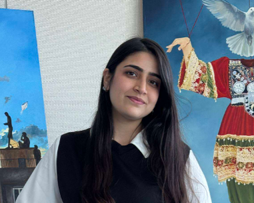
Rodaba Qureshi was born in 1996 in Kabul, Afghanistan. She completed her high school education in 2015 at Kabul, Abul Qasim Ferdawsi High School. In the same year, she was admitted to the Institute of Fine Arts and Industry, from which she graduated with honors in 2016. In 2018, she was accepted into the Department of Painting at the Faculty of Fine Arts at Kahramanmaras Sutcu Imam University. After completing one year of Turkish language preparation, she continued her education and successfully graduated with honors in 2023.
Currently, she is living in Australia and continuing her artistic journe.
Rodaba’s artist statement
I paint in order to better express and understand myself, aiming to develop my own artistic language in this direction. Since my homeland, Afghanistan, has a rich cultural heritage, I strive to reflect these cultural elements in my work. For this reason, I often include Afghan traditional clothing in my paintings and use vibrant colors that interact with figures. My goal is to break the stereotype of Afghanistan as merely a war-torn country and instead highlight its true beauty, awakening the audience’s subconscious to these hidden aspects. Guided by this purpose, I continue to conduct research and produce artworks that connect the past with the present.
About Zahaleiyl
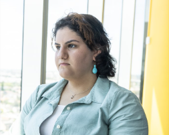
Zahaleiyl is an emerging artist whose creative journey began after relocating from Iraq to Jordan at the age of ten. Although she always had a natural artistic talent, it was in Jordan that she found the opportunity to develop her skills and pursue her passion more seriously. Inspired by her sister’s love of art, Zahaleiyl began drawing alongside her and gradually developed her own creative voice.
She further refined her practice through art training with CRP in Jordan, where she explored a range of artistic techniques and mediums. Her work spans oil painting, wood-burning, and glass painting, with a particular appreciation for simplicity, minimalism, and expressive brushwork.
Now based in Australia, Zahaleiyl continues to explore art as a form of creativity and self-expression, creating works that reflect her unique perspective and artistic journey.
Zahaleiyl’s artist statement
I am inspired by simplicity and the beauty that can be found in small details. My work often embraces a minimalist approach, using expressive brushstrokes, colour, and texture to create artworks that feel both personal and meaningful.
I enjoy working across different mediums, including oil painting, wood-burning, and glass painting. Each technique offers a different way to tell a story and explore creativity.
Art allows me to express ideas and emotions that are difficult to put into words. Through my work, I hope to create moments of connection, reflection, and appreciation for the simple things that surround us every day.
About Edris
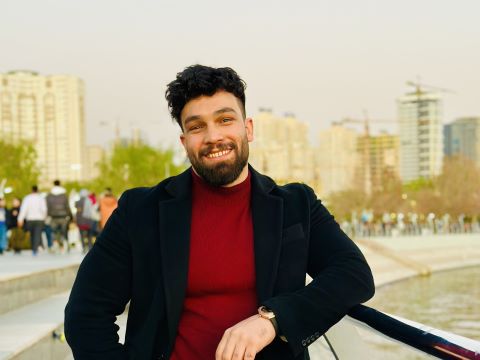
Edris is an Afghan artist, miniature painter, calligrapher, designer, and art educator currently based in Australia.
I was born and raised in Kabul, Afghanistan, and I developed a strong interest in art from a young age. I come from a relatively ordinary family, and I started working with art during my school years.
In 2014, I joined Firozkoh Vocational Institute in Kabul, where I studied traditional Afghan art, miniature painting, calligraphy, and graphic design for three years. During this time, I worked on several practical projects and was recognised as one of the strong students of my class. I also received professional certificates from the City & Guilds London programme.
After finishing my studies in 2017, I started my own small creative studio called Aina-e-Hunar (Mirror of Art). At the same time, I continued my studies in Graphic Design at the Faculty of Fine Arts, Kabul University, and graduated in 2020.
My work includes miniature painting, calligraphy, illustration, mural painting, and design. Over the years, I have taken part in many exhibitions in Kabul, including cultural events and embassies. I also organised and taught art workshops for young artists and people interested in traditional Afghan art.
One of the projects I am most proud of is a large mural I painted at the Australian Embassy in Kabul, which marked 50 years of diplomatic relations between Afghanistan and Australia. I also worked as part of a team on the production of an illuminated silk Qur’an, which was a traditional manuscript art project.
After the changes in Afghanistan, I had to leave my country. I spent some time in Iran and Pakistan, and in January 2026 I arrived in Australia. I am now continuing my art practice here and working on connecting traditional Afghan art with my current experiences.
Edris’ artist statement
My art practice is based on traditional Afghan visual culture, especially miniature painting, calligraphy, illumination, and geometric design.
For me, art is both a skill and a way of keeping cultural memory alive. I have spent many years learning and practicing traditional techniques, and I continue to study and develop them in my own way.
I work with different materials such as gouache, acrylic, oil paint, handmade paper, silk, wood, glass, and leather. I also do mural painting and design work. Among all these, calligraphy, especially Kufic script, is very important in my work. I am interested in its structure, history, and visual power.
In my practice, I try to keep a balance between tradition and my own personal expression. I respect the old rules of miniature and calligraphy, but I also try to explore new ideas, compositions, and visual styles.
The cultural heritage of Afghanistan is a major source of inspiration for me. Many traditional art forms are slowly disappearing, and I see my work as a way to help keep them alive and share them with others.
Migration has also changed my way of thinking. Living away from my home country has made me reflect more on identity, memory, and belonging. These ideas often appear in my work, even when I am not directly showing them.
Through my art, I want to connect the past with the present and share Afghan artistic traditions in a simple and honest way with a wider audience.
About Taif
Taif’s artist statement
My art practice is based on traditional Afghan visual culture, especially miniature painting, calligraphy, illumination, and geometric design.
For me, art is both a skill and a way of keeping cultural memory alive. I have spent many years learning and practicing traditional techniques, and I continue to study and develop them in my own way.
I work with different materials such as gouache, acrylic, oil paint, handmade paper, silk, wood, glass, and leather. I also do mural painting and design work. Among all these, calligraphy, especially Kufic script, is very important in my work. I am interested in its structure, history, and visual power.
In my practice, I try to keep a balance between tradition and my own personal expression. I respect the old rules of miniature and calligraphy, but I also try to explore new ideas, compositions, and visual styles.
The cultural heritage of Afghanistan is a major source of inspiration for me. Many traditional art forms are slowly disappearing, and I see my work as a way to help keep them alive and share them with others.
Migration has also changed my way of thinking. Living away from my home country has made me reflect more on identity, memory, and belonging. These ideas often appear in my work, even when I am not directly showing them.
Through my art, I want to connect the past with the present and share Afghan artistic traditions in a simple and honest way with a wider audience.
About Elia
Elia’s artist statement
My art practice is based on traditional Afghan visual culture, especially miniature painting, calligraphy, illumination, and geometric design.
For me, art is both a skill and a way of keeping cultural memory alive. I have spent many years learning and practicing traditional techniques, and I continue to study and develop them in my own way.
I work with different materials such as gouache, acrylic, oil paint, handmade paper, silk, wood, glass, and leather. I also do mural painting and design work. Among all these, calligraphy, especially Kufic script, is very important in my work. I am interested in its structure, history, and visual power.
In my practice, I try to keep a balance between tradition and my own personal expression. I respect the old rules of miniature and calligraphy, but I also try to explore new ideas, compositions, and visual styles.
The cultural heritage of Afghanistan is a major source of inspiration for me. Many traditional art forms are slowly disappearing, and I see my work as a way to help keep them alive and share them with others.
Migration has also changed my way of thinking. Living away from my home country has made me reflect more on identity, memory, and belonging. These ideas often appear in my work, even when I am not directly showing them.
Through my art, I want to connect the past with the present and share Afghan artistic traditions in a simple and honest way with a wider audience.
About Imeelya
Imeelya’s artist statement
My art practice is based on traditional Afghan visual culture, especially miniature painting, calligraphy, illumination, and geometric design.
For me, art is both a skill and a way of keeping cultural memory alive. I have spent many years learning and practicing traditional techniques, and I continue to study and develop them in my own way.
I work with different materials such as gouache, acrylic, oil paint, handmade paper, silk, wood, glass, and leather. I also do mural painting and design work. Among all these, calligraphy, especially Kufic script, is very important in my work. I am interested in its structure, history, and visual power.
In my practice, I try to keep a balance between tradition and my own personal expression. I respect the old rules of miniature and calligraphy, but I also try to explore new ideas, compositions, and visual styles.
The cultural heritage of Afghanistan is a major source of inspiration for me. Many traditional art forms are slowly disappearing, and I see my work as a way to help keep them alive and share them with others.
Migration has also changed my way of thinking. Living away from my home country has made me reflect more on identity, memory, and belonging. These ideas often appear in my work, even when I am not directly showing them.
Through my art, I want to connect the past with the present and share Afghan artistic traditions in a simple and honest way with a wider audience.
About Jackson
Jackson’s artist statement
My art practice is based on traditional Afghan visual culture, especially miniature painting, calligraphy, illumination, and geometric design.
For me, art is both a skill and a way of keeping cultural memory alive. I have spent many years learning and practicing traditional techniques, and I continue to study and develop them in my own way.
I work with different materials such as gouache, acrylic, oil paint, handmade paper, silk, wood, glass, and leather. I also do mural painting and design work. Among all these, calligraphy, especially Kufic script, is very important in my work. I am interested in its structure, history, and visual power.
In my practice, I try to keep a balance between tradition and my own personal expression. I respect the old rules of miniature and calligraphy, but I also try to explore new ideas, compositions, and visual styles.
The cultural heritage of Afghanistan is a major source of inspiration for me. Many traditional art forms are slowly disappearing, and I see my work as a way to help keep them alive and share them with others.
Migration has also changed my way of thinking. Living away from my home country has made me reflect more on identity, memory, and belonging. These ideas often appear in my work, even when I am not directly showing them.
Through my art, I want to connect the past with the present and share Afghan artistic traditions in a simple and honest way with a wider audience.
Asrin Karimpour
Asrin’s artist statement
My art practice is based on traditional Afghan visual culture, especially miniature painting, calligraphy, illumination, and geometric design.
For me, art is both a skill and a way of keeping cultural memory alive. I have spent many years learning and practicing traditional techniques, and I continue to study and develop them in my own way.
I work with different materials such as gouache, acrylic, oil paint, handmade paper, silk, wood, glass, and leather. I also do mural painting and design work. Among all these, calligraphy, especially Kufic script, is very important in my work. I am interested in its structure, history, and visual power.
In my practice, I try to keep a balance between tradition and my own personal expression. I respect the old rules of miniature and calligraphy, but I also try to explore new ideas, compositions, and visual styles.
The cultural heritage of Afghanistan is a major source of inspiration for me. Many traditional art forms are slowly disappearing, and I see my work as a way to help keep them alive and share them with others.
Migration has also changed my way of thinking. Living away from my home country has made me reflect more on identity, memory, and belonging. These ideas often appear in my work, even when I am not directly showing them.
Through my art, I want to connect the past with the present and share Afghan artistic traditions in a simple and honest way with a wider audience.
Enquire about buying a piece
Get in touch
Email us: creativecompass@ssi.org.au