

About Multicultural Gambling Harm Prevention
Our free, trusted service supports individuals from migrant, refugee, and multicultural backgrounds to overcome the negative effects of gambling.
Our counselling services consider the whole individual. We focus on behaviour change and use culturally sensitive planning to meet the person’s unique situation and needs, including culture, religion, language, and community.
If you or someone you know is having problems with gambling, we can help. Funded by the Victorian Responsible Gambling Foundation, our service is free, confidential and can assist anyone in Victoria experiencing difficulties with gambling.
How we help



For free, confidential support
call 1800 329 192.

Gambling harm can reach far beyond the individual, affecting families, relationships, and communities in lasting ways. In this video, Sunenna shares how her husband’s gambling affected her family, while Richard reflects on his own lived experience with gambling harm. Their stories offer an honest look at the emotional and personal challenges that come with gambling, and highlight the importance of compassion, connection, and support in the journey toward recovery.
Get in touch
If you or someone you know is experiencing negative effects from gambling, call our dedicated gambling support number on 1800 329 192 or email us at gamblingharmprevention@ssi.org.au.
Information in your language
About Families and Early Years Program
Families and Early Years Program is proud to partner with Metro South Health to deliver a community-based antenatal service for eligible newly arrived, refugee, and migrant women living in Logan, Queensland.
The service is facilitated by the SSI Gateway and aims to improve birthing outcomes for babies born in Logan. Evidence shows that a woman who receives care from a Midwife throughout the duration of pregnancy and birth is more likely to have a normal birth of a healthy baby at term, have a more positive experience of labour and birth, be more satisfied with her care, and successfully breastfeed.
We work closely with Midwives to provide wrap-around support to women and families by linking them in with internal and external services for housing, employment, health and financial wellbeing support.
In addition, the Family and early years program includes:



Get in touch
If you would like more information, please speak with your GP about a Families and Early Years Program referral or email acsl.gatewayofficer@ssi.org.au.
SSI Gateway
91 Wembley Road Logan Central, QLD
Monday – Friday 8:30am – 4:30pm
Phone: 07 3412 8222
About RCNC
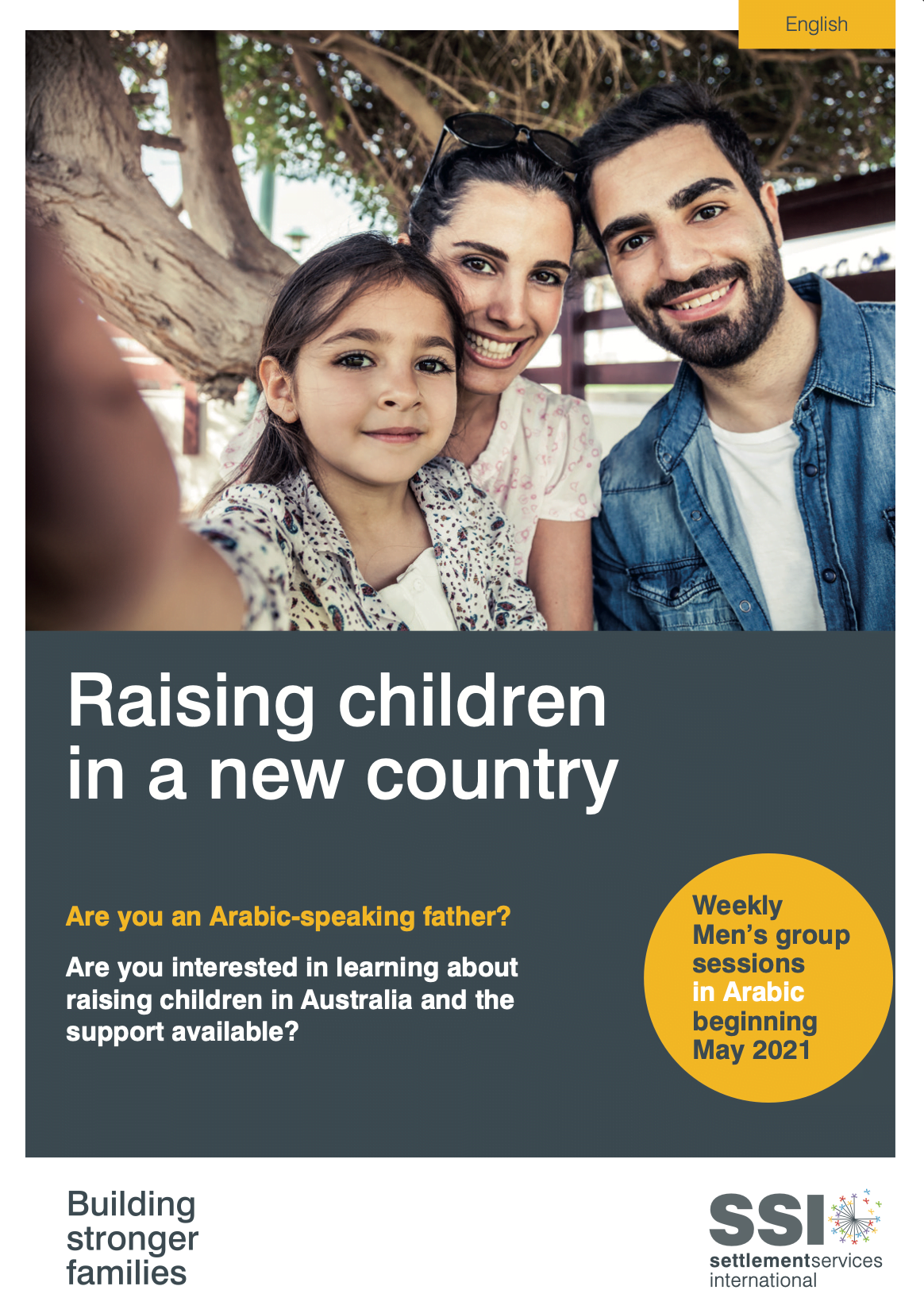
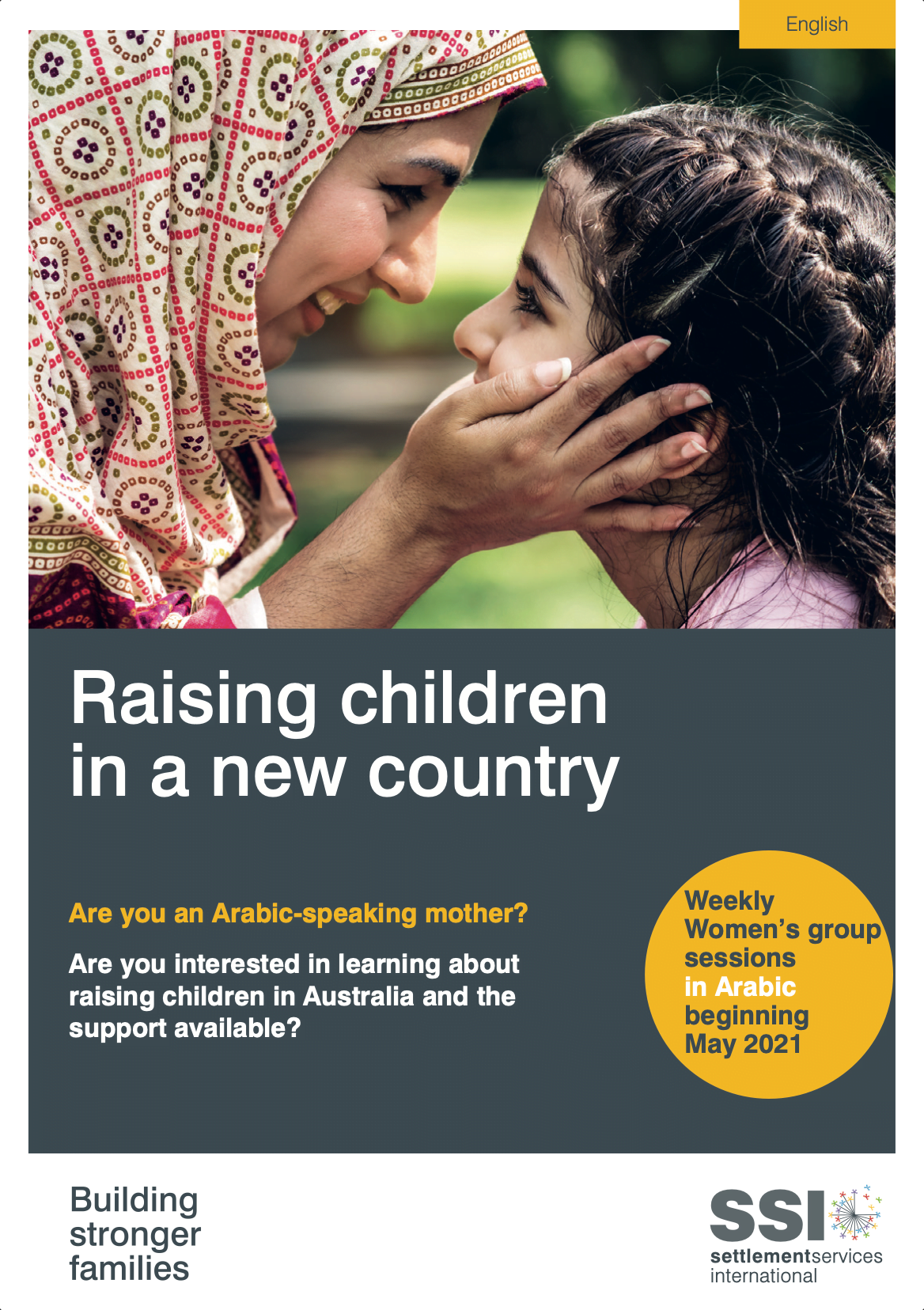
Bringing up children is a challenge for everyone. But raising them in a new country presents a unique set of problems and opportunities. Newcomers to Australia can experience confusion around local laws, conventions and social norms.
SSI’s Raising Children in a New Country program aims to provide parents with a better understanding of childcare at different stages of development, communication and discipline, the child protection system in Australia, and the education system. It is tailored for Tamil and Arabic-speaking parents.
No referral is required to access services. You can book the program by calling us on 02 8799 6700 or emailing us at info@ssi.org.au.
How we help


Resources
Get in touch
No referral is required to access services. You can book the program by calling us on 02 8799 6700 or emailing us at info@ssi.org.au.
About SSI Community Hubs
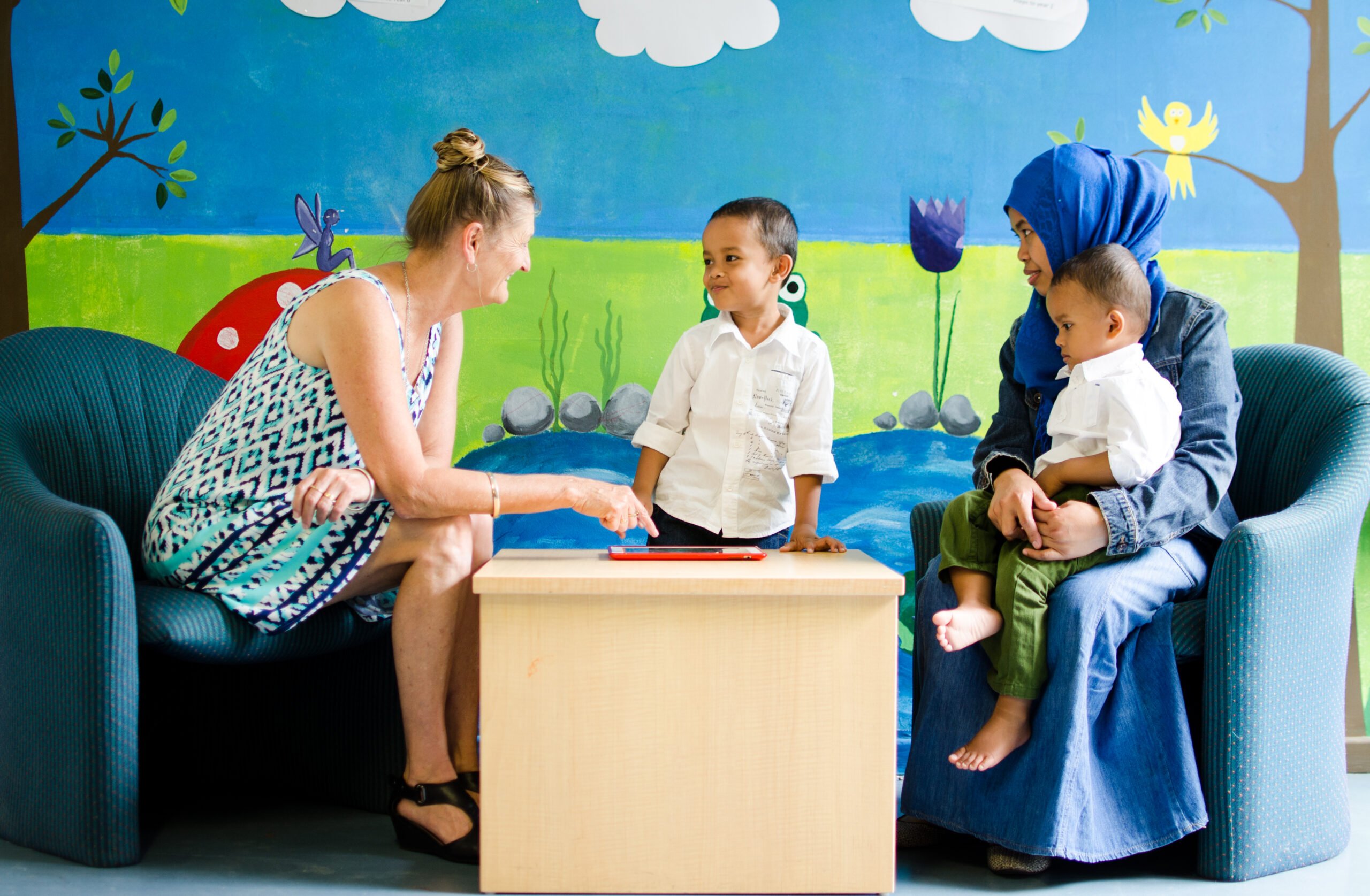
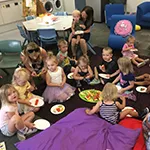
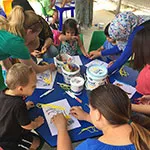
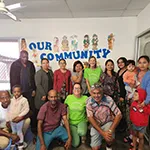
SSI Community Hubs brings local education, health, community, and settlement services together in a familiar and welcoming environment to make it easier for families with young children to access the services and assistance they need. The SSI Hub provides families with a sense of belonging and facilitates the development of friendships and support networks.
How we help



Find us and get in contact
SSI runs ten Hubs in NSW (Blacktown, Parramatta, Cumberland and Coffs Harbour) and ten Hubs in Queensland (Logan and Ipswich).
Each hub offers activities tailored to match the needs of the community, including early childhood support and education, English classes and vocational pathways.
Here’s where to find your nearest SSI Community Hub and how to get in touch.



Queensland
Contact our Hub Coordinator supporting hubs in Ipswich and Logan.
Maribel Marquez
communityhubs@ssi.org.au
0455 999 838
Fernbrooke State School
Ipswich
Queensland
Kruger State School
Ipswich
Queensland
Riverview State School
Ipswich
Queensland
Springfield Lakes State School

Ipswich
Queensland
Staines Memorial College
Ipswich
Queensland
Marsden State School
Logan
Queensland
St Francis College

Logan
Queensland
St Paul’s Catholic Primary School
Logan
Queensland
Woodridge North State School
Logan
Queensland
Woodridge State School
Logan
Queensland
Western Sydney
Contact our Hub Coordinator supporting our hubs in Parramatta, Cumberland and Blacktown.
Asami Iwasaki
communityhubs@ssi.org.au
0403 306 624
Parramatta West Public School
Parramatta
New South Wales
Rydalmere Public School

Parramatta
New South Wales
Granville Public School
Cumberland
New South Wales
Hilltop Road Public School
Cumberland
New South Wales
Westmead Public School
Cumberland
New South Wales
Bert Oldfield Public School
Blacktown
New South Wales
Kings Langley Public School
Blacktown
New South Wales
Coffs Harbour
Contact our Hub Coordinator supporting our hubs in Coffs Harbour.
Lisa Steward
communityhubs@ssi.org.au
0423 796 035
Narranga Public State School
Coffs Harbour
New South Wales
Tyalla Public School

Coffs Harbour
New South Wales
William Bayldon Public School

Coffs Harbour
New South Wales

Every child deserves a home where they feel safe, understood, and celebrated for who they are.
By opening your heart and home as a foster carer, you can provide safety and stability for a child in need.
At SSI, we do more than match children with carers – we create connections that honour culture, identity, and traditions. Because every child deserves to feel at home.
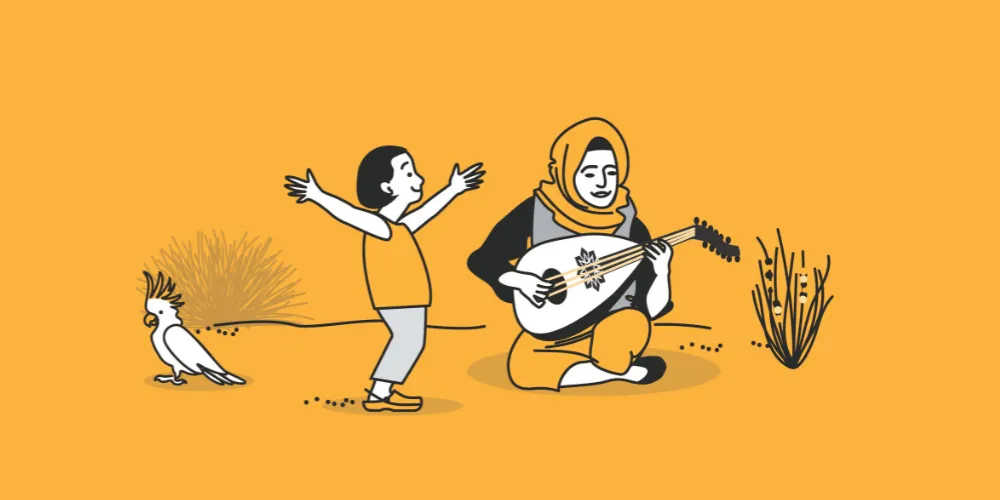
Share your culture or learn about theirs.
Whether you share their heritage or are ready to learn and grow alongside them, what truly matters is your care and commitment to making a positive difference in a child’s life.
How we support you
As an SSI foster carer, you’re never alone on your path to making a difference in a child’s life.
Streamlined onboarding and training
We make the process simple with flexible online training and minimal paperwork.

Tailored support
Our bilingual caseworkers offer personalised care.

24/7 support
Get regular check-ins and access to 24-hour on-call assistance whenever you need it.

Access to financial support
Foster carers receive a carer allowance to help meet the cost of caring for a child.
You can make a lasting difference in a child's life as a foster carer.
For children in care, every foster carer becomes a unique chapter in their story. No matter the length, the time a child is in your care matters.
The stories of these incredible young adults are a testament to the impact that foster carers can have on a child’s life.
Get in touch
SSI operates the Multicultural Child and Family Program in parts of metropolitan Sydney as well as the Hunter region and Central Coast.
NSW
P: 1800 299 447
E: fostercare@ssi.org.au
About SSI Multicultural Foster Care
For over a decade, we have advocated that every child has a right to a safe, happy and permanent home connected to family and community. Our specialty is in connecting children from diverse backgrounds with foster carers who can help them maintain their connection to culture, religion, and language.
We are always looking for a diverse range of foster carers, but you don’t need to be from the same cultural background as a child in order to be a foster carer. What truly matters is your care and commitment to making a positive difference in a child’s life.
Frequently asked questions
Foster care offers children a home while their own family is unable to provide them with a safe or caring home environment. Children in foster care are aged from 0 to 18 years.
Depending on their circumstances, a child may be in foster care for a few days, a few weeks or for many years. Sometimes they may remain permanently in the care of foster carers.
In NSW, there are about 20,000 children not able to live with their birth parents. Of these, about 15% are from a culturally and linguistically diverse (CALD) background.
Many children who need foster care have experienced trauma and various forms of abuse and can’t continue to live with their birth family. Wherever possible, the intention is to get children back living safely with their birth families.
Foster care is required when there are no extended family members or other suitable people to provide immediate or long term care.
When a child has been separated from their family because of ongoing child protection concerns, the Children’s Court and the relevant state government department are involved in making the decisions about children’s care.
There are four main types of foster care:
Respite foster care is regular periodic care. Children are looked after for short periods of time to provide birth parents or foster carers with a break, for example over school holidays or weekends.
Emergency or crisis foster care is required when there is immediate concern for a child’s safety. The duration can be from one night to a few weeks, or until another foster care arrangement is available.
Short-term foster care is required when there is a possibility that the situation that caused a child to be removed from their birth family may be resolved and they will be able to return (called restoration) or until another carer is found who is committed to providing long term care for the child.
Long-term foster care refers to caring for a child who is not expected to return to their birth family, and who will therefore need long-term care and be part of your family.
Becoming a foster carer
Foster carers care for children and young people who can’t live safely with their family. They provide safe and caring homes for these vulnerable children. By providing guidance, support and encouragement, foster carers make a real difference to the lives of children in care. Foster carers are trained, assessed and authorised to provide foster care.
Anyone can apply to become a foster carer as long as they meet the conditions set out below. Applicants must be:
– over 21 years of age
– an Australian citizen or permanent resident
– in good physical and emotional health without any medical condition that may affect their ability to care for a child or young person
SSI recognises that foster carers can have different personal and family circumstances. Foster carers can be:
– single, married or in a de facto relationship
– renting, buying or you may own your home
– working or not working
– a parent or someone who has a strong interest in helping children
Check your eligibility with our quiz!
The important qualities of a foster carer include:
– Empathy and good listening skills
– Perseverance and adaptability when things get tough
– Flexibility, patience and humour
– Ability to provide a safe, loving and caring home environment
– An ability to guide and discipline children without the use of physical punishment
– A willingness to work with other people in the child’s life such as birth parents and caseworkers
– A willingness to support the child to develop a sense of identity that includes their culture, language and religion, where appropriate.
– Be willing to learn and understand the impact of trauma on a child
– Able to balance your family’s needs, finances, interests and supports with the needs of the child
– Happy to participate in meetings and training
If you are interested in becoming a foster carer with SSI please contact us on:
P: 1800 960 976 or 02 8713 9200
E: fostercare@ssi.org.au
You can also check your eligibility and get in touch by completing our quiz.
Once you complete our quiz or get in touch, we will arrange a time to speak with you and your family about foster care, what it involves, and how to apply.
You will be provided with written information about our service and an application form. Once you have gathered the information you need and you decide you want to proceed, the next step will be to submit the application form to us.
You will then be invited to participate in an assessment process that will help us determine whether you can become a foster carer with our service.
The process includes:
– You and all adults in the household will have to complete a Health Check, Police Check, a Working with Children Check and referee checks
– Participating in training (Shared Lives) which covers nine topics and usually takes about 20 hours in total, either on weekends or evening sessions, in person or online
– A series of one on one interviews at your home to focus on your interests, skills, strengths and ability to take on the foster care role.
Being unique and different is part of what makes every one of us special. Every child and their birth family is different. Foster carers make a significant contribution by caring for vulnerable children in need of care and stability. Some children may show signs of stress, worry and uncertainty. Some may seem quiet, others may seem troublesome.
Child abuse causes trauma and harms how a child’s brain and emotions develop and how they learn to behave and react to situations.
Some children may show their anxiety, fear and confusion by not wanting to be a part of a family and withdrawing. Others may show behaviour that could be described as difficult or
challenging such as talking back, being angry, not listening, not eating or sleeping, not being able to regulate their emotions, throwing tantrums or running away.
Some children have never had routine in their lives and will need extra amounts of love, understanding and patience to help them learn new ways of behaving. The longer a child has not had stability and emotional support, the more time they will need to accept a different way of being cared for.
Maintaining or rebuilding relationships between children and their biological parents, siblings and family is continued when it is safe for the child. Many parents struggle to understand their roles when they are not caring for their children and this can raise many emotions including anger, loss, confusion and hope. How carers talk about children’s biological parents will influence how a child sees their family.
It is important that visits are safe, helpful and a good experience. It is also beneficial for children to see their carers have contact with their birth family. It gives them positive messages about people’s ability to communicate despite the situation.
Foster carers receive financial support in the form of a carer allowance. This allowance is to help cover the day-to-day costs of caring for a child and is not considered an income and therefore not taxable. The amount depends on the state or territory, and the age and needs of the child or young person in care.
You can find the latest guidelines on carer allowances for NSW here.
Foster care at SSI
SSI provides foster carers and casework support for all children, with a strong focus on children from culturally and linguistically diverse (CALD) backgrounds.
We deliver a specialist out-of-home care service that provides a culturally appropriate model of foster care for children and young people from CALD backgrounds aged 0-18 years in NSW.
While SSI has a strong focus on recruiting foster carers from CALD backgrounds, we recruit carers from any background if they have a genuine desire to provide a safe and caring home for children.
We are staffed by bilingual case workers and managers with cross cultural and out-of-home care casework skills and knowledge. We also work closely with community organisations, community leaders, women’s groups, religious organisations and other relevant services, in the recruitment and support of foster carers.
At SSI, we believe children in care who are supported to learn about and maintain a connection to their culture, religion and language have better outcomes as they grow up than those who are not supported in this way. These connections help children to understand where they have come from and to develop their sense of belonging and identity.
Helping children stay connected with their ethnic background, language and religion can also help children maintain positive relationships with their birth parents, extended family and community. This is important should children be returned to parental care, and in staying connected into their adult years.
Our service provides:
– General foster care and case management to meet the full needs of the child
– Foster carers from the child’s cultural background where possible
– Bilingual and bicultural case managers
– Cultural care planning to promote connections with their culture, religion, language and community
– Access to counseling and support services for children from refugee backgrounds
SSI Multicultural Foster Care works closely with foster carers to ensure they have the support they need.
A range of support services are available including:
– Carer assessment processes conducted in either English or community languages
– Initial and ongoing training conducted in English or community languages
– A professional caseworker to support you and the child
– Bilingual caseworkers who understand the child’s culture
– Monthly visits and regular phone contact with your caseworker
– Access to 24-hour on-call phone support for crisis situations
– General and culturally specific support groups for example, Vietnamese carers group, Arabic carers group
– Respite foster care
– Financial support to meet the day-to-day cost of caring for the child through a foster care allowance (for NSW carers, please refer to the Department of Communities and Justice website)
– Referrals to a range of support services for you and the child
If you are interested in becoming a foster carer with SSI please contact us on:
NSW
P: 1800 960 976 or 02 8713 9200
E: fostercare@ssi.org.au
About Emergency Relief
A personal or financial crisis can make it hard for a vulnerable individual to pay for the essentials of life. The Department of Social Services funds SSI to provide emergency relief services to people experiencing financial distress or hardship and have limited means or resources.
Forms of support can include food and fuel vouchers, part payment of bills, food parcels and clothing, budgeting assistance, and referrals to other support services. We complete more intensive referrals for people with complex needs.
SSI delivers Emergency Relief in the following regions:
- Ipswich, Queensland
- North Brisbane, Queensland
- Parramatta, New South Wales
- South East Melbourne, Victoria
How we help


Get in touch
Fill in the form below to seek assistance.
About Supporting U
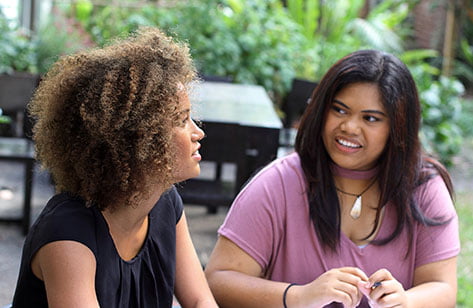
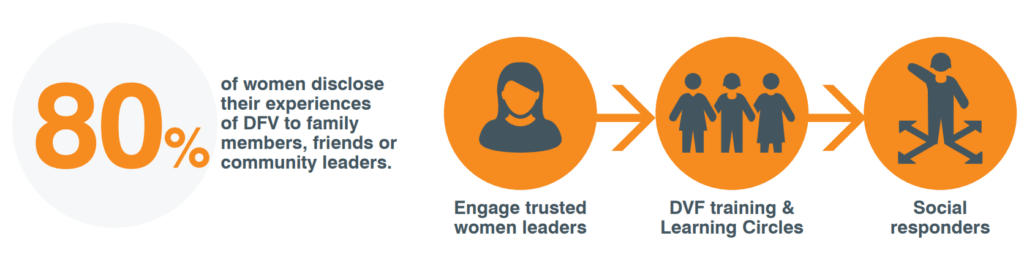
Female leaders from within culturally and linguistically diverse communities represent a powerful tool for change. SSI’s Supporting U program is designed to leverage the strengths of women leaders within Culturally and Linguistically Diverse (CALD) communities.
Under the program, female leaders are trained to act as social responders to drive change and address issues of Domestic and Family Violence (DFV). Sharing their experiences with other leaders, they are trained people of influence who listen to victim-survivors, prioritise their safety and refer them to appropriate services.
How we help

“I’d like to support the elders and priests within my community to gain information and contacts to use in assisting the families who are suffering from domestic and family violence” – Supporting U leader
In My Voice
The Supporting U Project has been successful and far-reaching – creating a network of connected and empowered social responders who will support their communities into the future. To ensure the valuable insights and stories of Supporting U leaders were captured and shared, a series of vignettes were created, called In My Voice.
This project was funded under the COVID-19 Domestic and Family Violence Grant by Women NSW.
Get in touch
If you would like more information about this project, please contact Juliana Nkrumah AM, Project Manager — Domestic & Family Violence:
P: 0488 680 268