

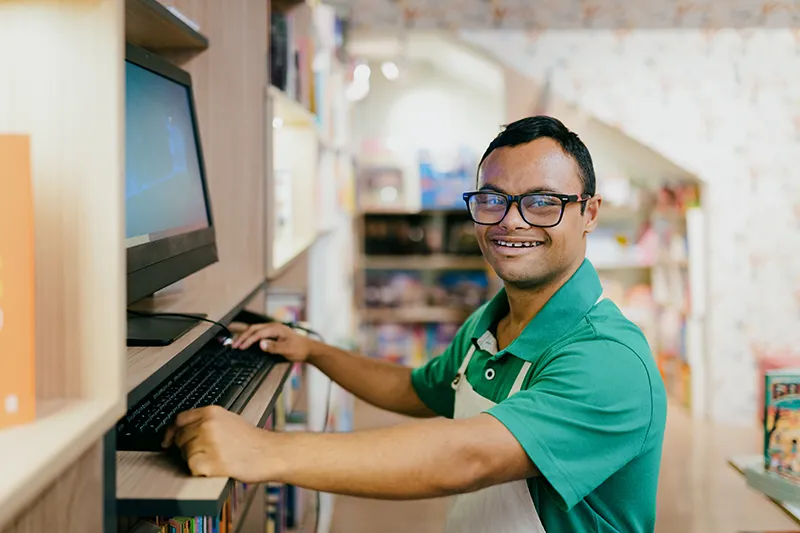
Culturally-responsive employment support for refugees with disability
We provide culturally-responsive employment support for people from refugee backgrounds in NSW, QLD and Victoria living with injury, illness or disability.
With over 25 years of experience offering refugee employment support services and job support for migrants, we help people recognise their skills and build confidence in what they can do.
Who we help
Inclusive Employment Australia has replaced Disability Employment Services.
SSI offers the Inclusive Employment Australia program in NSW, QLD and Victoria. Click here to find our office locations.
To be eligible to receive services with SSI, participants must:
- be an Australian resident or eligible visa holder (protected special category visa, temporary protection visas, or safe haven visas)
- have a disability, injury or health condition
- be between 14 and 67 years of age
- not be studying full-time
- not be working at or above your assessed work capacity.
Participants do not need to receive an Income Support Payment to access support.
Inclusive Employment Australia is funded by the Australian Government Department of Social Services.
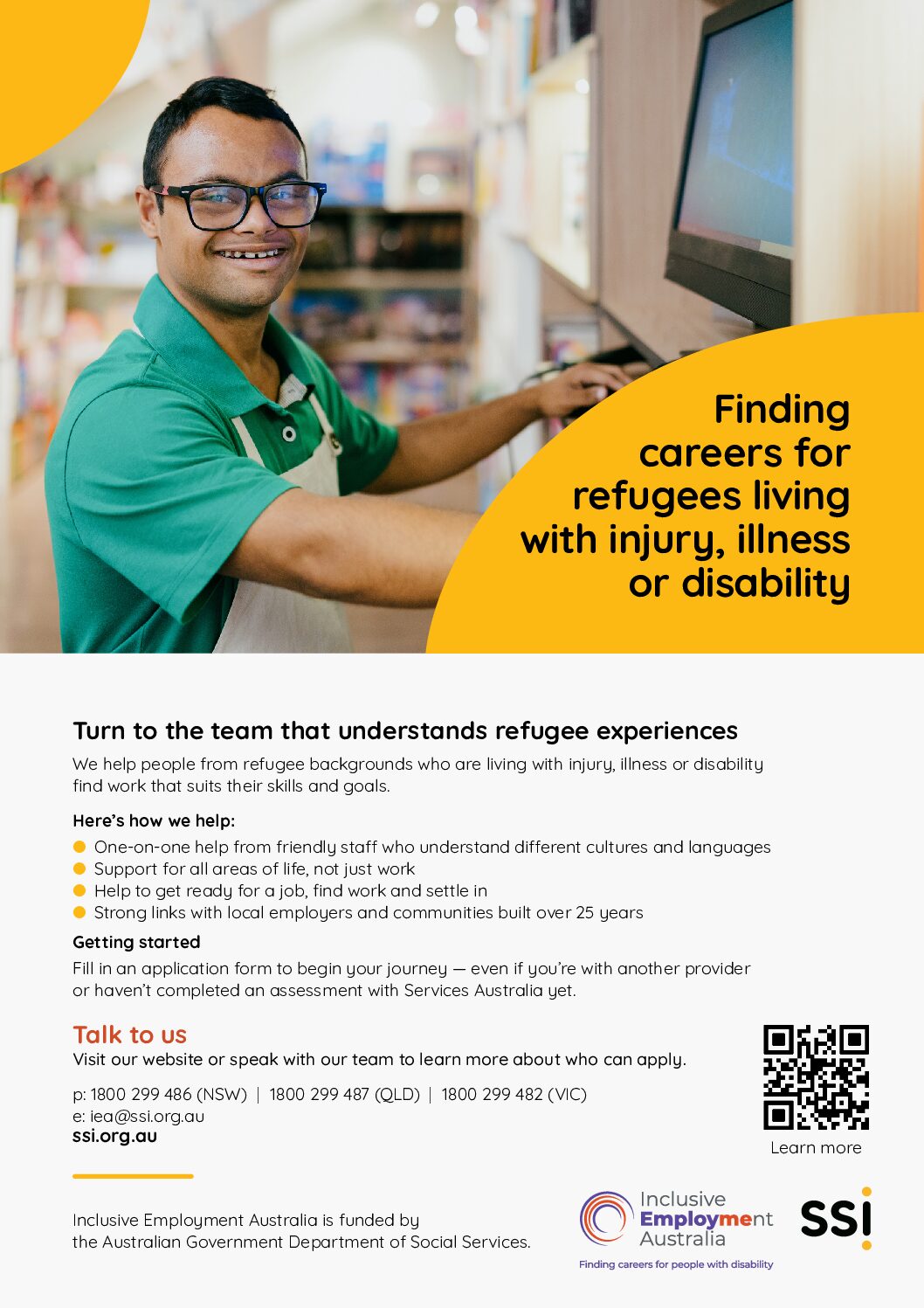
Download information flyer/poster
Where can you find us?
NSW
Ashfield
First Tuesday of every month
9am – 4pm
Level 2, 158 Liverpool Rd, Ashfield NSW 2131
1800 299 486
iea.nsw@ssi.org.au
Auburn
Monday – Friday
9am – 5pm
Suite 405, Level 4/39 Queen St, Auburn NSW 2144
1800 299 486
iea.nsw@ssi.org.au
Bankstown
Monday – Friday
9am – 5pm
Level 2, 462 Chapel Rd, Bankstown NSW 2200
1800 299 486
iea.nsw@ssi.org.au
Bonnyrigg
Wednesday
9am – 4pm
2 Wall Pl, Bonnyrigg NSW 2177
1800 299 486
iea.nsw@ssi.org.au
Burwood
Monday and Wednesday
10am – 4pm
2 Conder St, Burwood NSW 2134
1800 299 486
iea.nsw@ssi.org.au
Cabramatta
Monday – Friday
9am – 5pm
Suite 3, Level 1 Dutton Plaza Office, 8 Dutton Ln, Cabramatta NSW 2166
1800 299 486
iea.nsw@ssi.org.au
Campbelltown
Tuesday, Wednesday and Thursday
10am – 4pm
Suite 2 Level 6, 138 Queen St, Campbelltown NSW 2560
1800 299 486
iea.nsw@ssi.org.au
Campsie
Monday and Friday
10am – 4pm
Level 2, 59-63 Evaline St, Campsie NSW 2194
1800 299 486
iea.nsw@ssi.org.au
Fairfield
Monday – Friday
9am – 5pm
7 William St, Fairfield NSW 2165
1800 299 486
iea.nsw@ssi.org.au
Lakemba
Tuesday, Wednesday and Thursday
10am – 4pm
194-198 Lakemba Rd, Lakemba NSW 2195
1800 299 486
iea.nsw@ssi.org.au
Liverpool
Monday – Friday
9am – 5pm
Level 1, 45-47 Scott St, Liverpool NSW 2170
1800 299 486
iea.nsw@ssi.org.au
Marrickville
Tuesday and Thursday
10am – 4pm
176 Marrickville Rd, Marrickville NSW 2204
1800 299 486
iea.nsw@ssi.org.au
Merrylands
Tuesday, Wednesday and Thursday
9am – 4pm
12/254 Pitt St, Merrylands NSW 2160
1800 299 486
iea.nsw@ssi.org.au
Miller
Monday – Friday
9am – 5pm
C02-90 Cartwright Av, Miller NSW 2168
1800 299 486
iea.nsw@ssi.org.au
Parramatta
Tuesday
10am – 4pm
Level 19, 60 Station St East, Parramatta NSW 2150
1800 299 486
iea.nsw@ssi.org.au
Wetherill Park
Tuesday and Thursday
10am – 4pm
Suite 105/447 Victoria St, Wetherill Park NSW 2164
1800 299 486
iea.nsw@ssi.org.au
QLD
Beenleigh
Monday – Friday
9am – 5pm
Level 1, 110-112 George St, Beenleigh QLD 4207
1800 299 487
iea.qld@ssi.org.au
Chermside
Monday, Tuesday and Wednesday
10am – 4pm
Westfield Shopping Centre, Level 2, Corner Gympie & Hamilton Rd, Chermside QLD 4032
1800 299 487
iea.qld@ssi.org.au
Goodna
Monday – Friday
9am – 5pm
9 William St, Goodna QLD 4300
1800 299 487
iea.qld@ssi.org.au
Ipswich
Tuesday and Thursday
9am – 4pm
Level 3, 16 East St, Ipswich QLD 4305
1800 299 487
iea.qld@ssi.org.au
Kingston
Wednesday
9am – 4pm
558 Kingston Rd, Kingston QLD 4114
1800 299 487
iea.qld@ssi.org.au
Logan Central
Monday – Friday
9am – 5pm
91 Wembley Rd, Logan Central QLD 4114
1800 299 487
iea.qld@ssi.org.au
Moorooka
Tuesday
9am – 4pm
1/8 Mayfield Rd, Moorooka QLD 4105
1800 299 487
iea.qld@ssi.org.au
Sunnybank
Monday – Friday
9am – 5pm
Shop 4, 397 Hellawell Rd, Sunnybank QLD 4109
1800 299 487
iea.qld@ssi.org.au
Toowoomba
Tuesday, Wednesday and Thursday
10am – 3pm
123 Margaret St, Toowoomba QLD 4350
1800 299 487
iea.qld@ssi.org.au
Upper Mount Gravatt
Tuesday, Wednesday and Thursday
9am – 4pm
Shop 3B, 2092 Logan Rd, Upper Mount Gravatt QLD 4122
1800 299 487
iea.qld@ssi.org.au
VIC
Broadmeadows
Tuesday, Wednesday and Thursday
9am – 4pm
Level 2, Building A, 61 Riggall St, Broadmeadows VIC 3047
1800 299 482
iea.vic@ssi.org.au
Cheltenham
Monday – Friday
9am – 5pm
Level 2, 11 Chesterville Rd, Cheltenham VIC 3192
1800 299 482
iea.vic@ssi.org.au
Cranbourne
Monday , Wednesday and Friday
9am – 4pm
156 Sladen St, Cranbourne VIC 3977
1800 299 482
iea.vic@ssi.org.au
Croydon
Tuesday
9:30am – 4pm
5 Civic Square, Croydon VIC 3136
1800 299 482
iea.vic@ssi.org.au
Epping
Monday, Wednesday and Friday
10am – 4pm
Unit 16, 26-38 Miller St, Epping VIC 3076
1800 299 482
iea.vic@ssi.org.au
Mill Park
Thursday
9:30am – 4pm
11 Mill Park Dr, Mill Park VIC 3082
1800 299 482
iea.vic@ssi.org.au
Noble Park
Monday – Friday
9am – 5pm
G07/127 Chandler Rd, Noble Park VIC 3174
1800 299 482
iea.vic@ssi.org.au
Richmond
Monday, Wednesday and Friday
10am – 4pm
Suite 106, 91-95 Murphy St, Richmond VIC 3121
1800 299 482
iea.vic@ssi.org.au
Ringwood
Monday, Wednesday and Friday
10am – 4pm
Unit 5, 45-51 Ringwood St, Ringwood VIC 3134
1800 299 482
iea.vic@ssi.org.au
Sunshine
Monday – Friday
9am – 5pm
2 Devonshire Rd, Sunshine VIC 3020
1800 299 482
iea.vic@ssi.org.au
Werribee
Monday – Friday
9am – 5pm
Suite 10, Level 1, 75 Watton St, Werribee VIC 3030
1800 299 482
iea.vic@ssi.org.au
What participants will receive
Support is available to people whether they are thinking about starting work or already have a job and need some help. Support is also available for those who would like to volunteer. They can choose the type of support that suits them from the options below.

Help with job-readiness
- Explore employment goals
- Identify and get help with all types of barriers, not just work-related
- Access training and activities to build your skills
- Attend job preparation workshops and forums
- Access to educational institutions, community organisations and other support (including refugee-specific community linkages)

Help finding a job
- Support finding jobs that align with career ambitions, goals, previous experience, skills and work capacity
- Prepare for interviews and boost confidence
- Access to our network of employers
- Help getting overseas qualifications recognised
- Get the job!

Help in the workplace
- Access to support and training at different stages of employment, including workplace integration, onboarding and on-the-job training
- Address emerging challenges
- Support accessing transport, tools, licensing, and other needs
- Making sure the workplace is comfortable, culturally sensitive and supportive
Why choose SSI?
Finding and keeping a job can be especially hard for newly arrived refugees with disability. Language barriers, health and trauma, digital literacy, transport, and limited support networks often make it difficult to access mainstream services like the NDIS.
At SSI, we understand these challenges — and we know how to help overcome them. Since 2018, we’ve delivered Disability Employment Services (DES) with approaches tailored for refugees, including:
- Bilingual and culturally competent staff who understand refugee journeys
- Strong connections with refugee communities, leaders and services
- Personalised support that respects individual needs and lived experience
- Holistic help that goes beyond just job placement, for example, language, housing, financial aid and physical and mental health supports

Staff

Strong connections

Personalised support

Holistic help
Our track record shows the difference: We assisted over 11,600 participants between 2017 and 2024 into employment, education pathways, obtaining overseas skills and qualification recognition, and referrals into wrap-around and support services.
By focusing on refugee participants, SSI offers a culturally safe employment program, that is trusted and proven — giving people the best chance to succeed in the workforce and build a bright future.
What makes us different

We have dedicated teams who work closely with participants, employers and communities — each with a specific focus to help people get ready for work, support employers to recruit, and build strong community links.
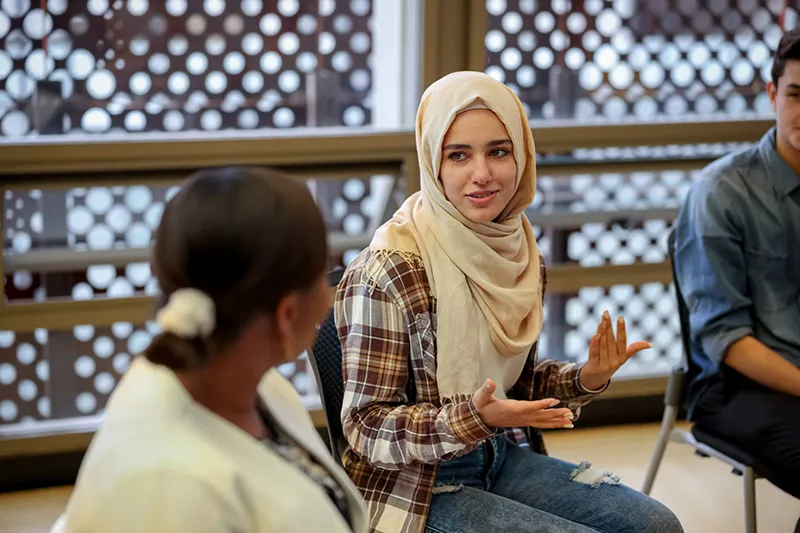
Over more than 25 years, we’ve built strong relationships and trusted networks within communities. Access to our range of services and deep community connections mean participants receive complete support for every aspect of life.
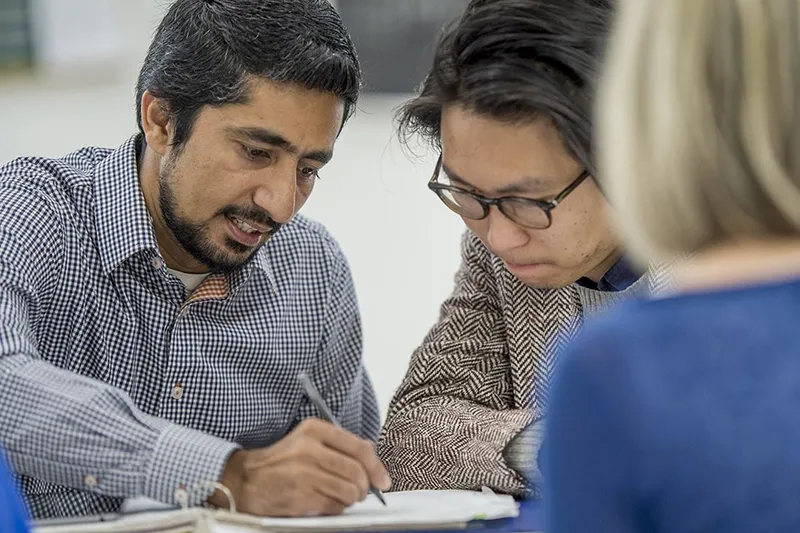
Our staff are trauma-informed and have received cultural responsiveness training. This means they understand how past experiences and culture can shape a person’s needs and goals.
How to get started
To begin the journey with us, please fill in the application form.
You can do this even if the person hasn’t completed an employment assessment with Services Australia yet or if they are with another provider.
Answers to questions you might have
What is the Inclusive Employment Australia (IEA) program?
Inclusive Employment Australia (IEA) is a federal program that helps people with disability, injury or health conditions prepare for work, find suitable employment, and maintain it over time. It offers inclusive employment for people with injury or illness.
Who is eligible for the Inclusive Employment Australia program?
To access IEA services, individuals generally need to meet the general eligibility criteria, unless they qualify under a special eligibility pathway.
General eligibility criteria include:
- Having a current and valid ESAt (Employment Services Assessment) showing a disability, injury or health condition that impacts work capacity.
- Having baseline work capacity (with intervention) under 30 hours per week.
- Being an Australian resident or holding an eligible visa (e.g. Australian citizen, permanent resident, Special Category Visa, Safe Haven Enterprise Visa).
- Being of working age (at least 14 years old and below Age Pension qualifying age).
- Not studying full time (unless special criteria apply).
- Not already working in open employment at or above the assessed employment benchmark.
Special eligibility pathways allow certain groups to access IEA even if they do not fully meet the general criteria. These include Eligible School Leavers, DSP recipients with a prior ESAt, pre-release prisoners, and some NDIS participants under specific conditions.
What is the ESAt / JCA and why is it important?
The ESAt (Employment Services Assessment) or JCA (Job Capacity Assessment) is conducted through Services Australia to assess a person’s work capacity, identify barriers, and determine the most suitable employment service, including Inclusive Employment Australia.
Eligibility for Inclusive Employment Australia generally depends on having a current and valid ESAt.
Can I register directly with an Inclusive Employment Australia provider (not through Services Australia)?
Yes. Some providers allow direct registration, meaning individuals can approach them directly rather than being referred through Services Australia. However, general or special eligibility criteria must still be met.
What kinds of supports and services does Inclusive Employment Australia provide?
Inclusive Employment Australia offers a range of tailored supports, including:
- Preparing for work (skill development, résumé building, interview support)
- Finding work that aligns with individual abilities and goals
- On-the-job support, mentoring and coaching
- Workplace adjustments (assistive technology, flexible hours, modifications)
- Career development and ongoing support as needed
What is the Employment Assistance Fund (EAF)?
The Employment Assistance Fund (EAF) helps pay for workplace adjustments, assistive equipment, modifications, and Auslan interpreting to ensure individuals can work effectively. The fund can be accessed by either the employee or employer.
Can I join Inclusive Employment Australia if I’m not on Centrelink?
Yes. Under the Inclusive Employment Australia design, individuals who are not receiving income support may volunteer into the program, provided they meet the eligibility criteria.
What is SSI’s role in Inclusive Employment Australia?
SSI is a provider for the Inclusive Employment Australia program in selected regions of NSW, QLD and Victoria. We bring specialist experience, particularly in working with people from refugee and migrant backgrounds, to deliver tailored, culturally responsive and community-connected employment services, and trauma-informed job support.
What documentation or proof do I need to show to be eligible for Inclusive Employment Australia?
When registering or commencing with an Inclusive Employment Australia provider, you must provide evidence such as identity documents (e.g. driver’s licence or passport), medical or functional reports, ESAt results, or proof of special eligibility (where applicable).
How long can I receive support under Inclusive Employment Australia?
Support is not limited by a fixed time period. Participants can continue receiving services as long as necessary to achieve their employment goals, subject to ongoing eligibility and program rules.
What happens if my circumstances change while I am with the Inclusive Employment Australia program (e.g. work capacity improves or employment begins)?
If circumstances change, the provider will review your needs and adjust the level or phase of support accordingly. Once commenced, participants generally do not need to requalify eligibility on an ongoing basis.
Who can be contacted for more detailed eligibility advice or to check qualification for the Inclusive Employment Australia program?
For detailed eligibility advice, you can contact Services Australia, your local IEA provider (such as SSI in your area), or review the official IEA guidelines on the Department of Social Services website.
Get help like
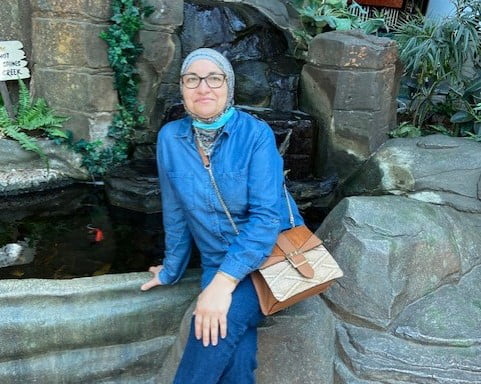
Jana
who struggled to find work that fit her needs until she received personalised support and encouragement from SSI. She has now secured her ideal job in the care industry.
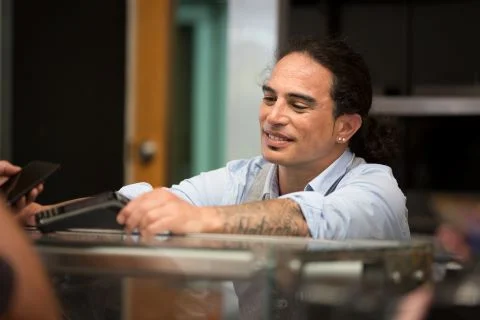
Omar
who wanted to work in retail and study but faced challenges due to living with schizophrenia and an intellectual disability. We helped him with training and securing a job at a supermarket, where he has thrived and achieved his goal of becoming a store manager.
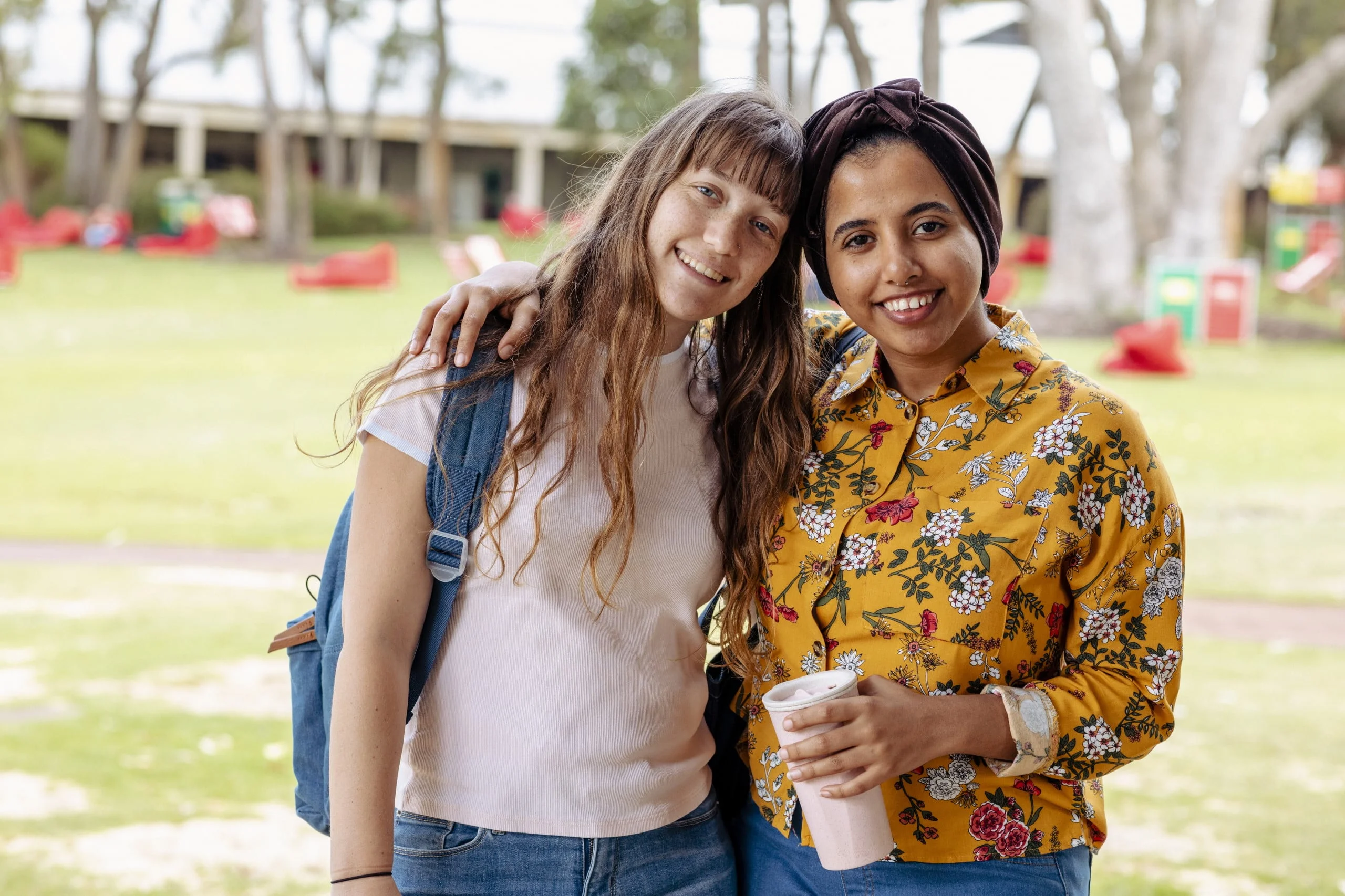
Sara
who struggled to find fulfilling work due to her bipolar affective disorder and unfamiliarity with the Australian workforce. SSI recognised her skills and helped her find a job where she uses her lived experience to assist others find work.
Start the journey now
Fields with an * are required.
Get in touch
SSI offers the Inclusive Employment Australia program in NSW, Queensland and Victoria.
P: 1800 299 486 (NSW)
P: 1800 299 487 (QLD)
P: 1800 299 482 (VIC)

You could make a world of difference in a child’s life as a kinship or foster carer
When children cannot live with their parents, they need care that is safe, supportive, and connected to their family and culture.
Wherever possible, children are placed with family (kin).
When that’s not possible, we look to community members who can provide a culturally appropriate home.
Our approach
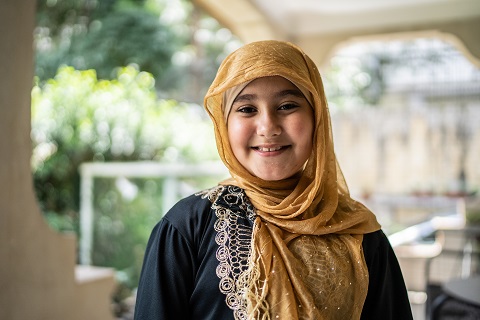
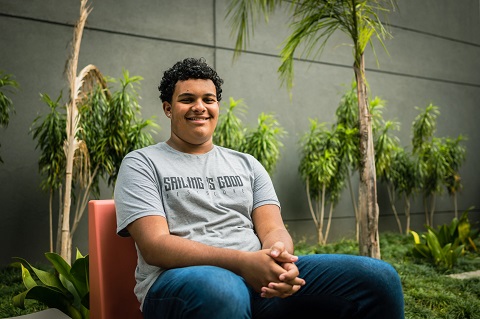
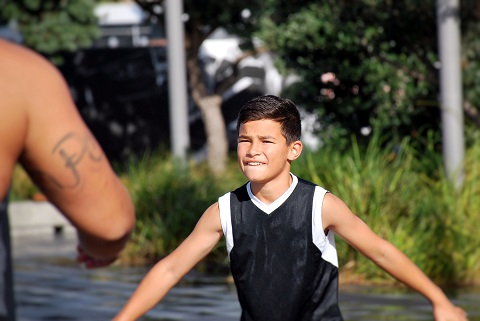
Children thrive when they are supported to learn about and maintain their culture, language and religion. This helps them:
What is kinship care?
Kinship carers are approved to provide care in their own homes for a child or young person they are related to, or who knows them as part of their extended family or community. A kinship carer may be:
- A grandparent
- An aunt or uncle
- Another relative
- A close family friend
- For children from culturally and linguistically diverse (CALD) communities, kinship care may also include someone who is known to the child and shares the child’s community, culture, or language group.
SSI’s Multicultural Family Based Care Program works with and supports kinship and foster carers in Brisbane, Logan and Ipswich.
What is foster care?
- Foster carers are approved to provide care in their own home for children and young people who are not related to them biologically.
- This care can be short-term or long-term and is supported by a service provider – in this case, SSI.
Why become a kinship or foster carer?
Becoming a carer is a meaningful way to make a lasting difference in a child or young person’s life. As a kinship or foster carer, you’ll be supported every step of the way with:
- A chance to change a life – Provide safety, stability, and connection for a vulnerable child or young person.
- Ongoing support and training – Access tailored training programs and in-home assistance to help you feel confident in your role.
- Services for children in your care – Children can benefit from early intervention programs delivered through local community hubs.
- Specialist cultural guidance – Receive support from an organisation with expertise in CALD communities, ensuring culturally safe and sensitive care for both you and the children you support.
What we do
At SSI we believe every child deserves safety, belonging, and the chance to stay connected to their family, culture, and community.
The Multicultural Family Based Care Program supports children and young people who cannot live at home by:

Providing safe, culturally responsive kinship and foster care

Recruiting, training, and supporting carers from diverse cultural backgrounds

Working with families to keep children connected to their identity, language, and community
When children need to be in out of home care for their safety and wellbeing, the best outcome for them is to be placed with family wherever possible. If this isn’t possible, we help connect them with carers from their cultural community.
We also support families through a process called family mapping, which helps identify relatives or culturally appropriate carers who can provide children with stability while maintaining their important connections.
By strengthening family and community ties, this program helps children and young people grow up with love, stability, and a strong sense of identity.
Get in touch
If you’re interested in becoming a kinship or foster carer, or simply want to learn more:
Call us on 0466 252 298
Email us at mfbc.logan@ssi.org.au

About SHER
Safe, Healthy and Empowered Relationships (SHER) is a Domestic and Family Violence behaviour intervention program for men who speak Dari, Swahili, Samoan and Karen, and are living in Logan, Ipswich, Brisbane, Gold Coast or Moreton Bay.
The goal of this program is to increase safety for women and children by providing men an opportunity to take accountability for their actions recognising the harm their violence and behaviour choices are having on family.
This program helps you:
- Build effective ways to handle difficult situations without conflict
- Take responsibility for your actions and impact on others
- Build healthy family relationships as a father and husband
How we can help
This program is for men who:
- come from an Afghan Dari, Swahili, Samoan and Karen speaking backgrounds living in Logan, Ipswich, Brisbane, Ipswich, Gold Coast, or Moreton Bay
- are concerned about how their behaviour affects their family
- are ready to make positive changes in their relationships
The SHER program can help to:
- Understand the difference between unhealthy and healthy relationships
- Build new ways to handle difficult situations
- Take accountability for your actions to build a safer home for your family
- Build better connections with those you care about
Program structure
Individual support phase
- One-hour weekly sessions
- Private discussions with a skilled bi-cultural workers
- Opportunity to discuss your specific situation
- Prepare for group work in a comfortable, private setting
- Explore new perspectives on family relationships
- Build strategies for creating a safer home environment
Group program phase (16 weeks)
- Weekly sessions
- Closed group format (same participants throughout the program)
- Learn from and support other men in similar situations
- Develop practical skills for positive change
Sessions take place every Thursday evening for 16 weeks, 6 – 8pm commencing April 2025
Gould Adams Community Centre, 558-662 Kingston Road, Kingston
Getting help
If you or someone is in immediate danger, please call Triple Zero (000) for emergency services.
If you are subjected to or impacted by sexual violence, know someone who is, or are triggered by this content and would like to access support, please contact:
- 1800 RESPECT – Call 1800 737 732, text 0458 737 732, chat online or video call via their website for confidential domestic, family and sexual violence counselling information and support services
- DV Connect – Call 1800 811 811 for immediate support with crisis transport and accommodation in QLD
- Lifeline – Call 13 11 14
- 99 Steps – 07 3412 8282 or 99steps@ssi.org.au for women from CALD backgrounds living in Logan/Beenleigh experiencing DFV. Support includes information, advice, case work support and referral

Program Update: Temporary pause on Expressions of Interest
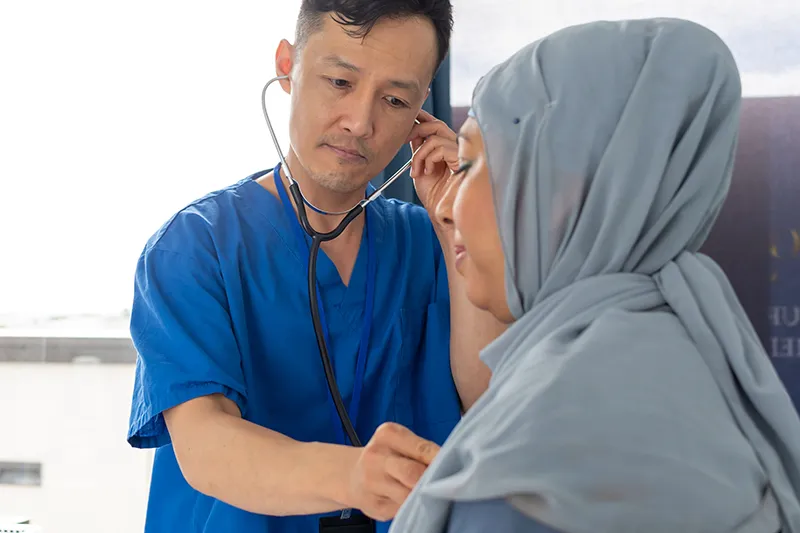
Due to a high volume of applications, the Health Support Navigation Service (HSNS) will temporarily pause new Expressions of Interest (EOI’s) from 2 February. The EOI form will reopen on 4 May when new referrals will resume. This short pause will allow our team to focus on supporting people who have already applied, ensuring we continue to provide timely, person-centred assistance without extended wait times. We appreciate your understanding and we are grateful to be supporting so many community members who need help navigating the healthcare system.
About Health Support Navigation Service
The service supports individuals from CALD and refugee populations, and those who are homeless or at risk of homelessness to have better access to primary health care in South Western Sydney Region
There is a critical need for improved service navigation to support better primary healthcare outcomes for CALD, refugee, and homeless communities. Many face barriers such as limited culturally appropriate services, low health literacy, stigma, and financial or mental health challenges. With the right care and support, people can more easily navigate the system and access the healthcare they need.
Who is this for?
People who are eligible for the service include those who:
- are residents of the South Western Sydney (SWS) Local Government Areas (LGA’s) of: Bankstown-Canterbury, Fairfield, Liverpool, Campbelltown, Camden, Wollondilly, Wingecarribee.
- are refugees or asylum seekers
- are experiencing homeless or are at risk of homelessness
- are from culturally and linguistically diverse backgrounds who were born overseas and usually speak a language other than English at home
What we do
Eligible participants receive:

Short term goal-focused support services provided through a navigator

Access to language translation and transport services depending on individual needs
Connection to community health services such as GPs, specialists, and other healthcare professionals , and referrals to local community health supports across the 7 eligible LGA’s

Individualised care plans and personal support service

Assistance with the application of a Medicare card for eligible clients

Access to financial support to cover gaps fees and approved treatment costs
Individualised care plans and coordination tailored to clients specific health needs for a maximum of three months

Access to preventative health care
Type of medical services costs covered
- GP visits
- Health checks
- Pathology
- Preventative health activities such as vaccinations, cancer screening and STI/BBV testing
- Wound care
- Allied health such as speech therapy and podiatry
- Mental health psychology and/or psychiatry visits
- Approved medical aids
- Medical form support
We’re here to help

Our service navigators are culturally competent and work professionally and respectfully to deliver trauma- informed care and have qualifications or experience in healthcare.

We provide a person-centered approach to providing health services that respect and integrates everyone’s cultural and linguistic background into care coordination
We work closely with other local service providers, including healthcare and social service organisations, to make appropriate referrals for our clients prior to clients being exited from our program
Partner with us
We’d love to work with your organisation. Partner with us to bring your expertise to those who need it most.
Whether you’re a community health centre, GP clinic experienced with homeless populations, CALD and refugee community organisation, multicultural group, faith leader, or specialist service provider, we invite you to join us on this initiative.
- Co-host information sessions within your community
- Address the multifaceted needs of individuals and families within the target populations by facilitating smooth client transfers and referrals
- Provide your expertise to contribute to a robust referral network to ensure clients can access holistic support – from a range of services, including:
- CALD and refugee organisations
- Refugee and asylum seeker support services
- Homelessness support and services
- Community health providers and GPs
- Community and faith groups
Contact us at clientservices@ssi.org.au for more information.
Get in touch
p. 1800 298 474
Where we are
For clients and communities in Campbelltown, Camden, Wingecarribee, and Wollondilly LGAs, please contact us at clientservices@ssi.org.au or call 1800 298 474 to get direct support and guidance
Address: 2/462 Chapel Road, Bankstown NSW 2200, Australia.
Daily, Monday – Friday
9:00am – 4:30pm
Address: 7 William St, Fairfield NSW 2165, Australia
Every Thursday
9:00am – 4:30pm
Address: 1/45-47 Scott Street, Liverpool NSW 2170, Australia
Postal address:
PO Box 152, NSW 1871, Liverpool
Meetings must be booked in advance
Address: 6 Harper Cl, Tahmoor NSW 2573
Wednesday Week 3 monthly
10:00am – 1:00pm
Address: 6 Harper Cl, Tahmoor NSW 2573
Wednesday Week 3 monthly
10:00am – 1:00pm
Address: Dr James Pirie Community Centre, 124 Bigge St, Liverpool NSW 2170
Every second and fourth Wednesday fortnightly.
Improving safety outcomes for migrant and refugee women and children
The Train, Engage, Connect, Support (TECS) project seeks to engage and build the capacity of multicultural community and faith leaders across Australia to prevent and respond to family, domestic and sexual violence (FDSV), in collaboration with specialist services.
This is a collaborative initiative, which recognises the importance of mobilising communities to address FDSV – a universal issue. Faith and community leaders supporting multicultural communities share our vision of respect, safety, and equality for all and have a unique and critical role to play as social responders. The TECS project has developed learning resources to support leaders to take action to prevent and respond to FDSV in their communities.
Fostering a supportive and inclusive environment is crucial—one where victim survivors of FDSV feel empowered to seek help, and individuals who use FDSV are held accountable for their actions.
The TECS project is supported by the Australian Government under the National Plan to End Violence Against Women and Children 2022-2032. The project is delivered by SSI in partnership with the Federation of Ethnic Communities’ Councils of Australia (FECCA).
Safer, stronger communities free from violence: our approach
In collaboration with community leaders, faith leaders, people from migrant and refugee communities with lived experience, and key sector stakeholders, the project involves:

National consultations with nearly 300 faith and community leaders, victim survivors and sector stakeholders across all states and territories.
Collaboration with faith and community leaders, victim survivors and sector stakeholders to co-design and deliver an evidence-based, culturally responsive national training package for faith and community leaders.

Facilitation of learning circles to support leaders to provide feedback, connect and share experiences following completion of the training.
Taking action to keep multicultural communities safe: Faith and community leaders training
The TECS project’s co-designed learning materials support community and faith leaders from migrant and refugee communities to prevent, identify and respond to FDSV. These resources are available to community and faith leaders across Australia who want to build their skills in understanding FDSV and support their communities to address these issues.
The training package includes:
- An interactive e-learning course to increase faith and community leaders’ confidence to understand and shape their role in recognising FDSV, responding appropriately, and referring victim-survivors to appropriate services. Includes vignettes featuring diverse community and faith leaders to highlight the role leaders can play in responding to FDSV.
- A conversation guide to help leaders recall core information from the e-learning and have conversations about FDSV in their communities. This is available within the e-learning.
- Opportunity to join a learning circle where you can connect with other leaders who have also completed this training. The registration link for this is available within the e-learning.
Certificates are available for leaders who complete the e-learning course.
Download stakeholder engagement toolkit
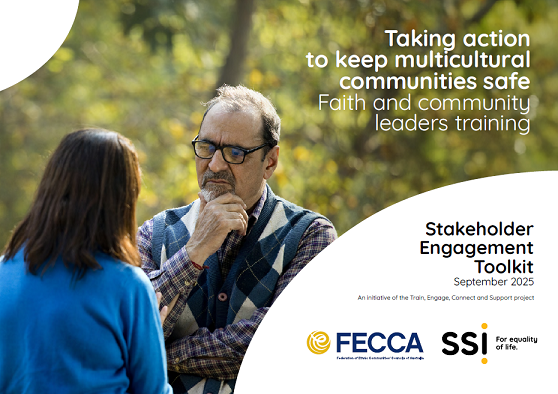
This toolkit helps to promote our free training for community and faith leaders to learn how to safely support people experiencing family, domestic, and sexual violence in their community.
Download promotional flyer/poster
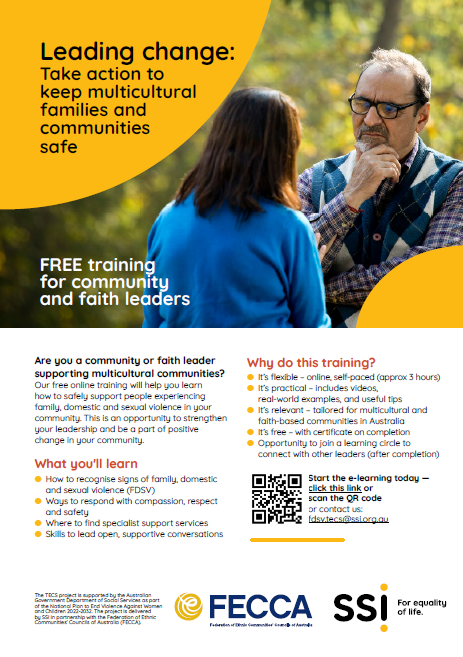
This flyer/poster is available to help promote our free training for community and faith leaders supporting multicultural communities.
Download policy insights
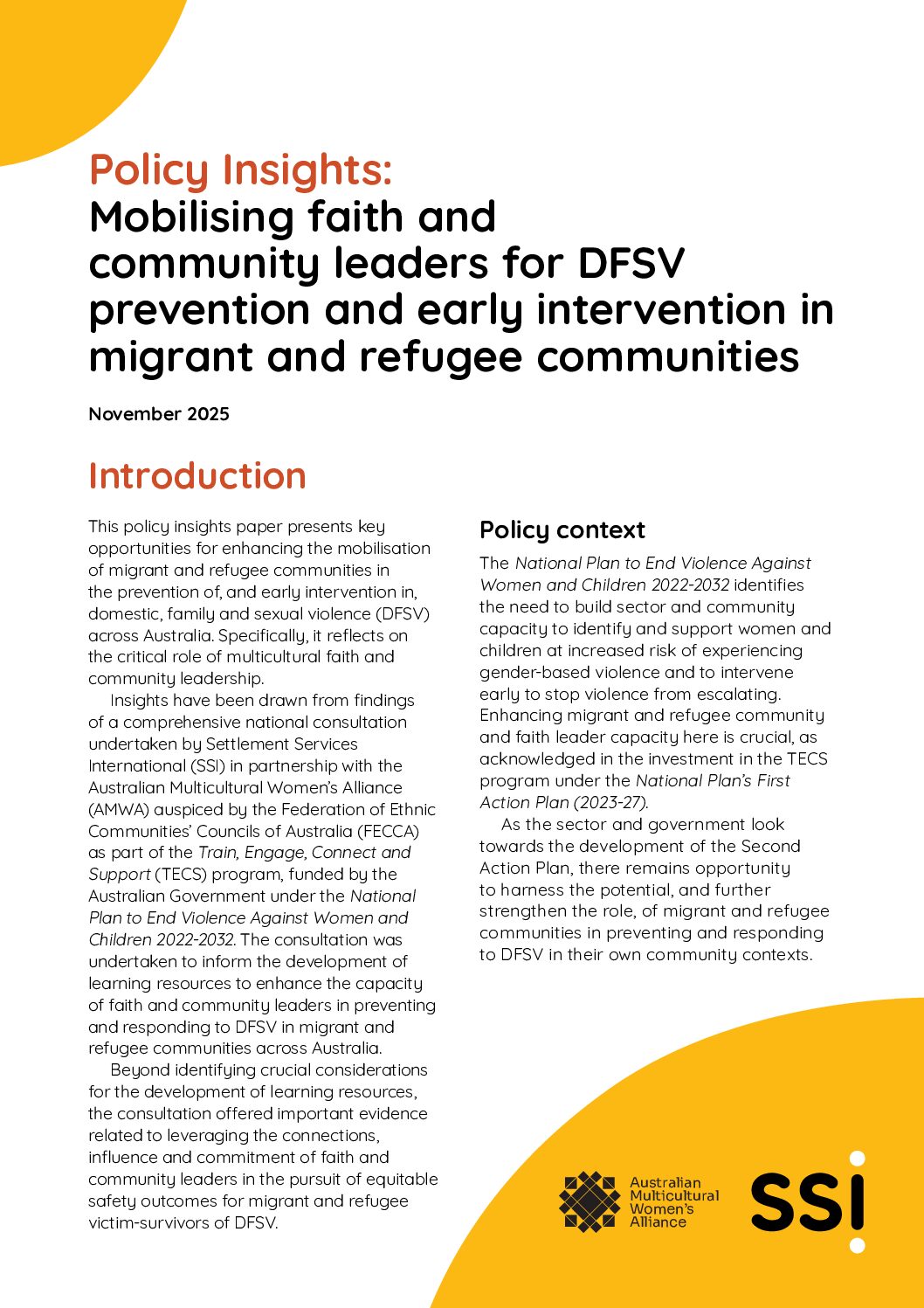
This policy insights paper presents key opportunities for enhancing the mobilisation of migrant and refugee communities in the prevention of, and early intervention in, domestic, family and sexual violence (DFSV) across Australia. Specifically, it reflects on the critical role of multicultural faith and community leadership.
Get in touch
For more information about this project, please contact us at fdsv.tecs@ssi.org.au or call our Community Engagement Coordinator on 0466 217 497.
Do you need support?

1800RESPECT – 1800 737 732
This is a 24-hour national sexual assault, family and domestic violence counselling line for any Australian who has experienced or is at risk of, family and domestic violence and/or sexual assault.
Individuals can also access local support services and search the internet using Daisy, a free app developed by 1800RESPECT that protects user privacy.
If you need translation or interpreting services call:
Translating and Interpreting Service National on 13 14 50 and ask them to contact 1800 RESPECT for you.
For callers who are deaf or have a hearing or speech impairment call National Relay Service and ask them to contact 1800RESPECT
- TTY/Voice Calls – phone 133 677
- Speak and Listen – phone 1300 555 727
- Internet relay users – visit the National Relay Service website
MensLine Australia – 1300 789 978
Supports men and boys who are dealing with family and relationship difficulties. 24/7 telephone and online support an information service for Australian men.
Men’s Referral Service – 1300 766 491
This service from No to Violence offers assistance, information and counselling to help men who use family violence.
Kids Help Line – 1800 55 1800
Australia-wide free 24/7, confidential and private counselling service specifically for children and young people aged five to 25 years.
Elder Abuse Help Line – 1300 651 192
Free information and support services for people who experience or witness the abuse of an older person. Operating hours vary.
Financial Counselling Australia – 1800 007 007
Access free resources and advice from a private financial counsellor. Call 1800 007 007 to speak to someone in your state.
13YARN – 13 92 76
The first national crisis support line for mob who are feeling overwhelmed or having difficulty coping.
They offer a confidential one-on-one yarning opportunity with a Lifeline-trained Aboriginal & Torres Strait Islander Crisis Supporter.

About SafePath
Victims of sexual violence from culturally and linguistically diverse (CALD) communities face unique challenges in reporting and reaching out for assistance when there is a lack of culturally responsive and trauma-informed services. Often, sexual violence services are not equipped with culturally and linguistically informed information, further enhancing barriers that victims may experience.
SafePath is a two-year project funded until June 2025 by the Department of Communities & Justice. The project aims to further equip frontline practitioners in identifying and responding to CALD victim survivors of sexual violence perpetration.
How we help
SafePath will develop culturally and linguistically informed resources to support victim-survivors, practitioners, and wider communities about sexual violence.
We invite you to share and use the resources when they are available. Some resources will be available in-language.
Getting help
If you or someone is in immediate danger, please call Triple Zero (000) for emergency services.
If you are subjected to or impacted by sexual violence, know someone who is, or are triggered by this content and would like to access support, please contact:
- Full Stop Domestic Violence helpline on 1800 385 578 or Full Stop NSW Sexual Violence Helpline on 1800 424 017
- Lifeline on 13 11 14
Get in touch
Should you have any comments, feedback, or questions, please contact us.
E: info@ssi.org.au
P: 02 8799 6700
About Care Finder
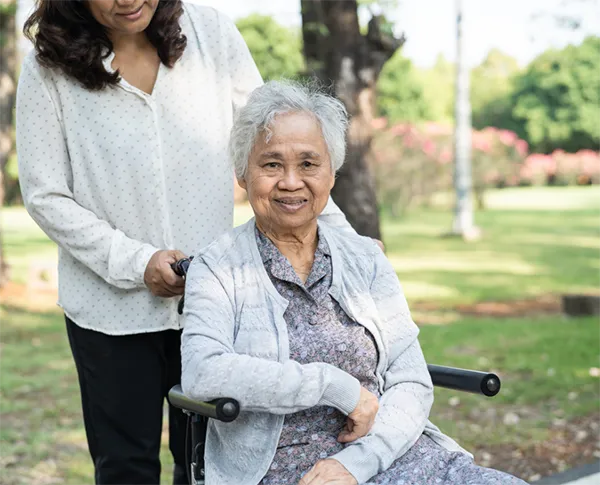
Our free service helps older Australians from diverse backgrounds connect to aged care services and supports. If you don’t have a carer or support person, we are here for you. We create a plan based on your needs and meet you where it suits you best – at home, in our office, or in the community.
SSI Care Finder Program is supported by funding from the Australian government through the PHN program (Primary Health Network).
How we help

Who we help
- Australians aged 65 or older from diverse backgrounds, including Aboriginal or Torres Strait Islander people aged 50 or older
- People experiencing homelessness or at risk of homelessness
- Live in Logan region in Queensland
- Require support to navigate the My Aged Care System and other relevant community services
- Eligible for government funded aged care support
Get in touch
To learn more about SSI’s Care Finder program, please contact our team in Logan.
91 Wembley Road Logan Central, QLD
Monday to Friday from 8.30 am to 4.30 pm
P: 0403 710 245
E: seniorconnect@ssi.org.au

About Championing Action for Tech Safety (CATS)
This project educates refugee and multicultural communities about how technology can be used in domestic and family violence. It provides practical knowledge on identifying and protecting against spyware, tracking apps, cache information, and passcodes that perpetrators may use to harm women and their children.
SSI successfully tendered for funding through the Preventing Tech-based Abuse of Women Grants Program (funded by the eSafety Commissioner). This program contributes to the Federal Government’s National Plan to End Violence Against Women and Children 2022-32 (the National Plan). Fundamental to the success of the National Plan is understanding and addressing tech-facilitated abuse of women and children.
Community education
We developed educational short story-based videos to spark conversations and reflections among community groups and individuals. We also created a training package to support these conversations through a community education program.
The videos focused on four areas of technology-based abuse that can be watched in multiple languages including Dari, Arabic, Chinese and English.
- Image-based abuse
- Impersonation
- Use of children’s devices
- Tracking
These resources help facilitators and participants discuss and understand the experiences of culturally and linguistically diverse (CALD) women affected by technology-based abuse.
How do you want to use the videos?
Free online training to learn more
Build your understanding of technology‑facilitated abuse in domestic and family violence, with a focus on the experiences of women from migrant and refugee backgrounds. This free, 30‑minute e‑learning course designed for social services workers and community leaders equips you to recognise abuse, respond effectively and strengthen community safety.
FAQs
What is tech-facilitated abuse?
According to eSafety, ‘technology-facilitated abuse or ‘tech-based abuse’ refers to harmful actions carried out online or through digital technology. These include harassment, making threats, stalking and coercive or controlling behaviour’.
For comprehensive information on this topic, head to the eSafety webpage.
More about the educational videos
SSI consulted and worked closely with community groups and caseworkers to create these resources. Together, we developed four videos that explore common forms of technology-based abuse reported by CALD women, which include:
- Impersonation
- Image-based abuse
- Tracking
- Use of children’s devices
These videos show real-life scenarios to help participants understand and discuss these experiences. You can use the videos in group discussions or watch them alone for self-reflection.
Get in touch
For more information about the project, please contact us on info@ssi.org.au.
About the Adira Centre
We promote culturally responsive, evidence-based and community informed responses to domestic, family and sexual violence in NSW, including in regional and rural areas.
The Centre collaborates across women’s safety, multicultural and settlement sectors in NSW to enhance quality, safe and culturally responsive domestic, family and sexual violence services and community-based responses.
Our tailored approach involves:
- case management and collaborative practice support
- community engagement: lived experience advice, supporting social responders and community education
- sector capacity building, engagement and training
- consultation, research, policy advice and advocacy to drive systemic change.
We work across four focus areas: primary prevention, early intervention, response, and recovery and healing.
Culturally responsive practice
We understand the importance of ensuring that domestic, family and sexual violence responses meet the needs of communities in all their diversity. Our work is grounded in cultural responsiveness and informed by evidence and community insights.
The Centre combines expertise in culturally responsive practice and a deep understanding of how different forms of violence can impact women, children and families from multicultural communities, as well as the specific challenges they may face in seeking help.
We work with victim survivors and communities to address these complex issues. We also collaborate with other services to provide appropriate support to migrant and refugee women, children and families.
What we do
Individuals
We provide specialist, culturally responsive support to migrant and refugee women and children who are at risk of, or experiencing, domestic, family and sexual violence. This includes:
- Support for immediate safety.
- Collaborative, culturally responsive and holistic case management.
- Counselling and recovery support.
- Support for socio-economic participation and community connection, and referrals to appropriate services.
Communities
We work with multicultural communities to support them with the knowledge and resources to effectively recognise, respond to, and prevent domestic, family and sexual violence. This includes:
- Community engagement and education on the drivers of domestic, family and sexual violence and available support services.
- Empowering communities as social responders.
- Supporting communities to lead positive change in attitudes towards gender equality and healthy relationships.
Sector and service delivery
- Expert advice and capacity building on cultural responsiveness in the context of family, domestic and sexual violence.
- Collaborative practice support, working with practitioners across sectors.
- Promoting cross-sector collaboration and developing evidence to enhance policy and practice responses.
Impact reports
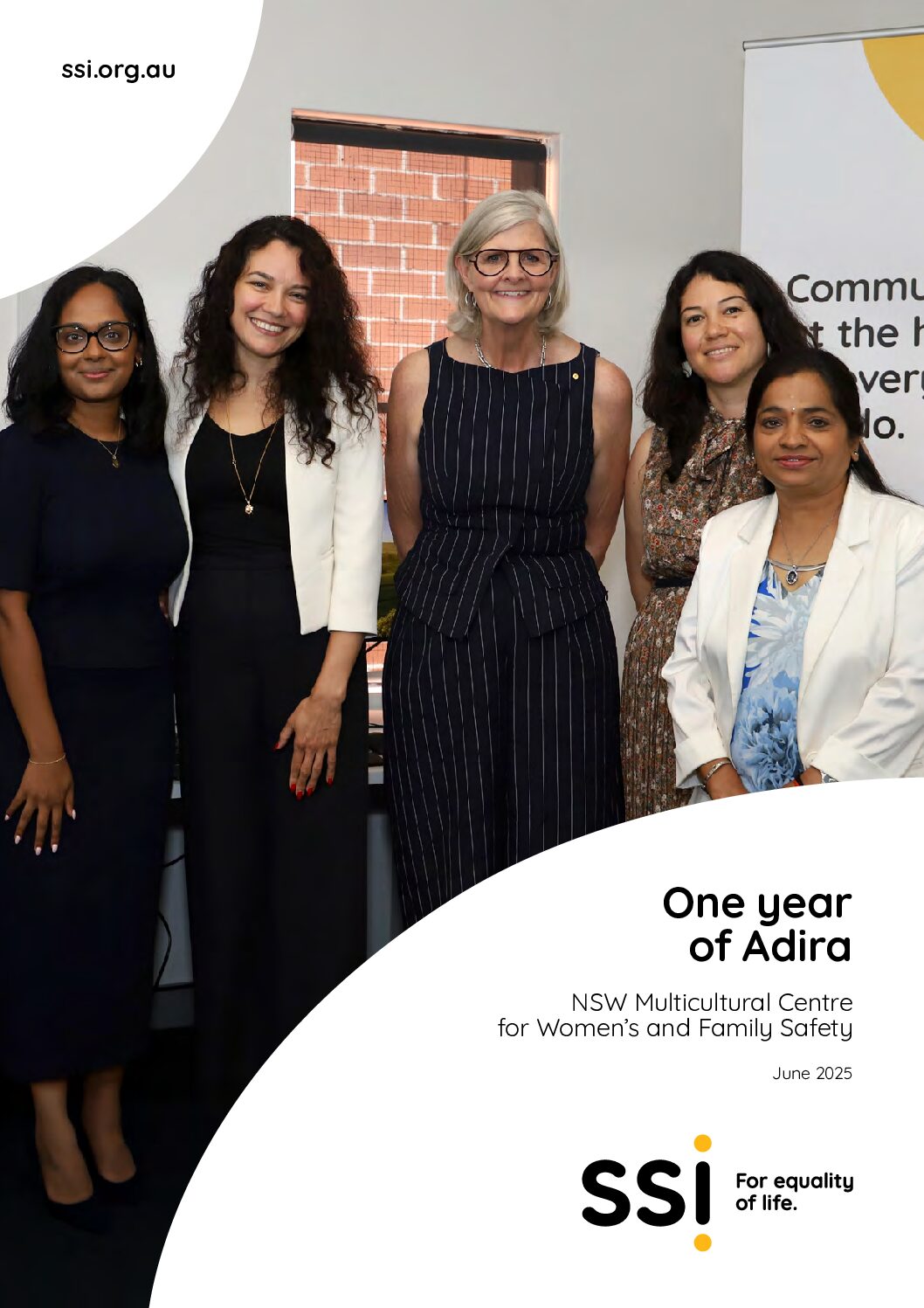
Established in 2024 and funded by the NSW Government, the NSW Multicultural Centre for Women’s and Family Safety (the Adira Centre) works across NSW to enhance culturally responsive domestic, family and sexual violence prevention and response in migrant and refugee communities. This report outlines the Adira Centre’s key achievements in its first year.
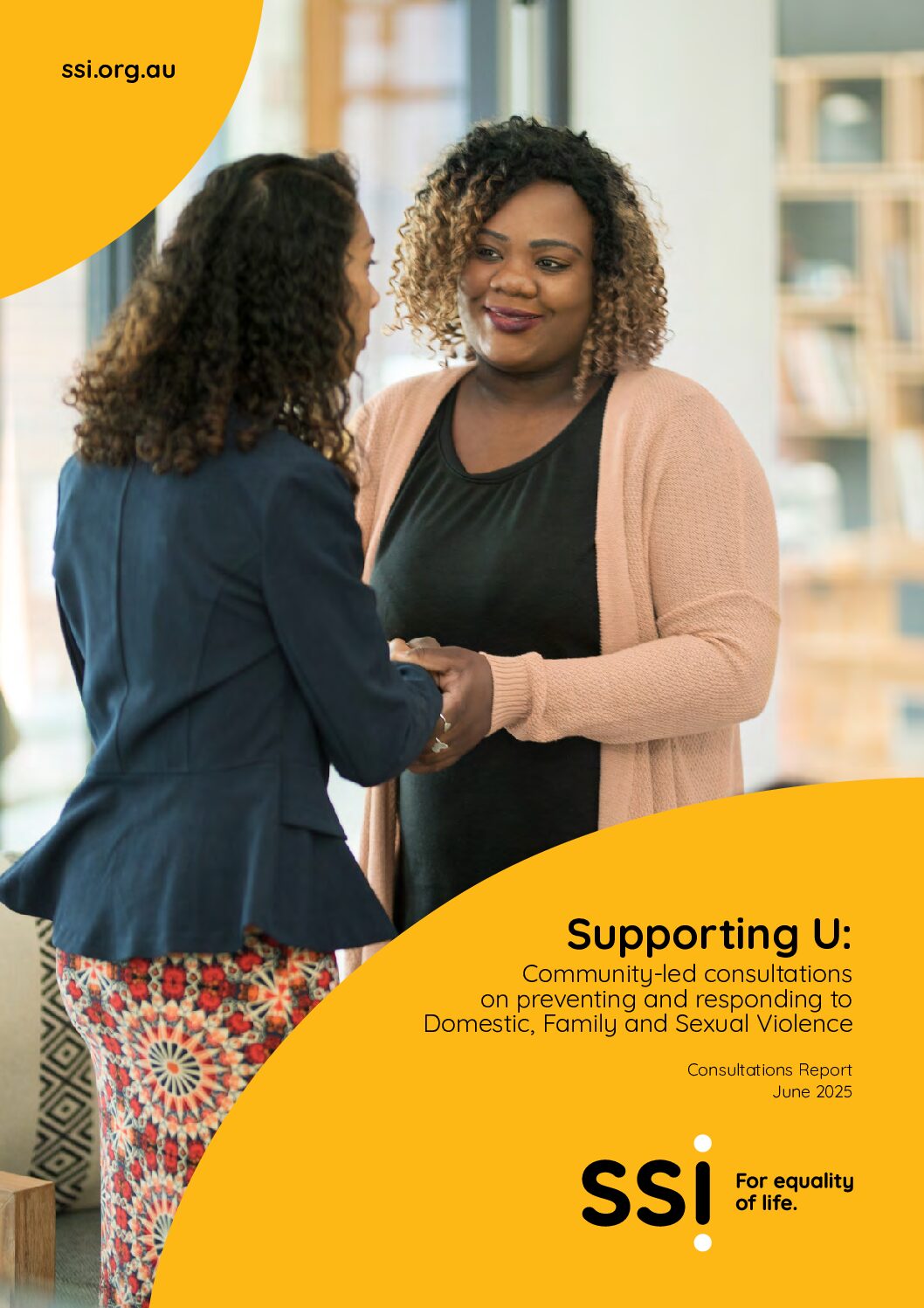
The cohort of Supporting U women, recruited in mid-2024, were supported to undertake grassroots consultations into issues of DFSV in their communities. This is an important step towards the Adira Centre’s longer-term goal of fostering community-led responses to DFSV in migrant and refugee communities.
Scoping the Gap explores the reality of unfunded domestic, family and sexual violence (DFSV) support provided by settlement and multicultural organisations and services working with migrant and refugee women and families. The research seeks to make visible systemic gaps and to depict the load carried by this sector in supporting women’s safety, despite limited recognition or resourcing.
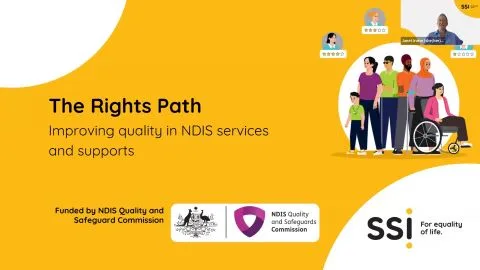
Understand your rights as an NDIS participant
We have created easy-to-understand resources in English, Arabic, Chinese, Hakha Chin, Karen, Khmer, Punjabi, Urdu and Vietnamese to enhance NDIS participants’ understanding of their rights and the quality of services they should expect from providers.
Find videos, brochures and more in your language
About The Rights Path Project
This project is designed to deliver robust choice and control focused outcomes for culturally and linguistically diverse (CALD) people with disability through an approach that draws on their own experiences. SSI has worked closely with NDIS participants and providers across NSW, Queensland and Victoria to consult, co-design, test and disseminate relevant and accessible in-language resources.
The purpose of this project is to:
Develop resources in English, Arabic, Chinese, Hakha Chin, Karen, Khmer, Punjabi, Urdu and Vietnamese.
Strengthen NDIS participants’ understanding of their rights and the quality they should expect of NDIS service providers.

Improve participant knowledge of how to make a complaint when they are not satisfied with services they receive.
Work with NDIS providers to assist in meeting their responsibilities under the NDIS Quality and Safeguarding Framework.
Encourage providers to connect, collaborate and form partnerships, share best practice, to strengthen their feedback and complaints pathways and promote participants rights by using the resources developed in this project.
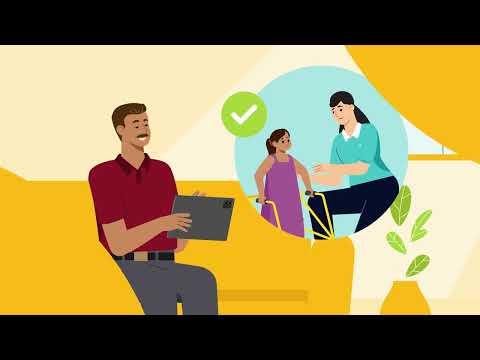
Meet the participants
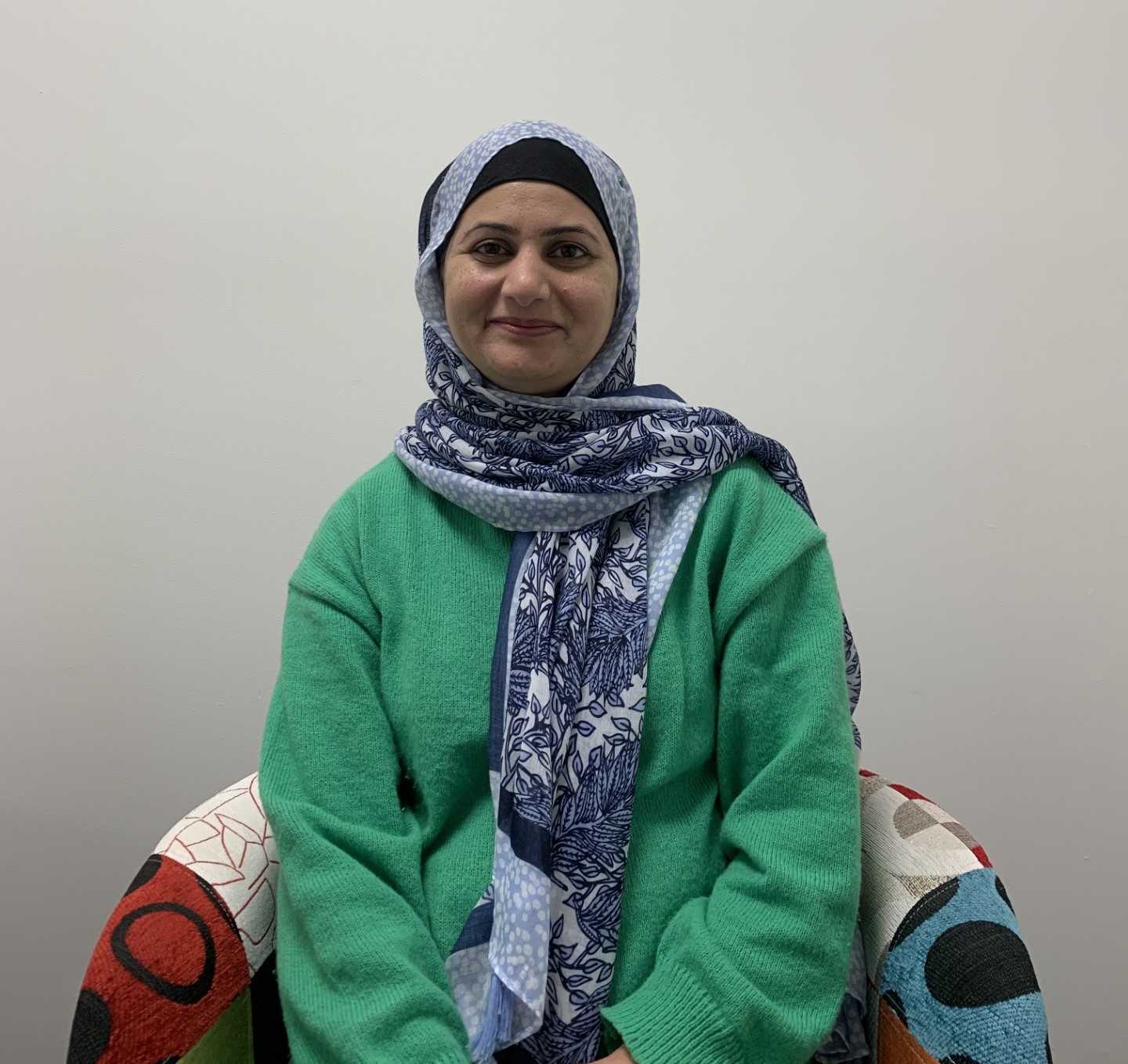
Participating in The Rights Path Project as a Lived Experience Consultant helped Rabia—a mum of two from a Pakistani background who speaks Urdu, Punjabi and English—discover her voice and recognise her role as an advocate within her community.

Participating in The Rights Path project as a lived experience consultant helped Anh gain a better understanding of her own rights and the steps to take when facing issues with NDIS services. Her experience will also empower others in the community who are experiencing similar challenges.
Participant reflections
Showing 1 – of 6 program resources
*Pseudonym used
Provider Consultants
SSI would like to acknowledge the project contributions made by the following NDIS Providers as Provider Consultants of The Rights Path Project:
- Amparo
- Bakhtar Community Organisation
- Carers QLD
- Carers VIC
- Empathy Community Services
- Inclusion Melbourne
- Fortify Health
- Maple Community Services
- Multicultural Disability Advocacy Association (MDAA)
- National Premier Disability Services
- ONCALL Group Australia
- People with Disability Australia
- SydWest Multicultural Services (previously Participate Australia)
- Uniting (NSW, ACT)
Advocacy
Click on the below links to go to the resources:
- What is an independent disability advocate?
- How a disability advocate could help you
- How can I find an advocate?
- Disability advocacy finder
- National Disability Advocacy Program
- Multicultural Disability Advocacy Association
- Action on Disability in Ethnic Communities
- Amparo
- National Ethnic Disability Alliance
- My Life, My Voice
- Disability Gateway
- Queensland Advocacy for Inclusion
- Your rights and entitlements in disability services
- SSI Local area coordination
- FECCA
- ECCV Raise our voices
- Disability advocacy NSW
- Disability advocacy VIC
- ADA Australia
- TAS Speak Out Advocacy
- People With Disability Australia
- Disability Advocacy Service NT
- Disability Advocacy and Complaints Service of South Australia Inc (DACSSA)
- ACT Disability, Aged and Carer Advocacy Service
In-language resources
Click on the below links to go to the resources:
- Your rights and entitlements in disability services (Vietnamese)
- NDIS Code of Conduct in multiple languages
- MiAccess
- NDIS Commission resources in your language
- Speak My Language ECCV
- Multicultural Disability Hub
- MyCare Space
- Amparo Factsheets
- Multicultural Australia Disability Support
- Centre for Culture, Ethnicity and Health, Key disability organisations
- ECCV Multicultural Disability Hub
NDIS Commission
Click on the below link to go to the NDIS Commission complaint contact form:
Feedback
- Click here for National Disability Safeguards Commission complaints form
- Call 1800 035 544, using Translating and Interpreting Service (TIS) at 131 450 for assistance.
- Phoning: 1800 035 544 (free call from landlines) or TTY 133 677.
- National Relay Service and ask for 1800 035 544.
- Make a complaint with the Commonwealth Ombudsman here
You can also make a complaint or share a compliment on the nTrustus digital complaints management system.
Other useful resources
Click here to view resources for NDIS Emergency and Disaster Management – R4NED funded by an NDIS Commission grant and developed by Kaleidoscope Focus.
Click here for reports and activity received by the Ageing and Disability Commission.
Carers Queensland – click here for stories of people with disability, their families and carers from multicultural communities.
Learn more about The Rights Path Project:
How did we create these resources?
We’ve adopted a human-centred co-design process, where SSI facilitators and participants worked closely together to explore feedback mechanisms within the NDIS service and support system. Workshops were conducted in English, with interpreters provided for participants with limited English language proficiency, and focused on the lived experiences of participants.
The consultation process
SSI engaged 18 Lived Experience Consultants both through online and face-to-face consultation workshops across NSW, QLD, and VIC to meet and consult with people with lived experience of disability. These consultations aimed to review the experiences of NDIS participants, their family members, and carers from the Khmer, Punjabi, Urdu, and Vietnamese-speaking communities. The focus areas included:
- Accessing the NDIS
- Understanding your rights
- Providing feedback to NDIS providers
SSI also collaborated with NDIS providers to gain insights into their experiences working with and managing feedback from CALD participants. This collaborative effort aims to ensure a comprehensive understanding of the needs of CALD participants, facilitating better service delivery and support.
The co-design process
SSI engaged 17 lived experience consultants in both online and face-to-face co-design workshops. These sessions focused on collaboratively designing culturally appropriate content by receiving input and guidance from people with lived experience.
Get in touch
This project was funded by the Australian Government through the Support for NDIS Providers Grants Program administered by the NDIS Quality and Safeguards Commission.

Download social media and newsletter tiles