Ahlam, Ana, and Emad all arrived in Australia as refugees and today, they are giving back by supporting newcomers settle in Australia as part of SSI’s Immediate Services team.
We caught up with them at the Sydney Airport arrivals hall to hear more about their first steps on Australian soil and what those moments taught them to better support others.
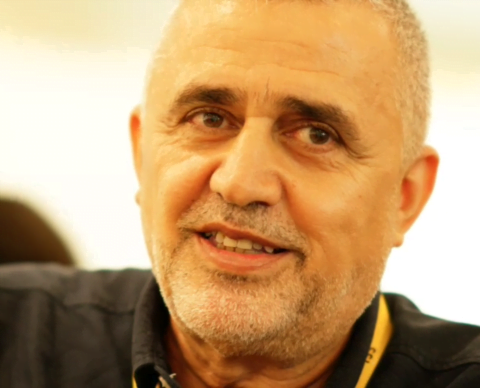
Emad’s never-ending excitement to be the first to welcome newcomers down under
Emad recalls his first moments in the arrivals hall he sits today as deeply emotional.
“This was the moment when someone waited for me and, upon my arrival, said, ‘Okay, welcome to Australia. A new life awaits you here.’ Immediately, I forgot everything I left behind in my country. All the suffering turned to excitement,” Emad reflected on his experiences from 15 years ago.
Today, Emad is part of a tight-knit team of staff from refugee backgrounds and other SSI staff who make the SSI Immediate Services team, who have the responsibility and privilege to be the first people Australia’s newcomers meet and build connections with when they first land in their new home.
“When our clients arrive at the airport, usually there are family and friends waiting so often it feels like a party. Because some families are waiting for five to eight to 10 years for approval for a loved one to come to Australia,” Emad said.
“We get very excited when we see our clients happy and getting hugs from their relatives. It’s especially moving when we welcome families and kids.”
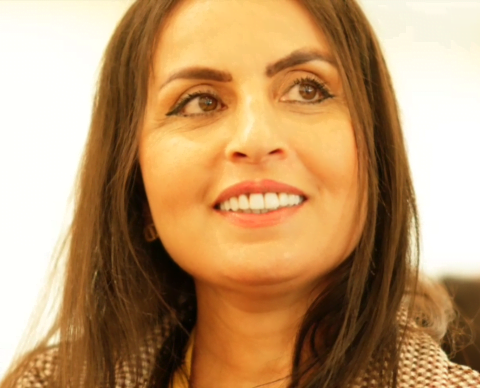
Ahlam: From newcomer to regular at Sydney Airport arrivals
Ahlam came to Australia as a refugee 16 years ago. When she first arrived, she didn’t speak English and had no money.
“I was so scared to come out of the airport, wondering who will be out there waiting for me. I had no idea what was going to happen next. When I came out, the SSI staff made me feel good, safe and so happy,” she recalled.
Since that day, Ahlam has become part of the SSI team and one of the ‘locals’ of Sydney Airport – she comes to greet and welcome newcomers so often, she is well-known and liked by staff in the arrivals hall.
“I think about my own experience when I landed at the airport; when I see them searching for someone who can help give them a home. I know what a good feeling it is to see someone waiting, holding your name on a sign. It is a feeling you can’t describe,” Ahlam reflected.
“Because I was a refugee myself, I don’t mind as long as I’m helping people because I know how they feel. Because they’ve suffered to come here; they’ve come from such a long way and they don’t know anyone. So to be here for them, I can see in their eyes how much it means.”
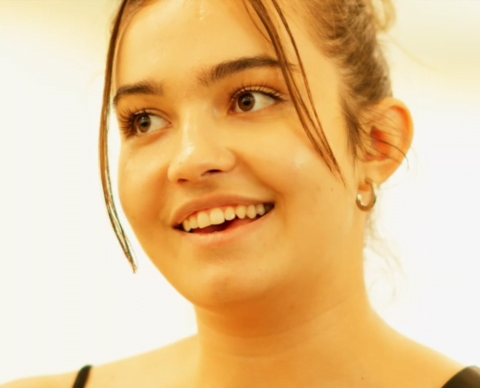
Ana’s aim to give newcomers a smooth arrival
Anastasiia, or Ana for short, arrived as a refugee from Ukraine two years ago. At first, she didn’t interact with SSI but soon connected with the team to get assistance with renting an apartment, furniture and everything else she needed for the household.
“My case manager was always checking up on me how I’m going and what’s happening. And the moment I was ready to look for a job, she referred me to SSI to become a Multicultural Support Officer,” she said.
This is how Ana ultimately landed a full-time permanent position in SSI’s Immediate Services team, whose responsibility it is to meet new arrivals at the airport, get them set up for life in Australia, and provide them with suitable temporary accommodation.
“My role is the ‘backstage’ person behind the curtains, providing information to our Multicultural Support Officers around what time they should be at the airport, who we’re meeting, how big the family is, what languages they speak and so forth.”
This job is very rewarding because I’m helping people to reduce the stress that I went through when I first came to Australia.”
Almost all refugees and asylum seekers who come to our shores have survived personal trauma and social upheaval. SSI’s Humanitarian Services Program (HSP) aims to provide them with the structured support they need to adjust to life in Australia and successfully settle into our communities. SSI delivers HSP services on behalf of the Federal government in several locations across NSW.
Our case workers work closely with newcomers, connecting them with the skills, support and resources they need to find their feet and develop into independent members of society.
In the last year, HSP’s diverse team supported over 3,000 newcomers feel welcome and secure in their new home country.
Watch what our clients, Nargis and Cecilia, had to say about the support they received on the first days in Australia and meet some of our expert ‘welcomers’ supporting newcomers:
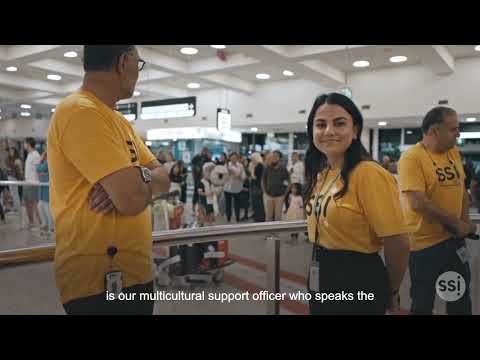
Learn more
Learn more about HSP Immediate Services Humanitarian Settlement Program (HSP) here:
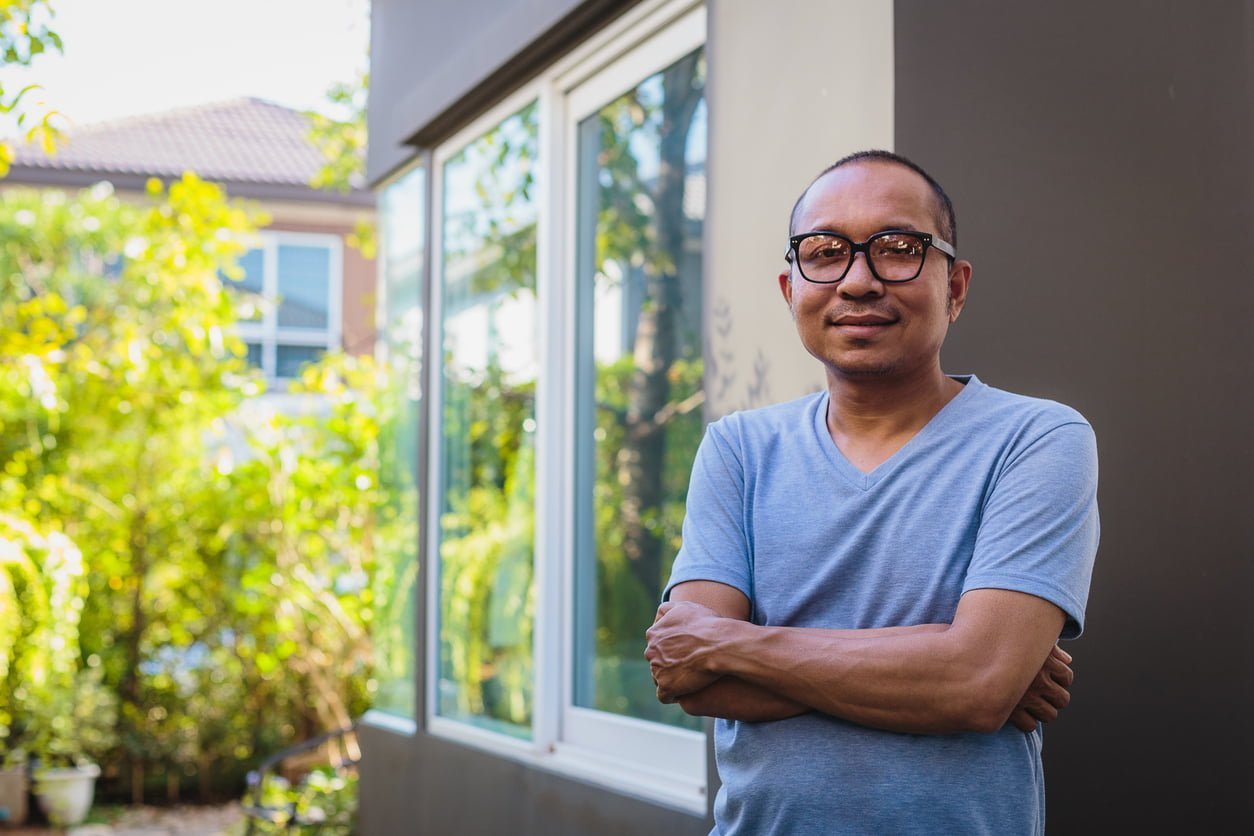
Rob Hendra spent decades in the fast-paced world of banking and finance before making a complete pivot into home care.
In 2020, he was studying to become a conveyancer and was focused on continuing his corporate career. All that changed when, during the height of the COVID-19 pandemic, Rob sadly lost his mother. Due to border closures at the time, he was unable to return home to Indonesia.
Experiencing the real-time devastation and direct impact on his family led to a shift in his perspective and he began to reevaluate what mattered most to him.
“I always wanted to look after my parents, but the reality was that I lived here overseas, and they lived back home. I could never care for them in that way,” Rob said.
Rob wanted to do his part to repay the collective debt to hospitals and honour the work they do to save and change lives. He began working part-time in a hospital while finishing his conveyancing course.
“During that period, I got to see a wide range of patients receiving treatment,” Rob recalled. “Particularly with the elderly, I got to spend more time having conversations with them and seeing how excited they were when family members visited.”
When an advertisement for SSI’s Home Care Workforce Program (HCWSP) appeared on his Facebook feed, Rob jumped at the opportunity. He sent in his CV and, within a week, had a response and multiple interview offers came pouring in.
Rob describes his career switch to home care as a higher calling, one where he can still put his conversational and business skills to use.
“I’ve had the whole fast paced career and I thought, I would like to do something for me, something that’s meaningful,” he said.
The tailored home care training at his workplace, Catholic Healthcare, offered Rob a mix of theoretical and practical knowledge, while also allowing him to branch out and grow the skills he already possessed.
“My current employer is one of the best organisations I’ve encountered in my working life,” Rob said.
His law background helps him thrive in aspects of home care like building rapport, reading body language, and making genuine connections.
“It’s a job with high flexibility and travel time considerations, and what’s great for me is it’s not too physically demanding,” Rob said. “It’s also a lot more secure than banking and finance!”
Looking back, Rob wouldn’t change a thing and is grateful for the seamless and efficient organisation that facilitated his career change.
“I was pleasantly surprised by how quickly everything played out,” he said. “I’m happier than ever and I get to do work that makes a real difference. If you’re compassionate and want to help others, home care is the type of job to get into.”
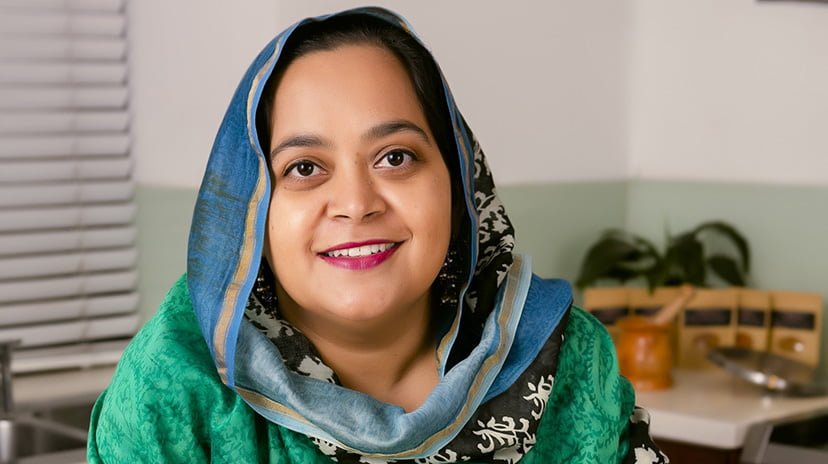
Indian-born and raised, Neda, made the leap to start her own business two years ago.
Driven by her passion for authentic Indian food and her desire for independence, she embarked on an entrepreneurial journey.
In 2009, Neda and her husband migrated from India to Australia.
Despite a successful career in India and holding a degree in Commerce in accounting and marketing, Neda struggled to secure a job in her field in Australia and instead worked in a contact centre for many years.
This is a reality for many educated migrant and refugee women, who find themselves employed in positions below their level of education and expertise.
Neda knew she had greater aspirations. “I’m someone who loves to take on challenges. I’ve always been ambitious,” she said.
The idea of creating her own business selling ready-made spice blends had lingered in her thoughts for years.
Neda explained how in Indian culture food brings families together. She recalled, “Growing up in India, we didn’t have much money, but our bellies were always full of food from a home-cooked nourishing meal.”
When Neda came to Australia, she noticed the store-bought spices did not do justice to the original flavours. She began making her spice blends from scratch, utilising recipes handed down through generations.
“The idea to start a business came to me from my challenge of preparing nutritious home-made meals for my family with a lack of time to cook from scratch,” she said.
Neda wanted to help home cooks with hassle-free yet authentic Indian cooking in their kitchens.
In search of a sounding board and seeking validation, she shared her business idea with a friend.
Her friend responded with uncertainty, casting doubt on Neda’s ideas and confidence.
Years later, during the COVID-19 pandemic, a workplace injury forced Neda out of her job.
At home and injured, she fell into a depression.
“With young kids to care for, I felt the pressure to contribute financially to support my young family,” Neda said.
Neda felt more compelled than ever by the idea of being independent and self-employed.
“I realised that it should be me who decides what I want to do. I do not need validation from other people who may not see my vision yet,” she said.
“My mum came to Australia during that time and as we talked, I shared my entrepreneurial idea with her, and she encouraged me to take the first giant leap,” Neda said. “My mother was always supportive of everything I do.”
In 2022, Neda began working on her product, established Bombay Spices and started selling it at local Victorian farmers’ markets.
“Engaging with people at the markets made me happy and confident. I knew it was the right path,” she said.
Neda’s husband was initially uncertain about the idea because he wanted her to focus on her injury recovery.
“It took some time, but he eventually came on board and now he sees my vision and is very supportive,” Neda said.
Neda now offers a range of eight different spice blends and has garnered a loyal following from market customers who eagerly wait each week to purchase their favourite spice blends.
Neda gives a lot of credit to the resources and start-up programs that have helped her along the way. This year, she began working with the Ignite small business start-up Female Founders to get her business to the next step.
“If you believe in yourself and your vision, you can use the resources available to you to get where you want to go,” she explained.
“We may not always have the support of our family or friends when we need it most. However, you need to take that first step and others will join you on your journey,” Neda said.

Kimia’s story begins in Kandahar, Afghanistan, where her parents fled from in the 1990s during the Taliban’s rule. Raised in neighbouring Iran, she discovered her passion for athletics at the age of 16. Little did she know that this passion would shape not only her athletic career but also her life’s trajectory.
Kimia Yousofi’s life journey exemplifies the transformative power of equal opportunities.
The now 27-year-old, returned to Afghanistan to train for selection at the Rio 2016 Olympic Games. She represented her country with pride and four years later, she once again qualified for the Tokyo 2020 Olympics. Competing in Tokyo, however, coincided with the Taliban’s return to power in Afghanistan, bringing with it oppressive measures against women.
As a female athlete representing a country under Taliban rule, Kimia became a target. Her involvement in sports clashed with the new restrictions imposed on women. In a courageous move, the Australian Olympic Committee (AOC), with the assistance of the International Olympic Committee (IOC), secured a safe exit for Kimia.
Arriving in Australia in 2022, Kimia found a welcoming athletics community and a chance to continue her Olympic journey. While training for selection to the Paris 2024 Olympics, she has also embarked on a journey to learn English at TAFE.
“When I came to Australia my English was zero. Then after one week, the Australian Olympic Committee gave me a coach, John Quinn. It was so hard just to communicate. I couldn’t talk with him. [We spoke through] a translate application. On the first day [of training] I didn’t talk with my teammates, just my coach, by application. After maybe six months, I realised the names of my teammates! And then I started talking with them. [Communication] was difficult for me.”
What Kimia found though, in her athletics team, was a group of similarly motivated, supportive people.
“I’m happy that I’m training with them. They always help me when I need help during training. They are positive. And I think it’s the best part of my squad. They are positive, always. The positive attitude helps us a lot because the training is hard.”
Kimia’s resettlement journey goes beyond personal success. She actively uses her profile to advocate for refugees, especially Afghan women. In less than two years, Kimia’s story has reached over 1.8 billion people worldwide. Her advocacy has extended to a meeting with UN representatives, where she has shared her experiences and addressed the issues faced by refugees in Australia.
Kimia’s resilience and commitment exemplify the potential for positive change when women are given equal opportunities.
Despite the adversity that Kimia has experienced during her life, she believes it’s important for women to persevere.
“When [the] Taliban came, I was in Afghanistan. At that time I didn’t have any idea about what I should do. I said, “I don’t want to stop. It’s not the end of my life; it’s not the end of my journey.”’
“Never give up. In every way. [There could be a] problem, issue, or barrier, but don’t give up. Because you can overcome problems. And problems can come to teach you something. You will go one level higher. Just keep doing.”
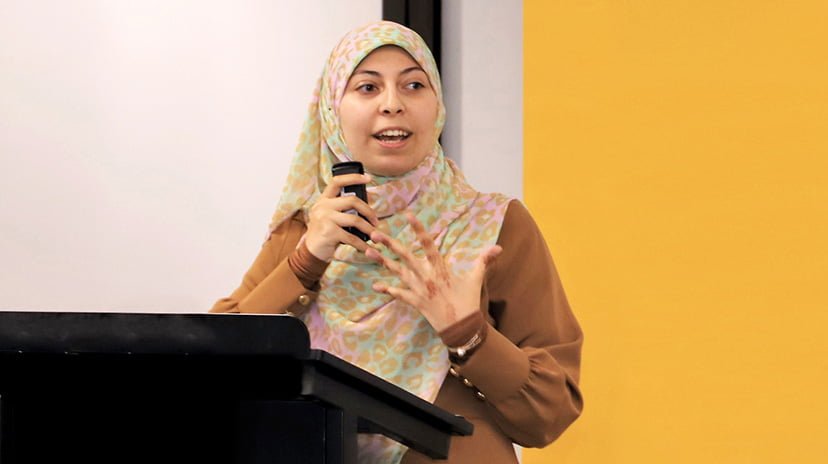
Roaa found safety in Australia after being forced to leave her home country. Now, despite the doubts of those around, she is studying a double degree and thriving.
In 2018, Roaa and her family found safety in Australia after being forced to leave Egypt and then China.
From her earliest years, Roaa wanted to become a psychologist and was committed to doing whatever it took to achieve her goal.
She has excelled academically throughout her life, achieving second place in her city in Egypt and securing the top position in her school during her years in China.
Arriving in Australia, Roaa faced the daunting task of adapting to a new school system and learning English. Initially, she struggled to achieve her usual high marks.
“I have always been a high achiever,” Roaa said. “It was difficult for me to accept receiving Cs. I thought, ‘What is happening?’”
From a young age, Roaa has always been taught the value of education by her parents. “I know that having an education as a woman is so powerful,” Roaa said.
As Year 12 approached, Roaa’s confidence dwindled. She sought validation through others so that she could find the confidence to achieve the high marks required to apply for a psychology degree. When she sought advice from a particular person, however, they dashed her dreams.
“I was told that I had just moved to Australia and my English was not very good,” Roaa recounted.
“I was told not to get my hopes up, as I might not get into psychology, so I should begin exploring other options.”
“When I left that room, I had given up on my dream of studying psychology,” she said.
Roaa went home and started looking for something ‘easy’ to get into it.
Roaa remembered, “I was feeling quite unsure of myself at the time, and I just needed to hear someone say, ‘Yes Roaa, you can do it.”
During her high school years, Roaa observed a common challenge in her community; psychologists found it challenging to fully understand the specific struggles of women from refugee backgrounds.
“Mental health is getting worse, especially for women in my community,” Roaa emphasised.
“My community needs more Arab psychologists who can empathise and understand their situation – their trauma and experiences. They need someone who has experienced something similar, not someone who has not felt what war means.”
Roaa decided to find confidence within herself and not abandon her dream of helping her community. “I told myself ‘Why not give it a shot? You will never lose anything by just trying,” she said.
Despite the challenges of COVID lockdowns, Roaa dedicated herself to her studies and completed Year 12, surprising herself with an ATAR of 94.5.
As university offers flooded in, Roaa chose to accept a double degree program in psychology and media and communications at the University of Sydney.
Roaa explained, “Do not ever underestimate what someone can do simply because they are a woman, or they have migrated from another country and their English may not be as good as yours. Even if they are refugees, do not assume they are incapable.”
“They have faced a lot of challenges that fuel their desire to achieve better. They are awaiting the opportunity and once given; they will seize it and strive to excel as best they can.”
In 2022, Roaa received an SSI Allianz Scholarship which supports her ongoing studies.
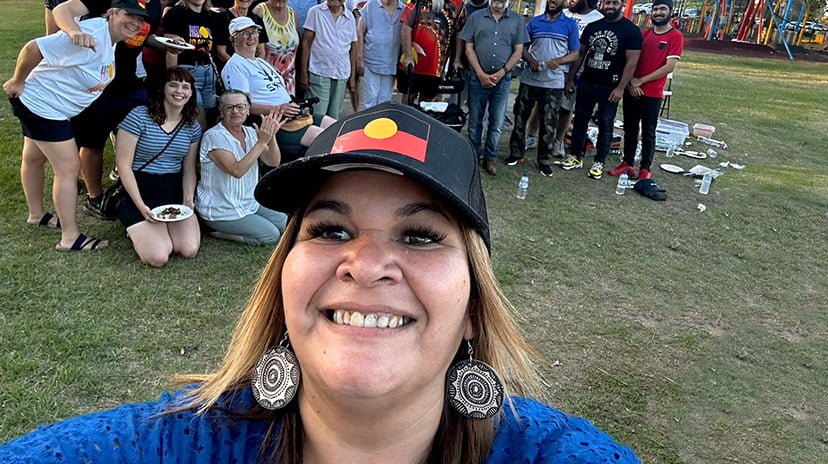
Lucy Davis is a Cobble Cobble woman from the Burrungum Nation Western Downs Queensland. She is the leader of Mob23 and sister to Professor Megan Davis, Aboriginal Australian activist and one of the architects of the Uluru Statement from the Heart which led to The Voice referendum. Mob23 operates in partnership with the Uluru Dialogues, an organisation that led the consultative process with First Nations Peoples in 2017, which resulted in the creation of the Uluru Statement from the Heart.
Lucy grew up in what she calls the ‘rougher end of Logan’ in Yugambeh country in Queensland. She has spent her life in an urban community where all forms of government ‘were missing the mark’ when it came to social disadvantage.
“Due to being a Black fulla and the massive oppression that has occurred for my father, my grandfather and my great grandmother who were taken off the country by force has always placed me in a position of disadvantage,” she said.
Early in her life, she understood the struggles of her Mob and the long road ahead to turn things around,
Lucy was raised by a single white mum who never shied away from the fact that her kids were Black.
“I was exposed to racism from a young age, and my mum was our biggest advocate. She would say to us kids ‘I would never understand what it feels like, but as your mother, I feel the pain and it is my responsibility to use every bit of my white privilege to give you the best start in life.’”
Lucy’s mum equipped her and her siblings with knowledge of politics and literature and showed what their force needed to grow into to become drivers of change.
“My mum is everything to us – she is the matriarch of the family.”
Today, Lucy champions her unique approach to change as the National RAP Manager for the Salvation Army.
“Some of the most inspirational women in my life have been my leaders and co-workers at Salvation Army, both Indigenous and non-Indigenous. They’ve truly listened and allowed me to create spaces for women to speak up.”
The common thread in Lucy’s life has been strong women coming together to fight for a better tomorrow for First Nations Peoples across their lands – but often these women faced resistance across many facets of Australian society.
“Women from other Mobs are my sisters, we band together – from the commonality of the oppression we’ve all faced together. It is sad, but it is the way it is.”
“In Aboriginal communities, women are the backbone. But their voices don’t always fit,” she reflected.
“Our men are on a real journey of reconstructing who they are because our women are so strong and have stepped up. But this is also the case in white culture – in politics, everyone struggles when a woman speaks up.”
In the weeks and months following the 2023 Constitutional Referendum, Lucy has hosted Voice-inspired sessions with Mob23 in partnership with local ‘Yes’ groups, continuing the fight for First Nations Peoples. Lucy is determined to turn disappointment into strength and optimism for her Mob.
Lucy cites her sister, who summed up the defeat of the Voice beautifully, “We will never recover – we had a chance to recover, and we didn’t. However, we now have six million new friends – the six million who voted yes.”
The Gold Coast Afghan community hosted a barbecue one afternoon for Lucy’s Mob23 to give them hope after the vote, which also coincided with the beginning of the Gaza/Israel war.
“These Afghan brothers and sisters had taken the time out to host something for my Mob, and they didn’t mention once that their neighbouring country was entering a war and that they might have family there, or their struggles,” she reflected.
For Lucy, investing in women and ‘counting them in’, as is this year’s theme for International Women’s Day, is a no-brainer in helping solve some of the most critical issues Aboriginal and Torres Strait Islander women face today, such as domestic violence, incarceration rates and finding a path forward post-referendum.
“There is a real push towards accepting women and their stories in our community. If Australian governments are serious about closing the gap, they must change their structures to allow women to have their voice heard in different areas of society and positions of power.”

Producer and MC Mel Ree is an actor, dancer, poet and fierce woman. Born in Papua New Guinea to the daughter of a chief, her ancestors sit at the base of her spine spurring her on to tell her story. Having dedicated her life and art practice to healing, she hopes to spark wildfires within listeners that burn down differences, uniting us in our pain and understanding of this human condition.
“My early years were tumultuous and catastrophic at times. I grew up violently poor and entrenched in my parents’ unhealed wounds. Police sirens, black eyes, dislocated from the motherland Papua New Guinea, I am driftwood, and my performances are earth, solid grounding. I exist and create because of healing.”
When Mel Ree responded to our request to be profiled as part of International Women’s Day, she spoke with her truth. Her words were powerful and revealing, as she began her story with the heartbreak of her childhood.
Out of the chaos and trauma, Mel was clearly a woman who was destined to evolve, share herself and her talents and help heal others through art and performance.
The first to do many things in her family lineage, like attend university, live in a big city, and pursue a career in the arts, Mel has forged ahead with pride and courage, but it hasn’t been without sorrow and grief.
“I am the first to speak our families’ truths with pride. I have lifetimes of intergenerational trauma and negative programming I have to work through in all areas of my life … My art is my therapy, and I have accepted the whole truth of my ugly, and it is powerful and beautiful in its own way, and I am thriving because of it,” Mel said.
Upon graduating from acting school, she found herself embodying other people’s stories – but not her own. It was through her friend and creator, Ayeesha Ash, who opened the door to poetry, and another world opened for Mel. One that allowed her to start her own journey of healing.
Through Ayeesha, and her dearly departed mentor, butch Queen activist and storyteller, Candy Royalle, Mel began her journey in leading through her words and art.
“I wrote, I spoke fearlessly, I opened my heart and emptied its contents into the bodies who came to witness and hold space at our poetry events, and my heart always returned more full,” she said.
“Poetry is one of the last revolutionary spaces where the voice of the people in the trenches, the marginalised, the outcast and the ‘different’ – we gather here to speak truth.”
Mel’s poetry and performances speak to, and represent, Culturally and Linguistically Diverse (CALD) women and Queer communities – something that was historically missing in mainstream media for far too long.
“Imagine never seeing your reflection. You wouldn’t know yourself. Wouldn’t recognise the intricacies of the shape of you, wouldn’t know that when the sun hits your iris at a certain angle you can see all your ancestors gathered like petals in bathwater, gentle, overwhelming beauty.
We NEED to see ourselves to know ourselves! I have become the woman I needed when I was a child. My friends, all of them, I would DIE and be reborn to have seen them on my screens and magazines as a child. I would have been saved from years of self-loathing. I would have known then I was beautiful too.”
Mel’s stories are not only raw and heartfelt reflections of marginalised communities, but also the truth of her life as a Black woman.
“My story is the story of healing. Of black rise and revolution. When I perform my own work I offer this story, with every cell in my body, with the intention that I might inspire someone’s healing or at the very least, give them permission to stand in their truth.
When I am a part of someone else’s work, I wear my afro full volume, I speak eloquently, my chest is high and I let every woman know, there is no shame, stand proud my sister, I will open this door and build its foundations strong for when you are ready to come through.”
With so much to say, and with the prospect of touching so many lives, Mel’s words on International Women’s Day are a call to action for women of all communities.
“Let love lead.
We, the world, our leaders, are so broken, our most sacred spaces infiltrated by greed, power hungry toxic patriarchal systems. Women possess all the qualities to heal the world, but they do not know or feel they have a right to because they haven’t seen themselves reflected, represented, in all the spaces they are not, women should know, feel, SEE that they are entitled to, deserve to be there and take up space.
The definition of insanity is to do the same thing over and over and expect a different result. Let’s try something new then hey?
Let women lead.”
Mel Ree will be performing her show, Revolution Renegade, as part of the BEMAC program for 2024.
Mel also hopes to one day take her one-woman show ‘Mother May We’ nation-wide, which premiered at Sydney’s Griffin Theatre in 2022.
Twenty-seven- year-old* Rana* arrived in Sydney in late 2023, heavily pregnant. She carried with her few belongings—but the immense physical and emotional toll of her journey from Gaza to Australia.
(more…)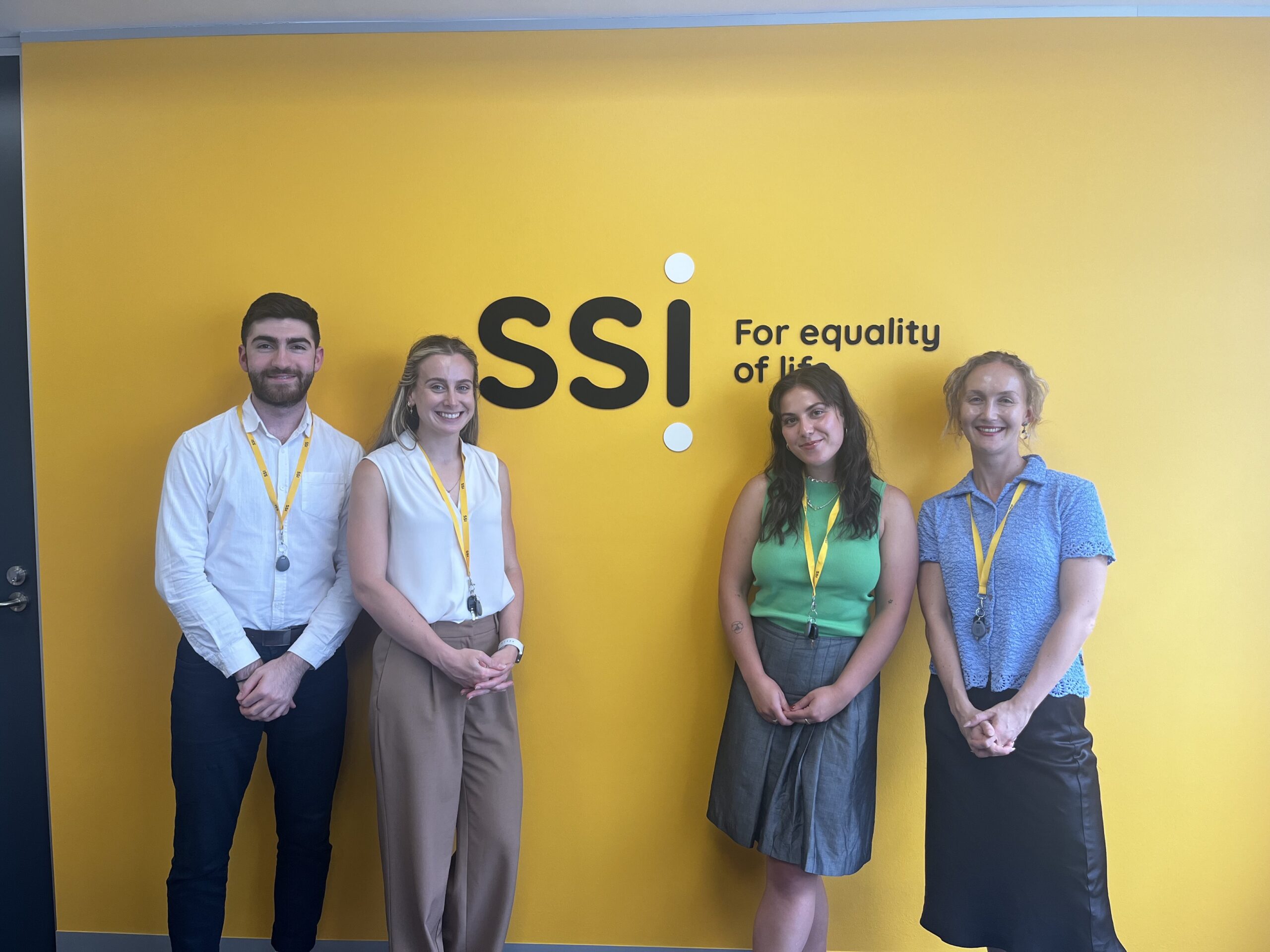
We are pleased to announce a new social enterprise from SSI – SSI Legal, a law practice specialising in immigration matters.
Through a long history of working with newcomers to Australia, we have identified the need for more ethical, trusted legal services to support people navigating Australia’s ever-changing and complex immigration system. We’ve established SSI Legal Pty Ltd to meet this need.
SSI acquired Mary Hanna Lawyers, a Melbourne-based migration law practice with extensive experience and a highly regarded reputation for delivering quality services in this space.
The transition of Mary Hanna Lawyers to SSI has enabled Mary Hanna to accept an appointment with the Administrative Appeals Tribunal, while her clients, practice and team have all transitioned seamlessly to the new legal practice with SSI.
We are proud to continue to build on the respected work of Mary Hanna and be led by the same values and principles of our wider organisation, committed to putting people first with a focus on ethics, honesty and respect.
For more information or to speak to one of our dedicated immigration lawyers, visit About SSI Legal – SSI.
Aged care providers across Australia know firsthand the impact of the ongoing workforce shortages. Some aged care homes are working below capacity, meaning seniors needing care have no option but to remain in hospitals for extended periods. Overcoming this staffing gap is a collaborative effort across the sector.
As part of our Home Care Staffing Support (HCSS) initiative in NSW and the ACT, we’ve partnered with Hireup Australia’s largest NDIS-registered platform of support workers. Together, we’re working on cost-effective and flexible ways to connect more aged care providers with qualified care workers.
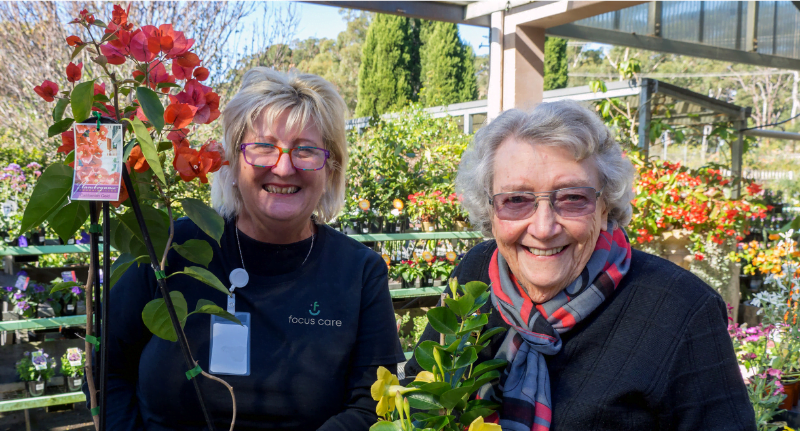
Focus Care Australia’s Service Operations Manager, Maria Paul recently shared insights into the benefits of the HCSS. She highlighted how key challenges are being solved to get more workers into jobs to care for Australia’s seniors.
Impact in action
“Focus Care provides in-home aged care, dementia care and disability support. We’ve experienced many different recruitment support programs across many regions. SSI and Hireup have been the ones that have made us the most hopeful by being the most effective solution for us,” Maria said.
She continued, “We’re a medium-sized company and passion is one of our biggest drivers – we thrive off it and promote that! The program has allowed us to be very responsive and given us the ability to maintain the consistency of our support to clients.”
Since joining the HCSS in June 2023, Focus Care has worked with approximately 30 different support workers, each helping to address their resourcing needs and working closely with case managers and Focus Care’s head office.
“Resourcing has been the biggest benefit for us. Our focus is always on building quality services, especially in terms of supporting our workforce as they carry out community care,” Maria said.
“Hireup makes that so much easier to do and has ensured our existing workforce isn’t spread too thin.”
“There are also financial benefits. SSI allows us to submit a 50 per cent rebate for the cost of paying Hireup support workers and with the money we’re saving, we can allocate more into helping both the people we support and our workers,” she added.
In a broader sense, the collaboration has given Focus Care a wider range of diverse expertise and personalities who can support clients. It has improved the quality of care that seniors receive and ensured that cultural contexts are considered when support workers provide aged care services.
Maria explained, “Almost 1,000 hours have been covered over the space of a few months. To us, that’s an unbelievable amount. If you think of it this way: without that workforce, that would be 1,000 hours where elderly people in our community would have gone without the fundamental care they need.”
In tandem with the Home Care Workforce Support Program (HCWSP), the HCSS has given aged care providers and workers a greater degree of flexibility in the hiring process and prompt job placement. The HCWSP ensures that all workers are trained and job-ready, while the HCSS pairs workers with providers in need of staff, both directly addressing staff shortages.
“Giving us options or solutions to tackle workforce challenges confidently – unbeatable! That’s what the HCSS has done, it’s a great partnership,” Maria said proudly.
How it works
As part of the government-funded HCWSP program, the HCSS provides flexible resourcing options for eligible Aged Care Providers by giving them access to the thousands of care workers seeking work via the Hireup platform.
SSI provides eligible aged care providers with a subsidy to cover 50% of the wages of casual workers hired through the Hireup initiative.
At the core, the initiative creates more opportunities and shifts for support workers. The knock-on effect is a job-ready pool of carers available to look after senior Australians.
Since partnering with Hireup in March 2023, we’ve seen both the HCWSP and HCSS continue to grow and actively contribute to the industry’s workforce shortage.