

24 Jul 2026
Media releasesCritical disability program risks leaving behind half the children who need it, new report warns
Without a clear focus on culturally and linguistically diverse (CALD) communities, Australia’s new Thriving Kids program risks missing up to half the children who need it most, according to a new report.
Cultural and systemic barriers mean children from CALD backgrounds are currently half as likely to access early intervention supports as other children. This is according to No Child Left Out: Designing Thriving Kids for a Diverse Australia, a report produced by the National Culturally and Linguistically Diverse Disability Reform Committee (NCDRC), a national network of services, peak bodies, and community organisations working with culturally diverse communities.
Unless these barriers are addressed, Thriving Kids risks entrenching existing inequities facing multicultural families rather than reducing them, warns NCDRC Chair Ben Fioramonte.
“Thriving Kids represents a once-in-a-generation opportunity to design an early intervention system that works for every child, regardless of their cultural or linguistic background,” said Mr Fioramonte, who is also the General Manager of Children, Families and Disability Support at SSI, the organisation leading NCDRC.
“The design window for this program is closing. Governments must act now to ensure culturally responsive care is built into Thriving Kids instead of trying to retrofit later on- which we know doesn’t work.”
“Too many children are missing out on the support they need because services aren’t designed with culturally diverse families in mind.
When families can’t access services early, children miss critical opportunities to thrive. The cost of inaction is significant – investing in early intervention also avoids increased pressure on health, education and social support systems over time, resulting in lower costs for government and the community.”
“The strategies we’re recommending will enable governments to reach more children, improve equity and access, and deliver better outcomes by ensuring culturally responsive organisations, trusted community networks and diverse families are involved at every stage of program design and delivery.
Bangladesh-born Shoma has watched her son Amir*, now six, struggle without the support that he needs. Amir has global developmental delay, and the services meant to help him weren’t built with families like his in mind.
The concerns started at childcare, when staff reported that Amir wouldn’t speak and seemed to struggle with symptoms of hyperactivity. But there was no clear pathway handed to Shoma from there. The only guidance she found came informally, through another woman in her community group who had been through the same system gap.
“My son’s disability is hard to understand, sometimes it shows up and sometimes it doesn’t. But as a mum I see it. Watching him not get the help he needed, I felt in a dark hole worrying about my son.”
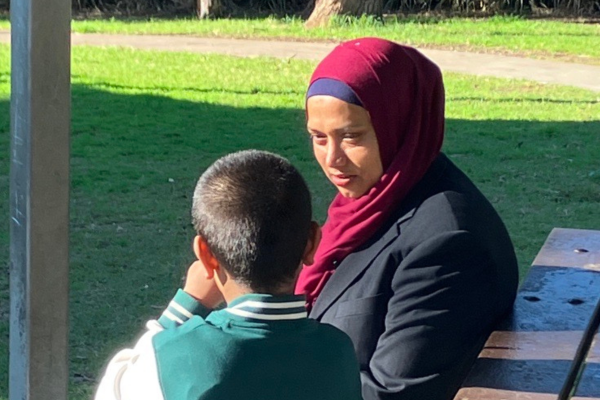
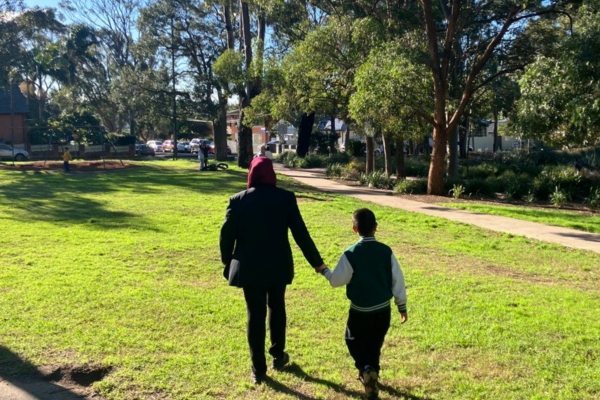
Shoma wanted support for her son, but the system she came up against wasn’t built to reach her: no language-accessible information, no clear entry point, and paediatrician costs she couldn’t afford. These were gaps in a service system that assumes a level of access many families like hers simply don’t have.
It was only through referrals shared by the other mother in her community and the help of an early childhood professional, who listened to Shoma’s pleas to help her understand the system, that she was able to move things forward for her son.
“I found it incredibly hard to talk to the providers. I didn’t have any guidelines or understand how to access support, but I was trying my best for my son.”
Six months later, funding came through. Amir started speech pathology and occupational therapy through an early intervention community organisation, and Shoma finally saw him make progress. Within a month, he began talking.
*Name changed to protect privacy
Key facts (AEDC)
- Children from CALD backgrounds are half as likely to access early intervention supports as other children
- Children from CALD backgrounds who did not attend any early childhood education and care were almost 80 per cent more likely to be developmentally vulnerable at school entry
- More than 51 per cent of Australians are first- or second-generation migrants, yet only 10 per cent of NDIS participants are from culturally diverse backgrounds
- When culturally responsive organisations are involved, NDIS access for culturally diverse communities is more than double the national average
NCDRC: Settlement Services International (SSI), Koorana Child & Family Services, Western Sydney MRC, Playgroup NSW, Queanbeyan Multilingual Centre, IMS Illawarra Multicultural Services, Aman (Asylum Seekers Action Network), Ethnic Community Services, ECCQ Ethnic Communities Council of Queensland, Settlement Council of Australia, EYIA, Autism Community Network, NDS National Disability Services, and SydWest Multicultural Services.
Other media releases
Media releases
20 Oct 2026
Media releases
16 Oct 2026