

Australia needs systemic change across government and institutions to strengthen social cohesion at this critical moment, national non-profit SSI told the Royal Commission into Antisemitism and Social Cohesion in Australia yesterday.
Australia needs systemic change across government and institutions to strengthen social cohesion at this critical moment, national non-profit SSI told the Royal Commission into Antisemitism and Social Cohesion in Australia yesterday.
SSI CEO Violet Roumeliotis and General Manager of Newcomers, Settlement and Integration Yamamah Agha gave evidence outlining a five-point plan to rebuild social cohesion and address the systems that allow racism and exclusion to persist.
Ms Roumeliotis told the Royal Commission that social cohesion should be understood as the outcome of a deeper goal: collective belonging.
“We tend to think about it as collective belonging, whether people feel recognised as part of Australia’s national story and feel they have an equal stake in our future. For SSI, it’s not simply whether different communities peacefully coexist, it’s whether people can participate fully in our economic, social, civic and cultural life.
“The reality is that social cohesion is largely invisible when it is working and catastrophic when it fails. Like infrastructure, it requires investment, engineering and constant maintenance. When we neglect the upkeep, we should not be surprised when cracks appear,” she said.
“If we address inequity and racism, then Australian communities will flourish and social cohesion will be bolstered.”
SSI welcomed the Commissioner’s interest in its recommendations across five reform areas put forward in its submission to the Royal Commission earlier this year, calling for
- National leadership that embeds social cohesion as core business across every layer of government
- Local listening roundtables with diaspora, faith and community groups, modelled on the approach New Zealand took after the 2019 Christchurch massacre
- A national advisory council giving faith and diaspora leaders a direct line to the Prime Minister
- Stronger anti-racism education in schools and action to prevent racism in workplaces
- Guaranteed support for all communities facing elevated risk to their safety and wellbeing
SSI is also urging the federal government to fully implement the Multicultural Framework Review and National Anti-Racism Framework, both developed through extensive consultation with communities across the country.
Ms Roumeliotis said social cohesion cannot be built through crisis response alone. Australia needs sustained action to tackle the underlying drivers of racism and division, rather than simply responding after incidents occur.
“Implementing the national anti-racism and multicultural frameworks would move us towards a more prevention focused approach, strengthening the institutions, relationships and opportunities that help people feel that they belong, are safe, included and that they have an equal stake in Australia’s future,” she said.
SSI’s appearance at the Royal Commission follows the Think Social Cohesion Summit, hosted by SSI, SydWest Multicultural Services and the Settlement Council of Australia last month, which brought together 160 leaders from government, community, civil society and academia to develop a shared agenda for strengthening social cohesion. A roadmap based on the summit’s findings is currently being developed.
As the Royal Commission formulates its findings and recommendations, SSI will continue working with settlement services, the community sector and government to advocate for reforms, partnerships and initiatives that address all forms of hate and strengthen belonging, safety and inclusion of all Australians.
Read SSI’s full submission to the Royal Commission here.
A pioneering program that supports migrant women to navigate the skills and qualifications recognition system will launch in Queensland this week.
The first of its kind in Australia, the Women’s Employment and Skills Pathways (WESP) aims to unlock the full potential of migrant women by supporting individual employment journeys, while also addressing significant workforce shortages across a range of industries and boost Australia’s productivity.
Operating out of Logan, Queensland and offering online support, the program’s initial piloting has already supported over 130 participants from over 40 countries of origin and based in QLD, NSW, VIC, SA, WA, ACT and NT. They include women with qualifications in healthcare, social work, engineering, teaching, law, commerce and hospitality, among others.
WESP is run by national non-profit SSI and funded for three years by the Minderoo Foundation as part of their commitment to gender equality in Australia.
Treasurer Hon Dr Jim Chalmers MP will officially launch the program at SSI’s Logan Hub on Wednesday 26 August, with other speakers including SSI CEO Violet Roumeliotis AM, Minderoo Foundation’s CEO John Hartman, and program participants.
WESP is aligned with the objectives of the Activate Australia’s Skills campaign, led by SSI and supported by over 130 partner organisations, and is informed by the campaign’s recent report Activate Her Skills: Harnessing the economic potential of migrant women through skills recognition.
The report found that more than 340,000 migrant women are working below their skill and qualification levels, driven in part by Australia’s complex and confusing skills recognition system and a lack of tailored support to help women navigate it.
Violet Roumeliotis AM, SSI CEO
“Australia cannot afford to leave talent on the sidelines. Every day, highly skilled migrant women are working below their qualifications or struggling to navigate complex recognition processes. This program is about unlocking their skills, strengthening their economic participation and helping address workforce shortages in sectors that urgently need talent.”
John Hartman, Minderoo Foundation CEO
“Every woman, regardless of her background, should have a fair opportunity to participate in the economy, realise the value of her skills and qualifications, and pursue her career ambitions.”
“Too many migrant women face significant barriers to having their skills, qualifications and professional experience recognised here in Australia.
“Minderoo Foundation is proud to support the Women’s Employment and Skills Pathways Program, which is helping remove those barriers and work towards a more equitable Australia where talent, not circumstance, determines opportunity.”
Program participants:
Smita is based in Victoria and a qualified lawyer from India. She initially migrated to New Zealand, where she completed the relevant skills recognition and accreditation processes before subsequently moving to Australia and completing the requirements to have her professional qualifications recognised here. Due to life circumstances, Smita was unable to pursue employment in her profession after arriving in Australia. Through WESP, she is now receiving tailored navigation and support to reconnect with her professional pathway and to work towards re-entering the legal profession.
Klaudia is based in Queensland and a qualified biomedical engineer from Poland. She came to Australia through the Graduate Visa program and has since established her life here and proudly became an Australian citizen. She is currently being supported by WESP to navigate the professional recognition and accreditation process with Engineers Australia and to work towards re-establishing her career as a biomedical engineer.
Diana is based in Victoria and a qualified social worker from Uganda. Despite her nine years of prior experience, she has not been able to secure employment in her field since arriving in Australia. Through WESP, she is receiving personalised navigation support to understand the recognition and employment pathways available to her and to work towards achieving her goal of practicing as a social worker.
SSI has welcomed the Australian government’s response to the House Standing Committee on Health, Aged Care and Disability’s Inquiry into the Thriving Kids initiative, saying it is an important step towards helping more children with disability access early support.
SSI General Manager of Children, Families and Disability Support Ben Fioramonte said the focus must now turn to implementation, particularly for children from culturally and linguistically diverse (CALD) communities who are around half as likely to access early intervention services as other children, despite often facing similar levels of need.
“The government has taken an important step forward in recognising that the success of Thriving Kids will depend on whether it reaches the children and families who are currently missing out,” Mr Fioramonte said.
“We encourage governments to ensure multicultural organisations are part of the delivery model, that CALD voices are included in decision-making, and that community feedback helps shape the ongoing evaluation of the initiative.”
SSI welcomed the government’s support for a commissioned service model to help ensure quality services are available across all Thriving Kids jurisdictions.
“Trusted multicultural, settlement and place-based organisations must be recognised as essential partners in delivering Thriving Kids, particularly in communities where children are least likely to access support,” Mr Fioramonte said.
“For many migrant and refugee families, these organisations are already the first place they turn to for advice and support. They help families navigate complex systems, build confidence and connect with the right services early.”
SSI also welcomed the government’s in principle support for inclusive co-design through the Thriving Kids Advisory Group and called for strong multicultural representation across governance and implementation arrangements.
Mr Fioramonte, who also chairs the National CALD Disability Reform Committee, said the committee could provide governments with valuable insights into service gaps, community awareness and emerging needs across the country.
“The Committee brings together services, peak bodies and community organisations working directly with culturally diverse communities across Australia,” he said.
“It is well placed to provide governments with practical feedback about where services are working, where gaps remain and what more is needed to ensure families can access support.”
SSI said community-led feedback should form part of the ongoing monitoring and evaluation of Thriving Kids.
“If Thriving Kids is going to succeed, governments need to understand not only where services are being delivered, but which communities are still missing out,” Mr Fioramonte said.
“Listening to the experiences of families and community organisations will be critical to ensuring the program delivers on its promise for every child.”
A broad alliance of business and civil society organisations is calling on the federal government to urgently convene a National Migration Summit this year to move beyond short-term politics, strengthen public confidence and develop a long-term plan for Australia’s migration system.
Migration is too important to be left to reactive policymaking or political point-scoring, according to the alliance, which represents industry, small business, social services and multicultural organisations.
The proposed summit would bring together governments, business, unions, community and settlement organisations, researchers, economists and migration experts to develop a shared national vision that balances economic opportunity, workforce needs, regional development, social cohesion and community confidence.
The summit would also provide a forum to seriously address legitimate community concerns about housing affordability, infrastructure and cost-of-living pressures through evidence and coordinated policy, rather than reactive debates narrowly focused on migration numbers.
For decades, governments of all political persuasions have recognised well-managed migration as one of Australia’s greatest national strengths, supporting economic prosperity while helping build one of the world’s most successful multicultural societies.
Now is the time to renew that consensus.
The statement is endorsed by Australian Council of Social Service (ACOSS), Council of Small Business Organisations of Australia (COSBOA), Federation of Ethnic Communities’ Councils of Australia (FECCA), Migration Institute of Australia, Minerals Council of Australia, Refugee Council of Australia (RCOA), Regional Australia Institute, Settlement Council of Australia (SCOA), Settlement Services International (SSI) and the Tech Council of Australia.
Dr Cassandra Goldie AO, CEO, Australian Council of Social Service
“Our diverse, multicultural society is one of our greatest strengths. We need to strengthen support for people newly arrived, so that everyone gets a great start to live with dignity and safety in this country. A National Migration Summit would progress this vision.”
Skye Cappuccio, CEO of the Council of Small Business Organisations Australia (COSBOA)
“Skilled migration is essential to small business, particularly in regional and rural Australia where local labour shortages bite hardest. For a local café, a regional tradie or a rural health clinic, the right migration settings can be the difference between staying open and turning work away.
Migration policy works best when it’s grounded in evidence — informed by data and by the real experience of businesses and communities. That’s how we build a program small businesses can plan and invest around, and importantly, trust to deliver.
That’s why COSBOA supports the call for a National Migration Summit to create a migration strategy that strengthens our economy and keeps public confidence in the program strong.”
Prerana Mehta, CEO, Federation of Ethnic Communities’ Councils of Australia
“A skilled, productive workforce and a cohesive multicultural Australia are not separate objectives – they are the same. FECCA is calling on government to convene a National Migration Summit as a forum where the system can align economic and workforce planning with the settlement and cohesion settings that sustain it with evidence, consultation and a shared national interest at its centre.”
Peter van Vliet, CEO, Migration Institute of Australia
“It is important to bring government, industry and the community together to develop a renewed, positive and agreed migration strategy both to benefit Australia and renew the social license for migration to Australia. The strategy should recognise the critical importance of targeted skilled migration and student migration to our economy as well as the social importance of other migration streams such as partner and humanitarian migration.”
Tania Constable, CEO, Minerals Council of Australia
“Australia’s mining industry needs skilled migration to grow and prosper. Skilled migration sustains economic growth, fills labour gaps and supports the sector’s role as a cultural and social anchor in regional communities. Co-designing the future of our skilled migration system is a positive way to consult broadly for a stronger future.”
Adama Kamara, Co-CEO, Refugee Council of Australia
“A National Migration Summit presents a vital opportunity to look holistically at how all migration streams meet Australia’s long-term needs. Genuine collaboration – bringing industry, civil society, and refugees directly into the decision-making process – is essential. Most importantly, when we design policy with key stakeholders, we create more effective, and more enduring outcomes for our entire nation.”
Liz Ritchie, CEO of the Regional Australia Institute
“Regional Australia continues to be overlooked in relation to the migration system. We live with a persistent challenge – a mismatch between labour demand and supply. The strong demand for regional labour is severely limited by the lack of available skilled workers. This results in an even tighter labour market than metro areas and when it’s difficult to fill vacancies, it’s equally difficult to realise the immense opportunities through regional investment and service delivery. If improving Australia’s productivity is the number one priority, it’s high time regional Australia was prioritised and not an afterthought.”
Maria Dimopoulos AM, CEO of the Settlement Council of Australia
“Australia’s migration system is strongest when migration and settlement work hand in hand. A National Migration Summit reflects the confidence and political courage to tackle one of Australia’s most important policy challenges through evidence, collaboration and a shared long-term vision for the benefit of all Australians.”
Violet Roumeliotis AM, CEO, Settlement Services International
“Australia desperately needs a long-term, evidence-based plan for migration. A National Migration Summit would help us move beyond the politics, strengthen public confidence and focus on what kind of country we want to build together. Australians deserve better than an endless debate about how much migration should be cut. They deserve a plan for the future.”
Lucinda Longcroft, Director of Policy and Government Affairs, Tech Council of Australia
“Australia’s technology sector has been built in significant part by people who chose to make their careers here. The Tech Council supports a National Migration Summit as a way to renew the consensus that well-managed migration is in Australia’s interest, and to plan for the long term.”
The Australian government’s humanitarian funding for Rohingya refugees and host communities in Bangladesh is a welcome step forward that demonstrates a strong commitment to one of the world’s most protracted displacement crises, according to non-profit SSI.
The $25.3 million in funding – part of an ongoing commitment from the Department of Foreign Affairs and Trade – will support life-saving assistance, skills development and disaster risk reduction initiatives for Rohingya communities in Cox’s Bazar, where more than one million refugees continue to live in challenging conditions amid declining global humanitarian funding.
SSI CEO Violet Roumeliotis said the announcement reinforced the importance of sustained international engagement and long-term investment in refugee protection across the Asia-Pacific region.
“I visited Cox’s Bazar myself earlier this year and it’s hard to put into words the immense challenges facing Rohingya refugees, but also the extraordinary resilience, leadership and strength within the community,” Ms Roumeliotis said.
“We met women, young people and community leaders who are building opportunities for others despite living in circumstances that most of us can barely imagine. Australia’s continued support sends an important message that the Rohingya people have not been forgotten.”
For more than a decade, SSI has supported refugee-led initiatives in the region through partnerships that recognise refugees not simply as recipients of assistance, but as leaders, advocates and agents of change.
Most recently, SSI has supported the Asia-Pacific Refugee Rights Network’s work with Shanti Mohila, a Rohingya women’s network in Cox’s Bazar that is empowering survivors of sexual and gender-based violence through peer support, leadership development, literacy training, advocacy and community organising.
“Community-led responses are often the most effective and resilient in times of crisis because they are grounded in trust, lived experience and local knowledge,” Ms Roumeliotis said.
“Our experience in Cox’s Bazar confirmed what we have seen throughout our work across the region: when refugees are supported to lead, communities are stronger, solutions are more sustainable and outcomes are more meaningful.”
SSI said the announcement should also serve as a reminder that humanitarian assistance alone is not enough. Sustained regional cooperation, refugee participation and long-term solutions remain essential.
“We commend the Australian government for showing leadership and stepping up its response to the largest displacement crisis in our Asia-Pacific region.” Ms Roumeliotis said.
“Australia has an opportunity to continue demonstrating leadership by expanding safe and accessible pathways for refugees, including resettlement, education, labour mobility, family reunion and community sponsorship pathways in addition to our existing refugee intake, ensuring that stateless and undocumented refugees are not left behind.”
SSI also renewed its call for stronger investment in refugee-led organisations and leadership pathways across the region.
“Durable solutions are most effective when they are shaped by refugees themselves. Governments, donors and international partners should invest directly in refugee leadership, community capacity and refugee-led organisations, not only in service delivery,” Ms Roumeliotis said.
“No single country can address displacement challenges alone. The future requires collective action, regional collaboration and genuine partnership between governments, civil society, international agencies and refugee communities.”
Without a clear focus on culturally and linguistically diverse (CALD) communities, Australia’s new Thriving Kids program risks missing up to half the children who need it most, according to a new report.
Cultural and systemic barriers mean children from CALD backgrounds are currently half as likely to access early intervention supports as other children. This is according to No Child Left Out: Designing Thriving Kids for a Diverse Australia, a report produced by the National Culturally and Linguistically Diverse Disability Reform Committee (NCDRC), a national network of services, peak bodies, and community organisations working with culturally diverse communities.
Unless these barriers are addressed, Thriving Kids risks entrenching existing inequities facing multicultural families rather than reducing them, warns NCDRC Chair Ben Fioramonte.
“Thriving Kids represents a once-in-a-generation opportunity to design an early intervention system that works for every child, regardless of their cultural or linguistic background,” said Mr Fioramonte, who is also the General Manager of Children, Families and Disability Support at SSI, the organisation leading NCDRC.
“The design window for this program is closing. Governments must act now to ensure culturally responsive care is built into Thriving Kids instead of trying to retrofit later on- which we know doesn’t work.”
“Too many children are missing out on the support they need because services aren’t designed with culturally diverse families in mind.
When families can’t access services early, children miss critical opportunities to thrive. The cost of inaction is significant – investing in early intervention also avoids increased pressure on health, education and social support systems over time, resulting in lower costs for government and the community.”
“The strategies we’re recommending will enable governments to reach more children, improve equity and access, and deliver better outcomes by ensuring culturally responsive organisations, trusted community networks and diverse families are involved at every stage of program design and delivery.
Bangladesh-born Shoma has watched her son Amir*, now six, struggle without the support that he needs. Amir has global developmental delay, and the services meant to help him weren’t built with families like his in mind.
The concerns started at childcare, when staff reported that Amir wouldn’t speak and seemed to struggle with symptoms of hyperactivity. But there was no clear pathway handed to Shoma from there. The only guidance she found came informally, through another woman in her community group who had been through the same system gap.
“My son’s disability is hard to understand, sometimes it shows up and sometimes it doesn’t. But as a mum I see it. Watching him not get the help he needed, I felt in a dark hole worrying about my son.”
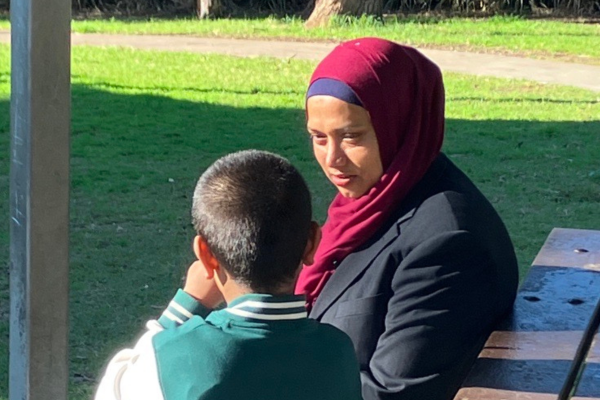
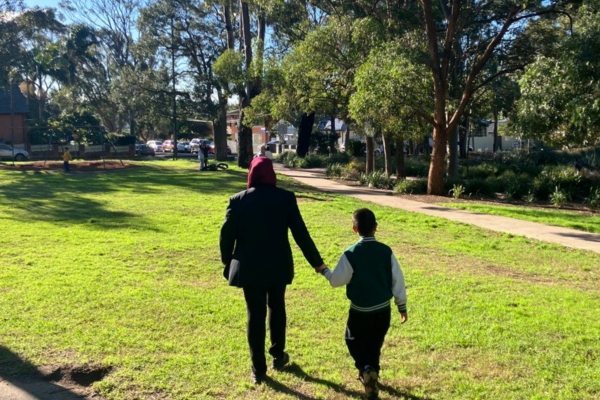
Shoma wanted support for her son, but the system she came up against wasn’t built to reach her: no language-accessible information, no clear entry point, and paediatrician costs she couldn’t afford. These were gaps in a service system that assumes a level of access many families like hers simply don’t have.
It was only through referrals shared by the other mother in her community and the help of an early childhood professional, who listened to Shoma’s pleas to help her understand the system, that she was able to move things forward for her son.
“I found it incredibly hard to talk to the providers. I didn’t have any guidelines or understand how to access support, but I was trying my best for my son.”
Six months later, funding came through. Amir started speech pathology and occupational therapy through an early intervention community organisation, and Shoma finally saw him make progress. Within a month, he began talking.
*Name changed to protect privacy
Key facts (AEDC)
- Children from CALD backgrounds are half as likely to access early intervention supports as other children
- Children from CALD backgrounds who did not attend any early childhood education and care were almost 80 per cent more likely to be developmentally vulnerable at school entry
- More than 51 per cent of Australians are first- or second-generation migrants, yet only 10 per cent of NDIS participants are from culturally diverse backgrounds
- When culturally responsive organisations are involved, NDIS access for culturally diverse communities is more than double the national average
NCDRC: Settlement Services International (SSI), Koorana Child & Family Services, Western Sydney MRC, Playgroup NSW, Queanbeyan Multilingual Centre, IMS Illawarra Multicultural Services, Aman (Asylum Seekers Action Network), Ethnic Community Services, ECCQ Ethnic Communities Council of Queensland, Settlement Council of Australia, EYIA, Autism Community Network, NDS National Disability Services, and SydWest Multicultural Services.
SSI has welcomed the Australian Government’s response to the National Response to Islamophobia report, developed by Australia’s Special Envoy to Combat Islamophobia. Schools will play a key role in the government’s commitments, building understanding of Muslim communities and promoting greater respect across Australia.
While education is a fundamental building block for inclusion and respect, SSI’s CEO Violet Roumeliotis said Australia’s response to rising Islamophobia needs to extend beyond the education system to drive change across all services the government delivers.
“The government’s response includes important and welcome measures, but tackling Islamophobia requires more than education alone. Every part of government has a role to play in removing the structural barriers and inequities that undermine belonging and social cohesion,” Ms Roumeliotis said.
“Social cohesion is built on a shared sense of belonging. That belonging grows when people are included, treated respectfully and have genuine opportunities to contribute to the nation’s future. We cannot achieve lasting social cohesion while racism, including Islamophobia, continues to exclude and dehumanise people.”
SSI strongly supports the government’s education and awareness measures, as well as funding to build community capacity and resilience. It also welcomes the Australian Federal Police’s expanded Community Liaison teams and new Social Cohesion Consultative Board, while noting these initiatives will only succeed if they are backed by sustained engagement and genuine partnership with the Muslim community and their leaders, rather than one-off consultation.
The announcement of additional investment in the Office for Multicultural Affairs to deliver measures to combat Islamophobia has also been welcomed. However, the Office should be empowered and resourced to advocate for whole of government implementation of the Multicultural Framework Review and National Anti-Racism Framework recommendations.
SSI notes that several significant recommendations from the Special Envoy’s report remain unaddressed. These include an independent review of counter-terrorism laws, policies and practices to investigate their potential discriminatory impacts on Muslim Australians. There has also been no commitment to the Special Envoy’s recommendation for an inquiry into Islamophobia, anti-Palestinian and anti-Arab racism.
SSI urges the government to adopt a genuinely system-wide, structural approach to addressing racism, including Islamophobia.
“The Special Envoy’s report makes recommendations across several federal departments, recognising that real change requires action from the whole of government,” Ms Roumeliotis said.
“The National Anti-Racism Framework is the vehicle to address the structural and systemic racism that affects all communities. While measures to specifically address Islamophobia are important, they need to be part of an overall commitment to tackling the root causes of racism and hate against all communities.”
SSI is calling on the government to take two immediate steps to commit to the National Anti-Racism Framework to eliminate racism in Australia, and establish a taskforce to oversee and advise on its implementation, including specific implementation plans to address racism against Aboriginal and Torres Strait Islander peoples and other affected communities. More than 70 civil society organisations have previously backed this call.
SSI is committed to working alongside the government to address Islamophobia and all forms of hate, and build an Australia where everyone can feel safe, included and a sense of belonging.
A new report is calling on Australian organisations to move beyond one-size-fits-all gender equity efforts and confront the systemic barriers holding culturally and racially marginalised (CARM) women back from leadership positions.
The report captures early findings from the RISE Project (Realise. Inspire. Support. Energise.), a four-year initiative working with 25 organisations across Australia to break down systemic barriers and expand leadership pathways for CARM women. The project was led by Diversity Council Australia (DCA), Settlement Services International (SSI) and Chief Executive Women (CEW), with funding from the Australian government Office for Women.
The RISE Project: an Insights Report draws on organisational diagnostics, lived experience insights and emerging evidence from participating organisations to explore what drives sustainable and inclusive change.
Early findings from the report highlight that organisations made the strongest progress when they focused on building racial literacy, centring CARM women’s voices in organisational decision-making, improving access to sponsorship and influential networks, and strengthening the data and metrics needed to track equity outcomes.
Key highlights from the report:
• 360 CARM women took part in the RISE Project across 25 participating organisations
• 623 mentoring or coaching sessions were delivered with 157 participants
• 269 participants took at least one step towards their career goals
• 63 women participating in the project secured a new role.
The report provides an initial set of descriptive learnings from the project. While further analyses are still underway, the Insights Report focuses on how organisations engage with the process of eliminating gendered racism in practice, providing insights into the steps organisations can take to move from intent to implementation.
“In 2023, DCA’s landmark CARM Women in Leadership report identified the entrenched systemic barriers CARM women face in Australian workplaces. That same year, we launched RISE alongside our consortium partners SSI and CEW to address those barriers and help create more equitable pathways to leadership,” said Dr Virginia Mapedzahama, DCA’s Racial Equity and Intersectionality Director and Project Lead, RISE.
“As this project comes to an end, our hope is that these findings will inform and strengthen ongoing efforts to drive systemic change so that more CARM women can access the leadership opportunities they deserve.
“If organisations want different leadership outcomes, they need to ask different questions, listen more carefully to the women most affected, and be willing to change the systems that hold inequity in place.”
“In many organisations, the higher you move up the leadership pipeline, the less diverse it becomes. That pattern reflects the structural and attitudinal barriers that CARM women continue to face in Australian workplaces — barriers that cannot be addressed through one-size-fits-all approaches,” said SSI CEO Violet Roumeliotis.
“This report is essential reading for any organisation seeking to dismantle those barriers and build more fair and inclusive workplaces. The findings show the profound impact when employers take the time to listen and create environments where CARM women can thrive. When we invest in and support CARM women to succeed on their own terms, we create stronger, more inclusive organisations that are better equipped for the future.”
“Efforts to advance women that treat all women as one group will always overlook those who face the greatest obstacles. CARM women are capable, ambitious and ready to lead; what holds them back is a system built around a narrow idea of who a leader is, not any lack of talent,” said Lisa Annese, CEO of Chief Executive Women.
“This report gives organisations a practical place to begin, and Chief Executive Women urges them to take it. Real progress means redesigning the pathways into leadership, not asking women to fit a mould that was never made for them.”
Access the RISE Project: an Insights Report via DCA’s website.
List of RISE participating organisations
Accenture Australia Pty Ltd
ACON Health Limited
Anglicare Victoria
ANU College of Systems and Society
Arup
Aurecon
Australian Financial Complaints Authority (AFCA)
BHP
Crown Resorts
Deloitte
EnergyAustralia
Gilbert + Tobin
HCF – Hospital Contributions Fund of Australia
Jesuit Social Services
Navitas Pty Ltd
Royal Australian and New Zealand College of Obstetricians and Gynaecologists (RANZCOG)
Russell Kennedy
Spectrum Migrant Resource Centre
Telstra
The Star Entertainment Group
Uniting NSW.ACT
University of Sydney
University of Technology Sydney
Westpac Group
Woolworths Group
A delegation of Australian advocates on the ground at the world’s largest refugee camp has called for desperate action to address the unprecedented growth in people displaced by war and persecution, on the eve of the release of UNHCR’s annual Global Trends report.
Australian representatives from SSI and Amnesty International Australia joined the Asia Pacific Refugee Rights Network (APRRN) in Cox’s Bazar to warn that no single country or organisation can address the scale of what is unfolding, calling for regional collaboration, collective action and refugee-led solutions across the Asia-Pacific.
The visit comes on the eve of the UNHCR Global Trends report, which is expected to show a region at breaking point, where resettlement pathways are shrinking, funding is being cut and political resistance to refugee protection is growing.
For Rohingya refugees, among the world’s most protracted displaced populations, conditions are worsening and there is no clear path home. Since early 2024, 150,000 Rohingya people have arrived in Cox’s Bazar, straining already depleted resources and pushing overcrowded camps to their limits with more than 1.2 million residents.
SSI CEO Violet Roumeliotis said there is no quick-fix solution to a crisis of this scale, but the Australian Government has clear levers it can pull, demonstrating regional leadership by increasing the humanitarian intake, expanding complementary pathways and advancing responsibility-sharing.
“At a time when displacement is reaching record levels and international support is under pressure, countries like Australia have an opportunity to step up with regional actors and help shape a more coordinated and compassionate regional response.
“After ten years of partnership with APRRN, we’ve seen firsthand the importance of refugee networks as the social infrastructure increasingly holding refugee protection together, filling the gaps left by retreating institutions and creating the conditions for collective advocacy that no single organisation can achieve alone,” she said.
Hafsar Tameesuddin, a Rohingya refugee and APRRN’s Co-Secretary General, said displaced communities in the region are not waiting for international actors to solve the crises affecting their lives, but are already organising, advocating, and building the case for accountability themselves.
“I have long believed, and my recent visit reinforced, that refugee-led organisations are among the most needs-based, practical, and community-centred actors in humanitarian response. They understand their communities best and consistently deliver meaningful impact.
“APRRN has been facilitating and will continue to support the decentralisation of funding, localisation of decision-making, and redistribution of power towards refugee-led organisations. Lasting systems change will only be achieved through genuine partnerships that recognise them as equal partners,” she said.
Amnesty International Australia Refugee Rights Campaigner Zaki Hairari said what he saw in Cox’s Bazar was confronting and heartbreaking. These people are living in limbo, having fled genocide in Myanmar, yet the world is slowly forgetting them.
“I met children learning on concrete floors with no carpet, families living in overcrowded shelters, and young people whose only request was the chance to have a future. Their resilience is extraordinary, but resilience alone cannot replace action.
“The Rohingya people cannot remain trapped in refugee camps forever. The international community must increase humanitarian support, expand resettlement pathways, and invest in education and livelihoods. The Rohingya deserve more than a life of waiting; they deserve hope, dignity, and a future,” he said.
Photo credits:
Ro Maung Hla Myint (@ro_maung_hla_myint)
Ro Yassin Abdumonab (@ro_yassin_abdumonab)
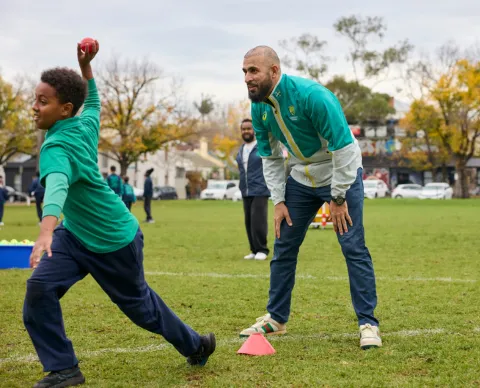
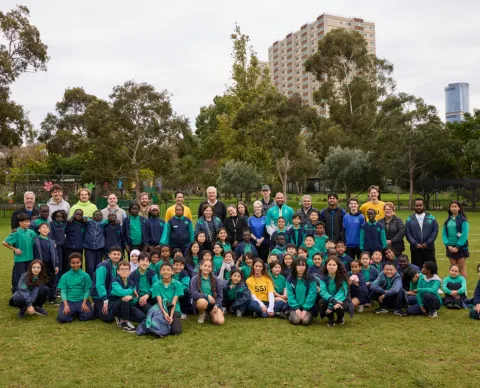
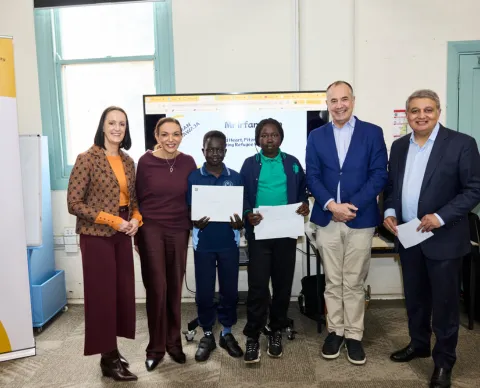
Students at Sacred Heart Primary School in Fitzroy joined cricketer Fawad Ahmed for a special Refugee Week event that brought together cricket and community, while marking a historic national milestone.
The event, delivered in partnership with the Usman Khawaja Foundation and SSI, Australia’s largest refugee resettlement organisation, recognised that Australia has now welcomed one million refugees since the end of World War II.
The milestone resonated strongly with the school community, with many students and families having their own lived experience of displacement and resettlement.
Ahmed, who sought asylum in Australia himself, shared his story with students and used cricket as a way to connect, inspire and build confidence among young people.
Multicultural Affairs Minister the Hon. Dr Anne Aly MP, Sarah Witty MP, Member for Melbourne, and SSI Chair Peter van Vliet also joined the event, which formed part of Refugee Week 2026 ― an annual celebration highlighting stories of courage, resilience and belonging across Australia.


Usman Khawaja, cricketer and founder of the Usman Khawaja Foundation:
“I am excited to have the Usman Khawaja Foundation here today at Sacred Heart Primary School, joining forces with SSI. Our two organisations share common goals and purposes and a belief that every young person deserves the opportunity to belong, to contribute and to thrive.”
Hon. Dr Anne Aly MP, Minister for Multicultural Affairs:
“Every person deserves to feel safe, included and proud of who they are. Refugee Week is a reminder that belonging is built in places just like this, in classrooms, playgrounds, local clubs and communities that welcome people in.”
“Fawad’s story shows that where you start in life does not define where you can go. Sport has a special way of bringing communities together, and today was a beautiful example of multicultural Australia in action.”
“The Albanese Government will always back communities that help people feel at home, participate fully and contribute to the country we share.”
Violet Roumeliotis AM, SSI CEO:
“Reaching one million refugees welcomed to Australia is a powerful reminder of who we are as a country. This milestone is not just about numbers — it’s about the kind of country we choose to be. What we saw on the pitch today is what real opportunity looks like: young people being supported to thrive and to see themselves as part of Australia’s story. Sport has a unique ability to bring people together. Whether on the cricket pitch or local sports field, it creates friendships and helps people from different backgrounds see each other as teammates and neighbours.”
Fawad Ahmed, cricketer:
“Since World War II, Australia has welcomed more than one million refugees. We are celebrating their courage, resilience, and contribution to our nation, and reaffirm our commitment to a future built on compassion, dignity and opportunity for all.”