

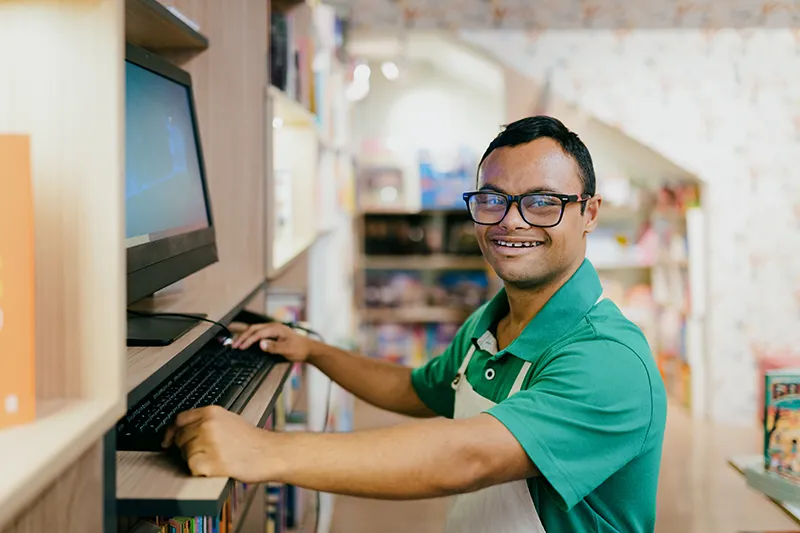
Culturally-responsive employment support for refugees with disability
We provide culturally-responsive employment support for people from refugee backgrounds in NSW, QLD and Victoria living with injury, illness or disability.
With over 25 years of experience offering refugee employment support services and job support for migrants, we help people recognise their skills and build confidence in what they can do.
Who we help
Inclusive Employment Australia has replaced Disability Employment Services.
SSI offers the Inclusive Employment Australia program in NSW, QLD and Victoria. Click here to find our office locations.
To be eligible to receive services with SSI, participants must:
- be an Australian resident or eligible visa holder (protected special category visa, temporary protection visas, or safe haven visas)
- have a disability, injury or health condition
- be between 14 and 67 years of age
- not be studying full-time
- not be working at or above your assessed work capacity.
Participants do not need to receive an Income Support Payment to access support.
Inclusive Employment Australia is funded by the Australian Government Department of Social Services.
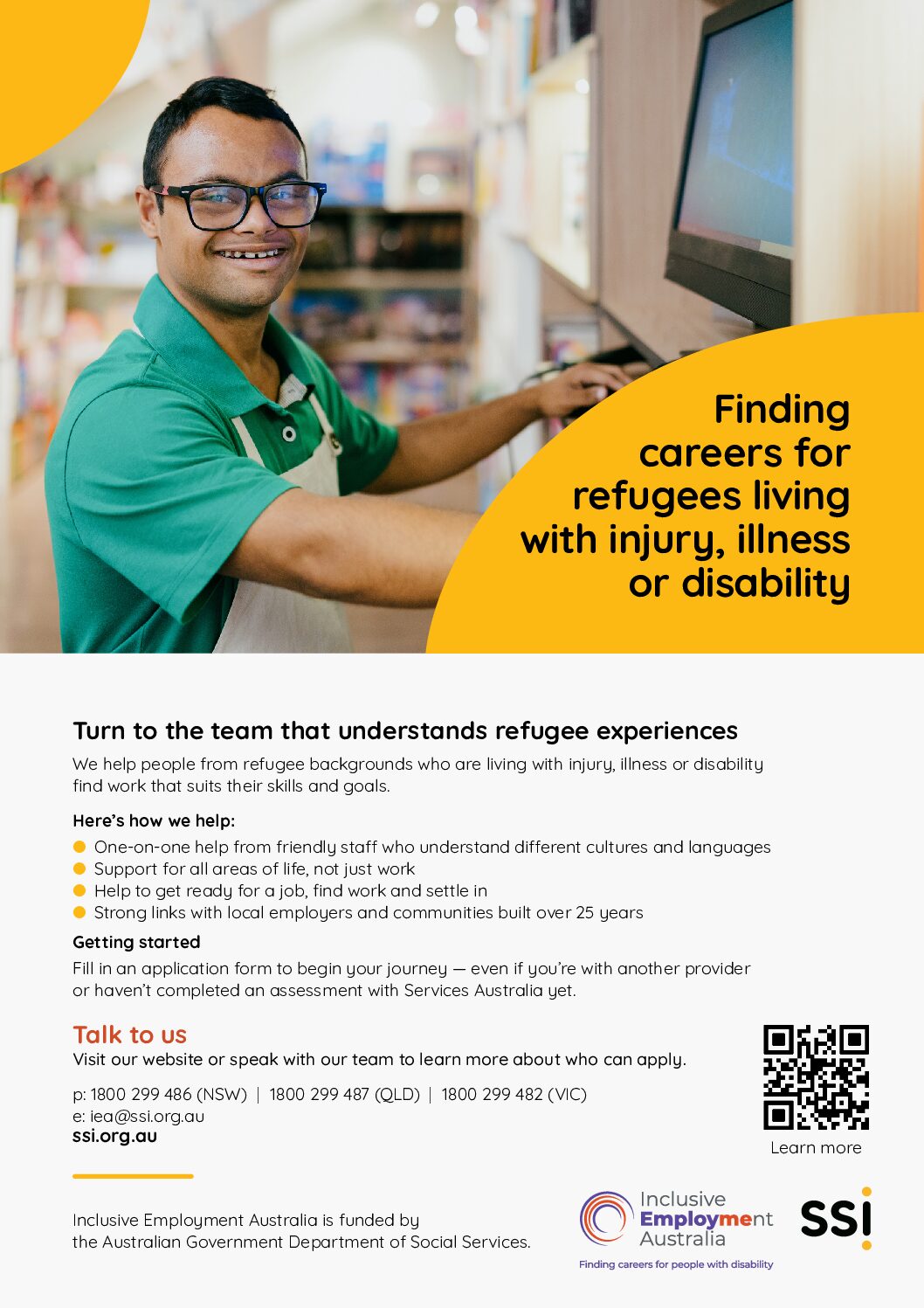
Download information flyer/poster
Where can you find us?
NSW
Ashfield
First Tuesday of every month
9am – 4pm
Level 2, 158 Liverpool Rd, Ashfield NSW 2131
1800 299 486
iea.nsw@ssi.org.au
Auburn
Monday – Friday
9am – 5pm
Suite 405, Level 4/39 Queen St, Auburn NSW 2144
1800 299 486
iea.nsw@ssi.org.au
Bankstown
Monday – Friday
9am – 5pm
Level 2, 462 Chapel Rd, Bankstown NSW 2200
1800 299 486
iea.nsw@ssi.org.au
Bonnyrigg
Wednesday
9am – 4pm
2 Wall Pl, Bonnyrigg NSW 2177
1800 299 486
iea.nsw@ssi.org.au
Burwood
Monday and Wednesday
10am – 4pm
2 Conder St, Burwood NSW 2134
1800 299 486
iea.nsw@ssi.org.au
Cabramatta
Monday – Friday
9am – 5pm
Suite 3, Level 1 Dutton Plaza Office, 8 Dutton Ln, Cabramatta NSW 2166
1800 299 486
iea.nsw@ssi.org.au
Campbelltown
Tuesday, Wednesday and Thursday
10am – 4pm
Suite 2 Level 6, 138 Queen St, Campbelltown NSW 2560
1800 299 486
iea.nsw@ssi.org.au
Campsie
Monday and Friday
10am – 4pm
Level 2, 59-63 Evaline St, Campsie NSW 2194
1800 299 486
iea.nsw@ssi.org.au
Fairfield
Monday – Friday
9am – 5pm
7 William St, Fairfield NSW 2165
1800 299 486
iea.nsw@ssi.org.au
Lakemba
Tuesday, Wednesday and Thursday
10am – 4pm
194-198 Lakemba Rd, Lakemba NSW 2195
1800 299 486
iea.nsw@ssi.org.au
Liverpool
Monday – Friday
9am – 5pm
Level 1, 45-47 Scott St, Liverpool NSW 2170
1800 299 486
iea.nsw@ssi.org.au
Marrickville
Tuesday and Thursday
10am – 4pm
176 Marrickville Rd, Marrickville NSW 2204
1800 299 486
iea.nsw@ssi.org.au
Merrylands
Tuesday, Wednesday and Thursday
9am – 4pm
12/254 Pitt St, Merrylands NSW 2160
1800 299 486
iea.nsw@ssi.org.au
Miller
Monday – Friday
9am – 5pm
C02-90 Cartwright Av, Miller NSW 2168
1800 299 486
iea.nsw@ssi.org.au
Parramatta
Tuesday
10am – 4pm
Level 19, 60 Station St East, Parramatta NSW 2150
1800 299 486
iea.nsw@ssi.org.au
Wetherill Park
Tuesday and Thursday
10am – 4pm
Suite 105/447 Victoria St, Wetherill Park NSW 2164
1800 299 486
iea.nsw@ssi.org.au
QLD
Beenleigh
Monday – Friday
9am – 5pm
Level 1, 110-112 George St, Beenleigh QLD 4207
1800 299 487
iea.qld@ssi.org.au
Chermside
Monday, Tuesday and Wednesday
10am – 4pm
Westfield Shopping Centre, Level 2, Corner Gympie & Hamilton Rd, Chermside QLD 4032
1800 299 487
iea.qld@ssi.org.au
Goodna
Monday – Friday
9am – 5pm
9 William St, Goodna QLD 4300
1800 299 487
iea.qld@ssi.org.au
Ipswich
Tuesday and Thursday
9am – 4pm
Level 3, 16 East St, Ipswich QLD 4305
1800 299 487
iea.qld@ssi.org.au
Kingston
Wednesday
9am – 4pm
558 Kingston Rd, Kingston QLD 4114
1800 299 487
iea.qld@ssi.org.au
Logan Central
Monday – Friday
9am – 5pm
91 Wembley Rd, Logan Central QLD 4114
1800 299 487
iea.qld@ssi.org.au
Moorooka
Tuesday
9am – 4pm
1/8 Mayfield Rd, Moorooka QLD 4105
1800 299 487
iea.qld@ssi.org.au
Sunnybank
Monday – Friday
9am – 5pm
Shop 4, 397 Hellawell Rd, Sunnybank QLD 4109
1800 299 487
iea.qld@ssi.org.au
Toowoomba
Tuesday, Wednesday and Thursday
10am – 3pm
123 Margaret St, Toowoomba QLD 4350
1800 299 487
iea.qld@ssi.org.au
Upper Mount Gravatt
Tuesday, Wednesday and Thursday
9am – 4pm
Shop 3B, 2092 Logan Rd, Upper Mount Gravatt QLD 4122
1800 299 487
iea.qld@ssi.org.au
VIC
Broadmeadows
Tuesday, Wednesday and Thursday
9am – 4pm
Level 2, Building A, 61 Riggall St, Broadmeadows VIC 3047
1800 299 482
iea.vic@ssi.org.au
Cheltenham
Monday – Friday
9am – 5pm
Level 2, 11 Chesterville Rd, Cheltenham VIC 3192
1800 299 482
iea.vic@ssi.org.au
Cranbourne
Monday , Wednesday and Friday
9am – 4pm
156 Sladen St, Cranbourne VIC 3977
1800 299 482
iea.vic@ssi.org.au
Croydon
Tuesday
9:30am – 4pm
5 Civic Square, Croydon VIC 3136
1800 299 482
iea.vic@ssi.org.au
Epping
Monday, Wednesday and Friday
10am – 4pm
Unit 16, 26-38 Miller St, Epping VIC 3076
1800 299 482
iea.vic@ssi.org.au
Mill Park
Thursday
9:30am – 4pm
11 Mill Park Dr, Mill Park VIC 3082
1800 299 482
iea.vic@ssi.org.au
Noble Park
Monday – Friday
9am – 5pm
G07/127 Chandler Rd, Noble Park VIC 3174
1800 299 482
iea.vic@ssi.org.au
Richmond
Monday, Wednesday and Friday
10am – 4pm
Suite 106, 91-95 Murphy St, Richmond VIC 3121
1800 299 482
iea.vic@ssi.org.au
Ringwood
Monday, Wednesday and Friday
10am – 4pm
Unit 5, 45-51 Ringwood St, Ringwood VIC 3134
1800 299 482
iea.vic@ssi.org.au
Sunshine
Monday – Friday
9am – 5pm
2 Devonshire Rd, Sunshine VIC 3020
1800 299 482
iea.vic@ssi.org.au
Werribee
Monday – Friday
9am – 5pm
Suite 10, Level 1, 75 Watton St, Werribee VIC 3030
1800 299 482
iea.vic@ssi.org.au
What participants will receive
Support is available to people whether they are thinking about starting work or already have a job and need some help. Support is also available for those who would like to volunteer. They can choose the type of support that suits them from the options below.

Help with job-readiness
- Explore employment goals
- Identify and get help with all types of barriers, not just work-related
- Access training and activities to build your skills
- Attend job preparation workshops and forums
- Access to educational institutions, community organisations and other support (including refugee-specific community linkages)

Help finding a job
- Support finding jobs that align with career ambitions, goals, previous experience, skills and work capacity
- Prepare for interviews and boost confidence
- Access to our network of employers
- Help getting overseas qualifications recognised
- Get the job!

Help in the workplace
- Access to support and training at different stages of employment, including workplace integration, onboarding and on-the-job training
- Address emerging challenges
- Support accessing transport, tools, licensing, and other needs
- Making sure the workplace is comfortable, culturally sensitive and supportive
Why choose SSI?
Finding and keeping a job can be especially hard for newly arrived refugees with disability. Language barriers, health and trauma, digital literacy, transport, and limited support networks often make it difficult to access mainstream services like the NDIS.
At SSI, we understand these challenges — and we know how to help overcome them. Since 2018, we’ve delivered Disability Employment Services (DES) with approaches tailored for refugees, including:
- Bilingual and culturally competent staff who understand refugee journeys
- Strong connections with refugee communities, leaders and services
- Personalised support that respects individual needs and lived experience
- Holistic help that goes beyond just job placement, for example, language, housing, financial aid and physical and mental health supports

Staff

Strong connections

Personalised support

Holistic help
Our track record shows the difference: We assisted over 11,600 participants between 2017 and 2024 into employment, education pathways, obtaining overseas skills and qualification recognition, and referrals into wrap-around and support services.
By focusing on refugee participants, SSI offers a culturally safe employment program, that is trusted and proven — giving people the best chance to succeed in the workforce and build a bright future.
What makes us different

We have dedicated teams who work closely with participants, employers and communities — each with a specific focus to help people get ready for work, support employers to recruit, and build strong community links.
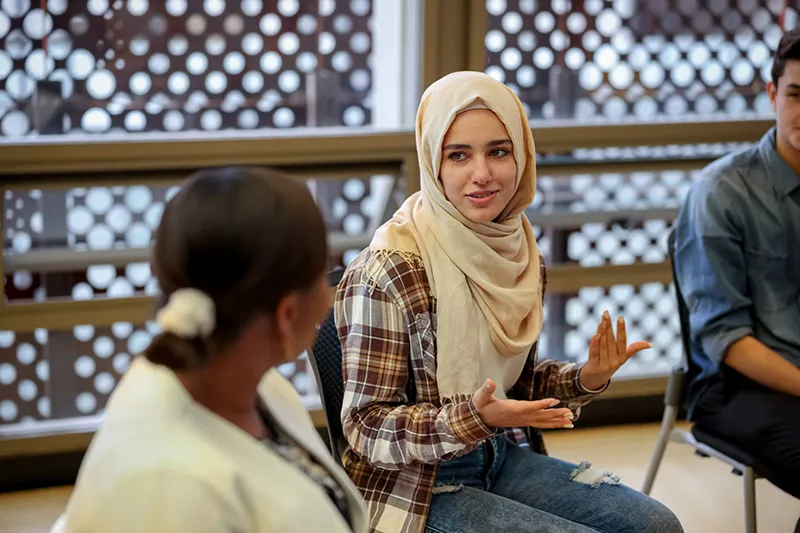
Over more than 25 years, we’ve built strong relationships and trusted networks within communities. Access to our range of services and deep community connections mean participants receive complete support for every aspect of life.
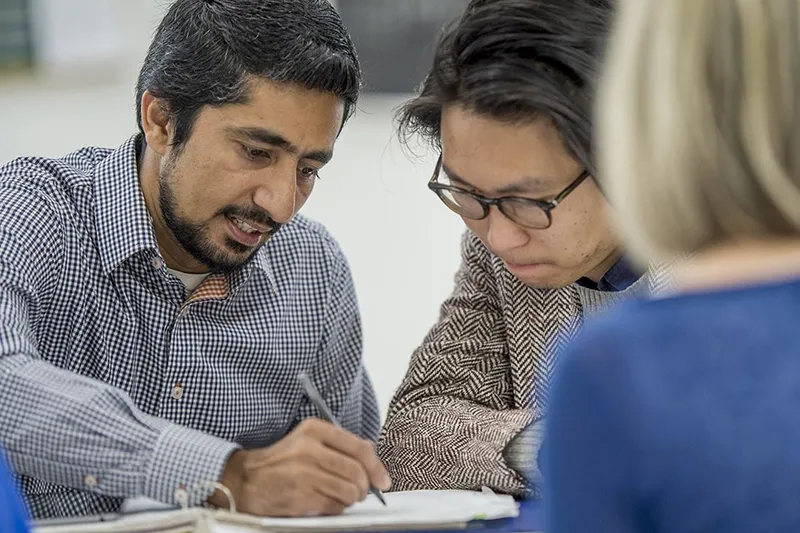
Our staff are trauma-informed and have received cultural responsiveness training. This means they understand how past experiences and culture can shape a person’s needs and goals.
How to get started
To begin the journey with us, please fill in the application form.
You can do this even if the person hasn’t completed an employment assessment with Services Australia yet or if they are with another provider.
Answers to questions you might have
What is the Inclusive Employment Australia (IEA) program?
Inclusive Employment Australia (IEA) is a federal program that helps people with disability, injury or health conditions prepare for work, find suitable employment, and maintain it over time. It offers inclusive employment for people with injury or illness.
Who is eligible for the Inclusive Employment Australia program?
To access IEA services, individuals generally need to meet the general eligibility criteria, unless they qualify under a special eligibility pathway.
General eligibility criteria include:
- Having a current and valid ESAt (Employment Services Assessment) showing a disability, injury or health condition that impacts work capacity.
- Having baseline work capacity (with intervention) under 30 hours per week.
- Being an Australian resident or holding an eligible visa (e.g. Australian citizen, permanent resident, Special Category Visa, Safe Haven Enterprise Visa).
- Being of working age (at least 14 years old and below Age Pension qualifying age).
- Not studying full time (unless special criteria apply).
- Not already working in open employment at or above the assessed employment benchmark.
Special eligibility pathways allow certain groups to access IEA even if they do not fully meet the general criteria. These include Eligible School Leavers, DSP recipients with a prior ESAt, pre-release prisoners, and some NDIS participants under specific conditions.
What is the ESAt / JCA and why is it important?
The ESAt (Employment Services Assessment) or JCA (Job Capacity Assessment) is conducted through Services Australia to assess a person’s work capacity, identify barriers, and determine the most suitable employment service, including Inclusive Employment Australia.
Eligibility for Inclusive Employment Australia generally depends on having a current and valid ESAt.
Can I register directly with an Inclusive Employment Australia provider (not through Services Australia)?
Yes. Some providers allow direct registration, meaning individuals can approach them directly rather than being referred through Services Australia. However, general or special eligibility criteria must still be met.
What kinds of supports and services does Inclusive Employment Australia provide?
Inclusive Employment Australia offers a range of tailored supports, including:
- Preparing for work (skill development, résumé building, interview support)
- Finding work that aligns with individual abilities and goals
- On-the-job support, mentoring and coaching
- Workplace adjustments (assistive technology, flexible hours, modifications)
- Career development and ongoing support as needed
What is the Employment Assistance Fund (EAF)?
The Employment Assistance Fund (EAF) helps pay for workplace adjustments, assistive equipment, modifications, and Auslan interpreting to ensure individuals can work effectively. The fund can be accessed by either the employee or employer.
Can I join Inclusive Employment Australia if I’m not on Centrelink?
Yes. Under the Inclusive Employment Australia design, individuals who are not receiving income support may volunteer into the program, provided they meet the eligibility criteria.
What is SSI’s role in Inclusive Employment Australia?
SSI is a provider for the Inclusive Employment Australia program in selected regions of NSW, QLD and Victoria. We bring specialist experience, particularly in working with people from refugee and migrant backgrounds, to deliver tailored, culturally responsive and community-connected employment services, and trauma-informed job support.
What documentation or proof do I need to show to be eligible for Inclusive Employment Australia?
When registering or commencing with an Inclusive Employment Australia provider, you must provide evidence such as identity documents (e.g. driver’s licence or passport), medical or functional reports, ESAt results, or proof of special eligibility (where applicable).
How long can I receive support under Inclusive Employment Australia?
Support is not limited by a fixed time period. Participants can continue receiving services as long as necessary to achieve their employment goals, subject to ongoing eligibility and program rules.
What happens if my circumstances change while I am with the Inclusive Employment Australia program (e.g. work capacity improves or employment begins)?
If circumstances change, the provider will review your needs and adjust the level or phase of support accordingly. Once commenced, participants generally do not need to requalify eligibility on an ongoing basis.
Who can be contacted for more detailed eligibility advice or to check qualification for the Inclusive Employment Australia program?
For detailed eligibility advice, you can contact Services Australia, your local IEA provider (such as SSI in your area), or review the official IEA guidelines on the Department of Social Services website.
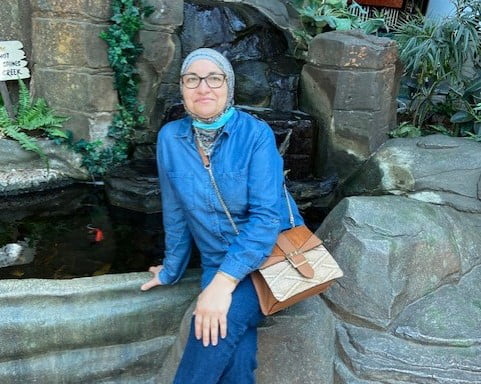
Get help like
Jana
who struggled to find work that fit her needs until she received personalised support and encouragement from SSI. She has now secured her ideal job in the care industry.
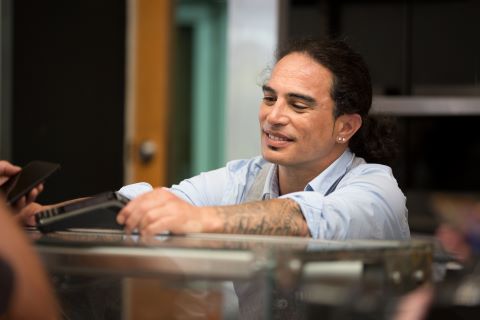
Omar
who wanted to work in retail and study but faced challenges due to living with schizophrenia and an intellectual disability. We helped him with training and securing a job at a supermarket, where he has thrived and achieved his goal of becoming a store manager.
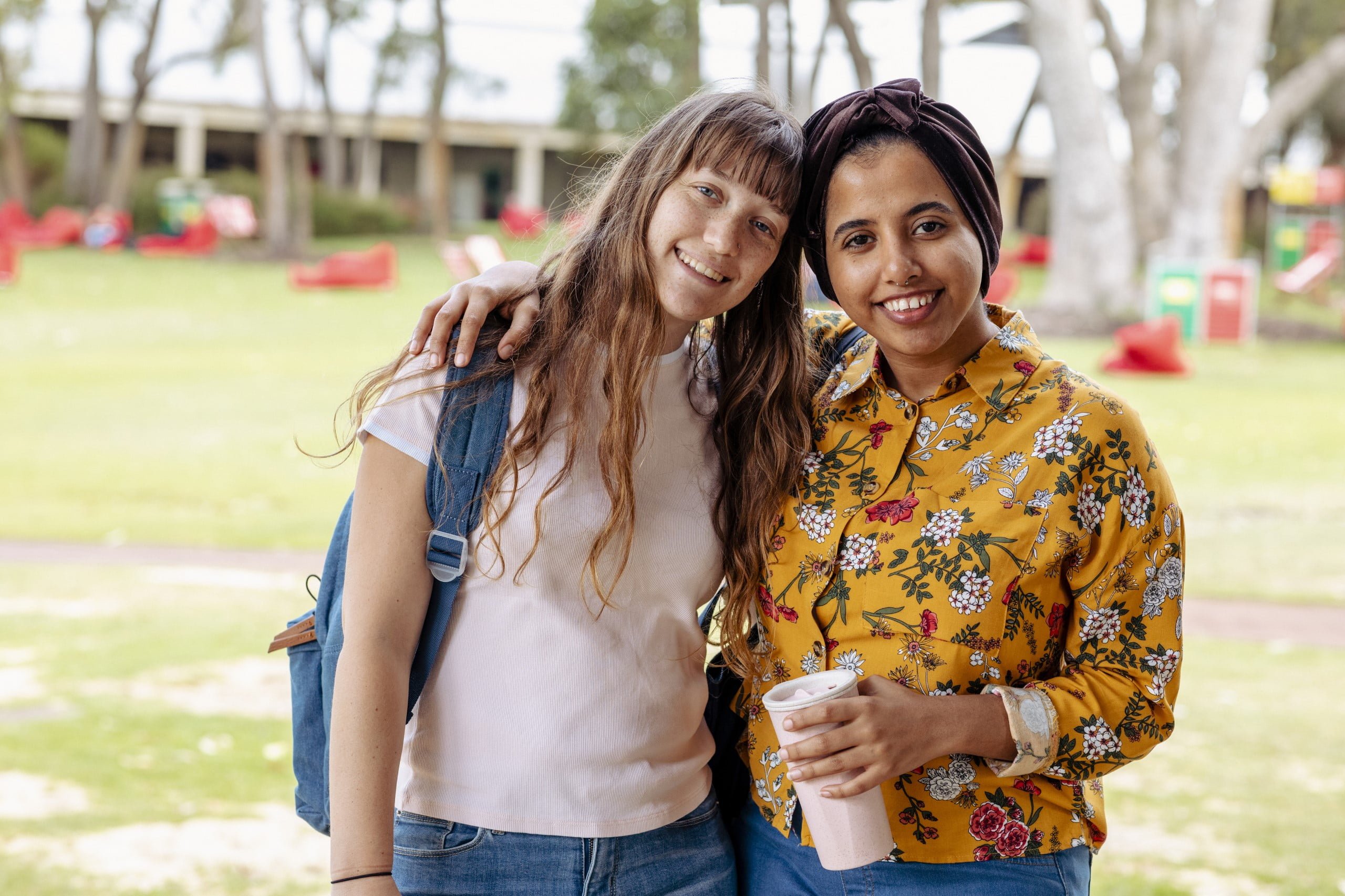
Sara
who struggled to find fulfilling work due to her bipolar affective disorder and unfamiliarity with the Australian workforce. SSI recognised her skills and helped her find a job where she uses her lived experience to assist others find work.
Start the journey now
Fields with an * are required.
Get in touch
SSI offers the Inclusive Employment Australia program in NSW, Queensland and Victoria.
P: 1800 299 486 (NSW)
P: 1800 299 487 (QLD)
P: 1800 299 482 (VIC)
About Creative Compass
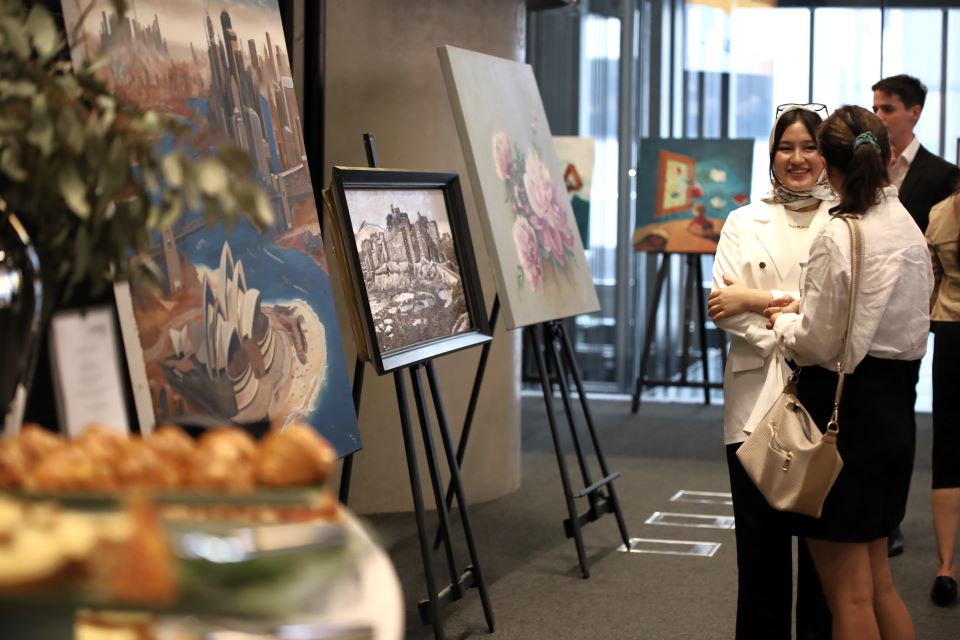
For refugee artists, creative practice is more than a profession — it’s a lifeline, bridging past experiences with new possibilities.
Recognising art as a pathway to healing, cultural expression, and economic participation, SSI’s Humanitarian Settlement Program developed Creative Compass to invest in newcomer’s potential, offering tailored mentorship, skills development, and pathways into Australia’s arts industry.
With Creative Compass, refugee artists navigate new horizons, shaping their dreams while enriching Australia’s collective story.



Why Creative Compass?
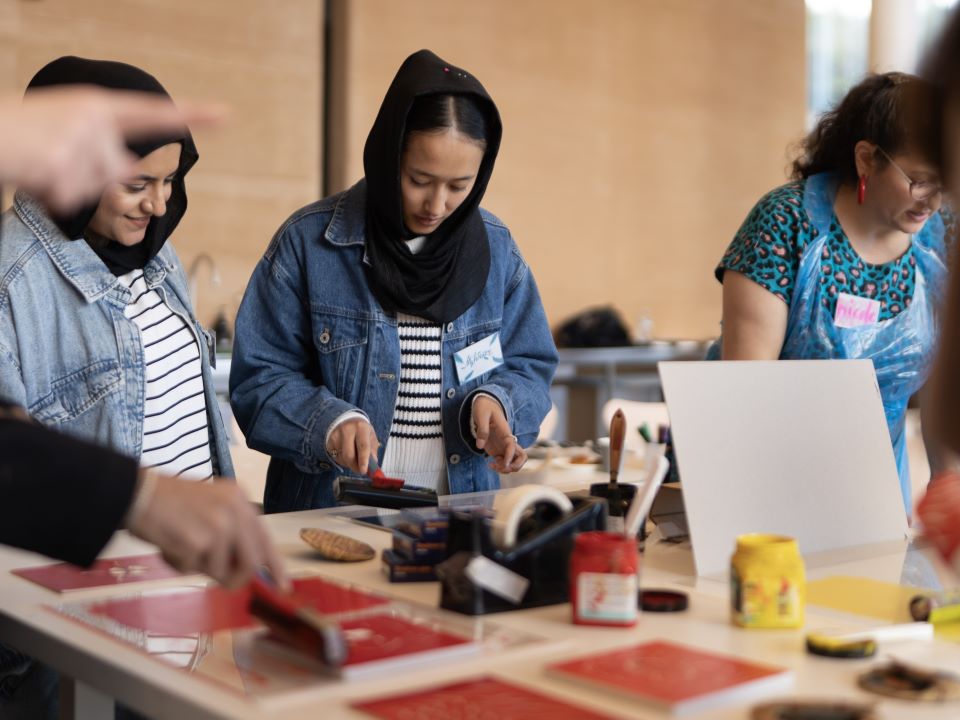
Newly arrived refugee artists bring extraordinary skills, stories, and cultural traditions, yet too often face barriers to opportunity.
Through tailored mentorship, workshops, and connection to professional networks, the program helps artists:
- Build sustainable creative careers
- Foster social inclusion through exhibitions, performances, and community events
- Enhance wellbeing through creative expression and supportive spaces
- Access resources, studios, and professional networks
- Celebrate cultural identity across visual arts, music, performance, and storytelling
Art speaks across cultures and languages — it heals, inspires, and helps people feel at home in Australia.
Our impact
124
newly arrived artists
engaged in the program.
40,000
dollars in artist’s earnings
through sales, performances, and commissions.
90
percent of participants
reported a stronger sense of belonging and inclusion within the community.
FY24 and FY25

Behind the scenes of Creative Compass
What we do
Identifying Talent: Finding and nurturing creative clients within HSP

Artist Consultations: Providing orientation and tailored guidance on navigating the Australian arts industry

Workshops & Masterclasses: Building professional skills — from writing artist bios to setting up an art business
Education & Training Pathways: Connecting artists to formal learning and qualifications

Excursions: Facilitating creative experiences and immersions to deepen skills and connection
Exhibitions and showcases: Hosting exhibitions and events for artists, and connecting them with paid opportunities

Music Initiatives & Performances: Creating collaborative spaces for musicians and performers

Mentorship & Networking: Connecting artists with peers, mentors, and industry professionals
What’s on
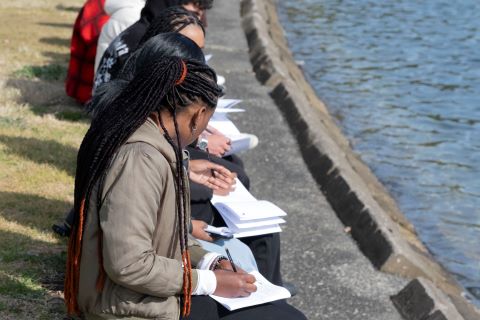
A three-year creative partnership led by CuriousWorks in collaboration with SSI and the Sydney Opera House. It provides a platform for culturally diverse artists to explore themes of belonging and welcome, with each year featuring a new theme, a series of artist workshops, and a culminating public exhibition.
Regular mentorship and skills-based workshops support artists to develop their portfolios, navigate the Australian arts industry, and grow their creative practice. These sessions offer tailored guidance, peer connection, and access to valuable resources and professional networks.
Partnerships and collaboration
Collaboration is central Creative Compass. The program thrives through partnerships with organisations, businesses, and cultural institutions that share a commitment to inclusion and creative expression.
These collaborations make it possible to deliver workshops, exhibitions, and mentorship opportunities that open doors for refugee artists to connect with Australia’s arts industry. From co-curated events and professional development programs to in-kind support such as studio spaces and materials, partnerships and collaborations create meaningful pathways for refugee artists to connect, grow, and thrive within Australia’s arts industry.
So far, we have partnered or collaborated with:
- Cultural Arts Collective
- Macquarie Bank
- Diversity Arts Australia
- Sydney Opera House
- Community Refugee Welcome Centre
- CuriousWorks
- Art Gallery of NSW
- The University of Sydney
- 1 Elizabeth
Recent highlights
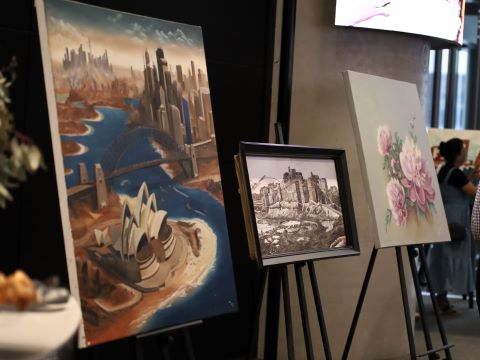
In partnership with the Macquarie Group Foundation, Beyond Borders 2025 is a public exhibition taking place from 2–7 November, showcasing artworks by refugee-background artists from across the globe. The exhibition offers artists opportunities to sell work, gain income, and connect with Australia’s arts community
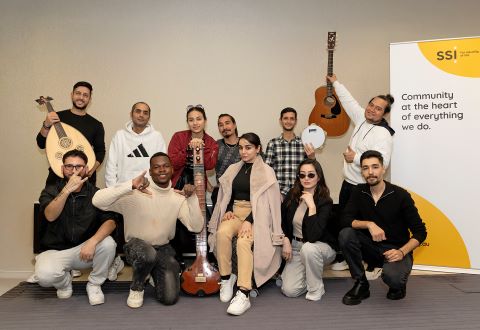
A six-week series of music workshops forming an ensemble of HSP artists, combining skill-sharing, professional guidance, and connection. The program culminated in a live performance during Refugee Week.
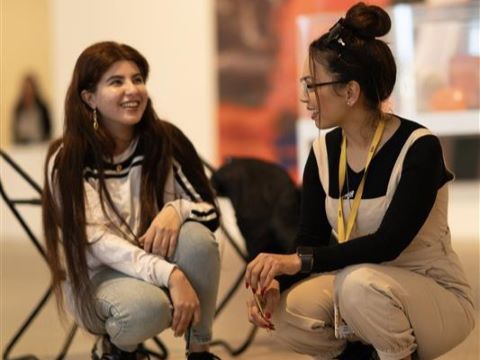
An 8-week program offering visual storytelling sessions led by by the gallery staff including a First Nations educator. It supported 25 refugee artists to develop creative skills while enhancing cultural learning and professional development.
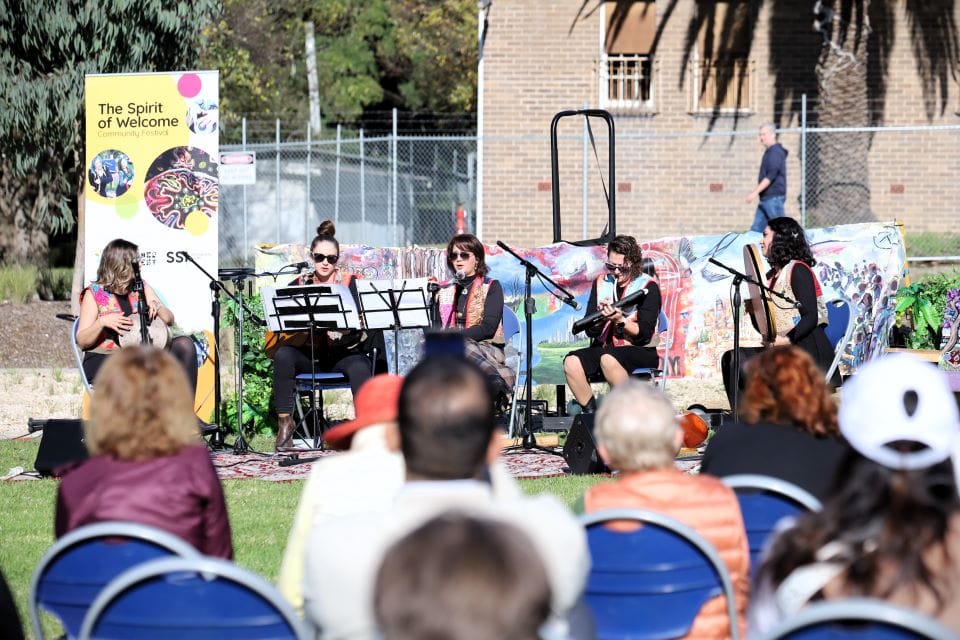
Curated exhibitions and events at the Art Gallery of NSW, Ministry of Health, and Spirit of Welcome Festival celebrated refugee artists and explored identity, resilience, and cultural expression. Panels and events fostered dialogue and visibility within the arts and public health sectors.
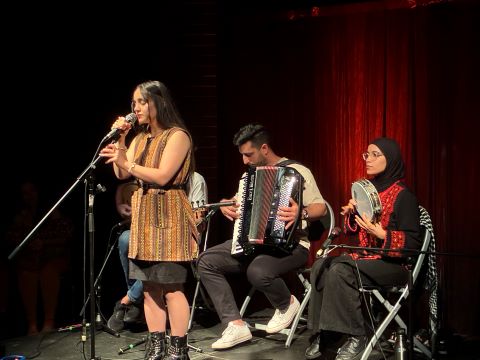
Eight recently arrived refugee artists from Palestine, Syria, Burma, and Iran collaborated to create new music and cultural expression. The program culminated in a live performance at Bankstown Arts Centre.
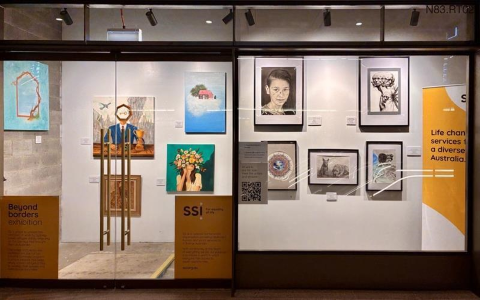
In partnership with Macquarie Group Foundation, 16 refugee-background artists transformed the 1 Elizabeth Concourse shop into a dynamic gallery. Between December 2024 and July 2025, 31 artworks sold, generating over $25,000 in direct revenue for artists.
Future directions
Since forming in 2023, Creative Compass started as a small project and has grown into a pioneering, comprehensive program supporting artists to rebuild their creative lives and share their talents with Australian audiences. This is just the beginning. Future directions include:
- Promote Creative Compass artists to showcase and perform nationally
- Developing programs for refugee children and youth
- Establishing a dedicated art hub for rehearsals, exhibitions, and events
- Extending regional outreach and conducting long-term research into wellbeing and career outcomes
- Building a replicable model for culturally responsive arts programs
Get involved
Creative Compass is a growing movement of artists, mentors, and supporters.
If you’d like more information, if you’re a cultural institution wanting to collaborate, or a stakeholder interested in partnership opportunities — we’d love to hear from you.
Email: creativecompass@ssi.org.au
Ghasan Saaid
About the Adira Centre
We promote culturally responsive, evidence-based and community informed responses to domestic, family and sexual violence in NSW, including in regional and rural areas.
The Centre collaborates across women’s safety, multicultural and settlement sectors in NSW to enhance quality, safe and culturally responsive domestic, family and sexual violence services and community-based responses.
Our tailored approach involves:
- case management and collaborative practice support
- community engagement: lived experience advice, supporting social responders and community education
- sector capacity building, engagement and training
- consultation, research, policy advice and advocacy to drive systemic change.
We work across four focus areas: primary prevention, early intervention, response, and recovery and healing.
Culturally responsive practice
We understand the importance of ensuring that domestic, family and sexual violence responses meet the needs of communities in all their diversity. Our work is grounded in cultural responsiveness and informed by evidence and community insights.
The Centre combines expertise in culturally responsive practice and a deep understanding of how different forms of violence can impact women, children and families from multicultural communities, as well as the specific challenges they may face in seeking help.
We work with victim survivors and communities to address these complex issues. We also collaborate with other services to provide appropriate support to migrant and refugee women, children and families.
What we do
Individuals
We provide specialist, culturally responsive support to migrant and refugee women and children who are at risk of, or experiencing, domestic, family and sexual violence. This includes:
- Support for immediate safety.
- Collaborative, culturally responsive and holistic case management.
- Counselling and recovery support.
- Support for socio-economic participation and community connection, and referrals to appropriate services.
Communities
We work with multicultural communities to support them with the knowledge and resources to effectively recognise, respond to, and prevent domestic, family and sexual violence. This includes:
- Community engagement and education on the drivers of domestic, family and sexual violence and available support services.
- Empowering communities as social responders.
- Supporting communities to lead positive change in attitudes towards gender equality and healthy relationships.
Sector and service delivery
- Expert advice and capacity building on cultural responsiveness in the context of family, domestic and sexual violence.
- Collaborative practice support, working with practitioners across sectors.
- Promoting cross-sector collaboration and developing evidence to enhance policy and practice responses.
Impact reports
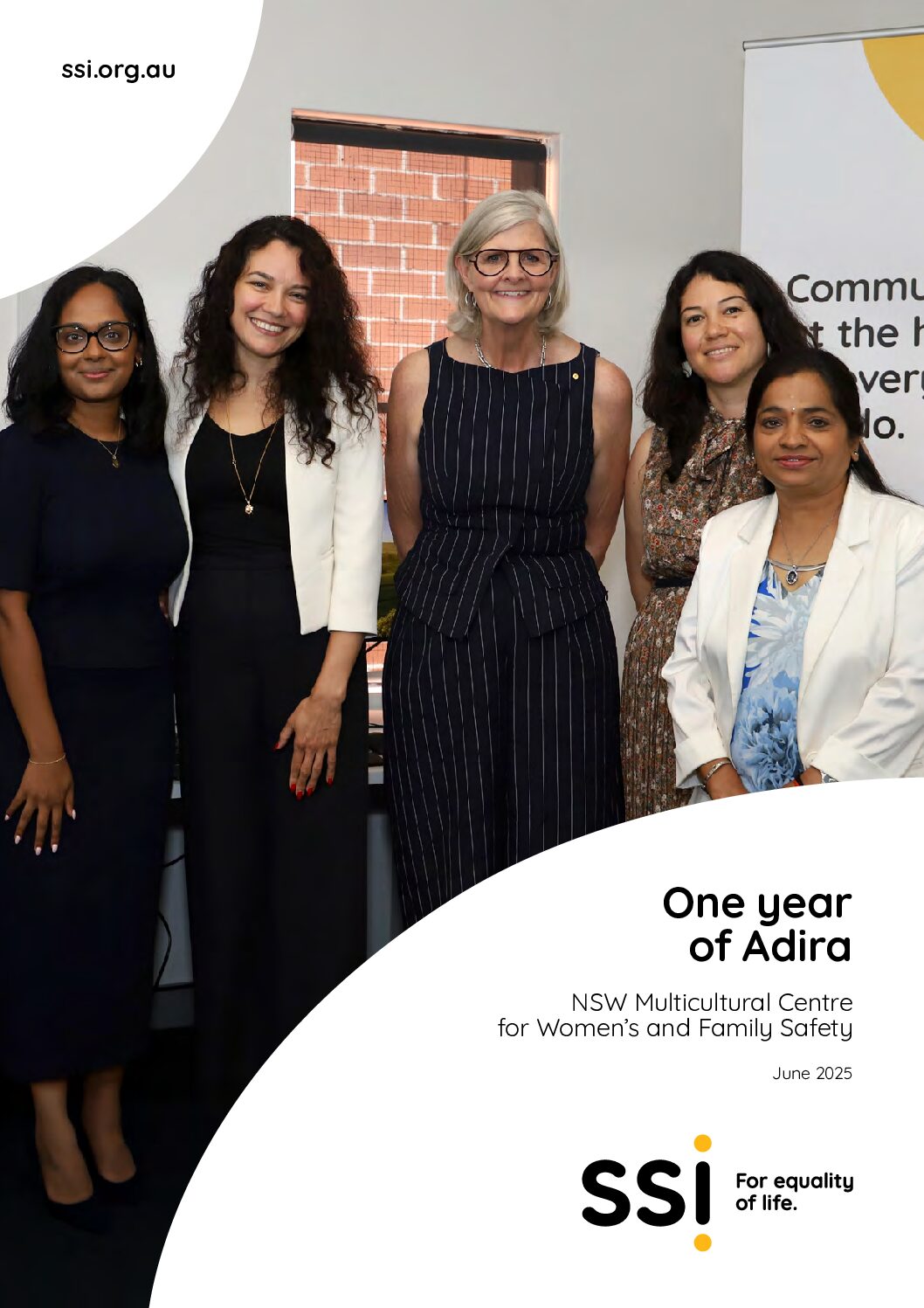
Established in 2024 and funded by the NSW Government, the NSW Multicultural Centre for Women’s and Family Safety (the Adira Centre) works across NSW to enhance culturally responsive domestic, family and sexual violence prevention and response in migrant and refugee communities. This report outlines the Adira Centre’s key achievements in its first year.
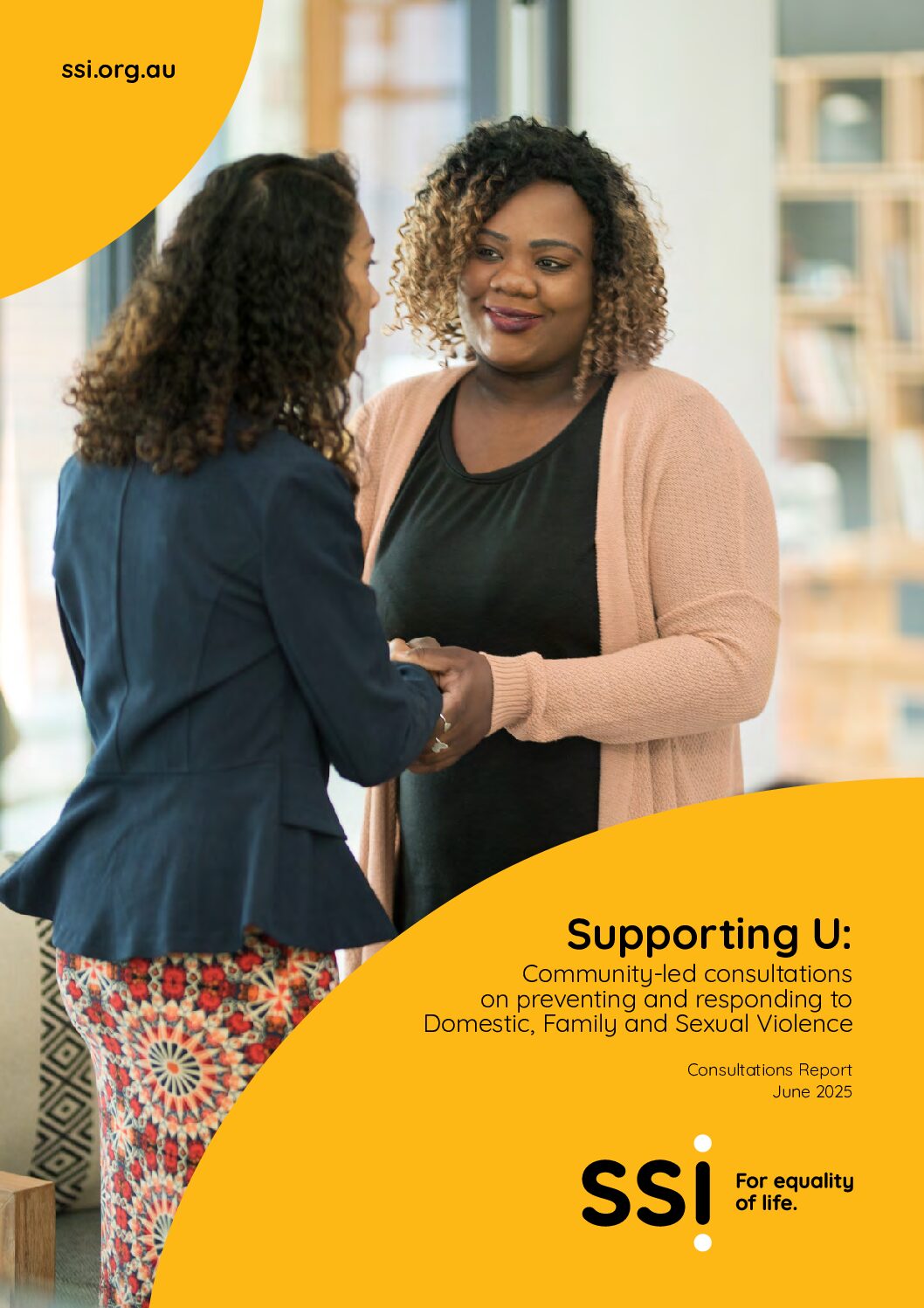
The cohort of Supporting U women, recruited in mid-2024, were supported to undertake grassroots consultations into issues of DFSV in their communities. This is an important step towards the Adira Centre’s longer-term goal of fostering community-led responses to DFSV in migrant and refugee communities.
Scoping the Gap explores the reality of unfunded domestic, family and sexual violence (DFSV) support provided by settlement and multicultural organisations and services working with migrant and refugee women and families. The research seeks to make visible systemic gaps and to depict the load carried by this sector in supporting women’s safety, despite limited recognition or resourcing.
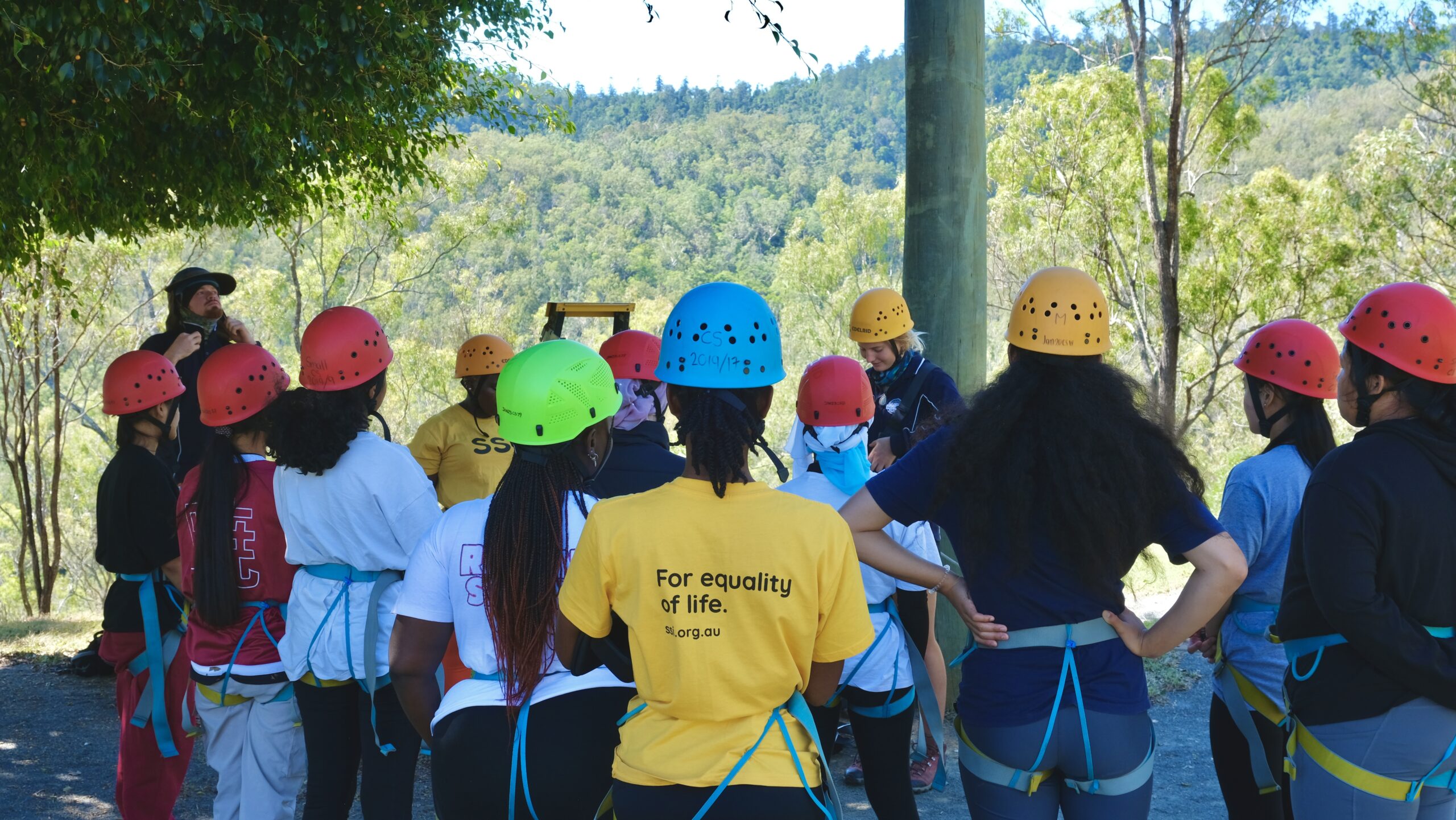
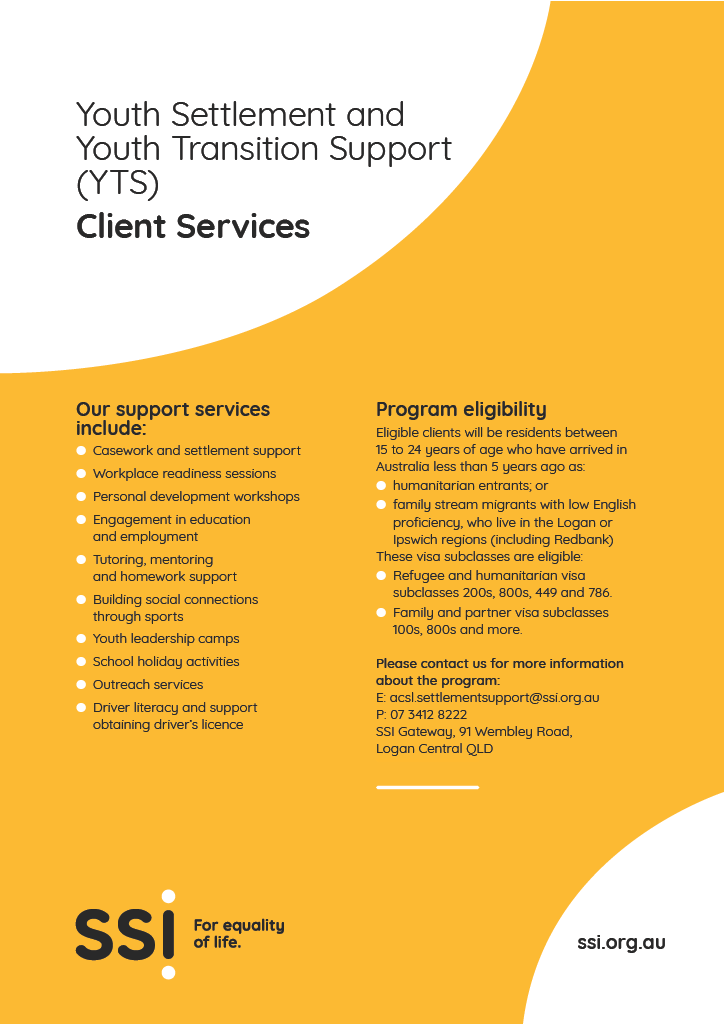
About YTS program
Starting a new life in a new country is a challenge. Young refugees and vulnerable refugees, humanitarian entrants, and migrants often need extra help and support to become and stay connected in their new community. The Federal Government’s Youth Transition Support scheme is intended to help.
SSI delivers YTS services within Logan and Ipswich, Queensland for newcomers up to 24 years old and living in the local area.
How we help



Download YTS flyer
Get in touch
If you would like to know more information about the Youth Transitions Support program in Queensland, you can contact the team at:
E: acsl.settlementsupport@ssi.org.au
P: 07 3412 8222

About the SETS program
Refugees, asylum seekers and migrants who enter Australia without strong family and community support face major hurdles in adapting to their new lives. The Settlement Engagement and Transition Support (SETS) Queensland program aims to provide such newcomers with the skills they need to engage in society, to achieve emotional wellbeing and to gain economic independence.
Delivered by SSI and operating in the Logan, Brisbane, Moreton Bay South, Redlands, Lockyer Valley, Scenic Rim, and Ipswich regions of Southern Queensland.
How we help

The program provides:
Client support & referral services
We provide information, advice, referrals, and advocacy via one-on-one appointments to support families and individuals who have been in Australia for less than five years on humanitarian or family stream visas. Our services help clients understand, access, and navigate Australian systems, with outreach support available as needed.
Community education
We provide group information sessions, workshops, and outreach sessions on a range of topics, including employment, housing, driver literacy, citizenship test preparation, and healthy relationships to newly arrived refugees and migrants.
Community capacity building
We equip and empower individuals and groups from new and emerging communities to work towards collectively increasing the social and economic participation and personal well-being of community members to ensure that positive settlement outcomes are sustained in the long term.
Youth-centred support
We offer a range of youth activities, a safe space to meet and study and outreach initiatives for young people aged 15 to 24. Our youth-centred settlement workers provide dedicated support. We also facilitate Multicultural Youth Queensland (MyQ), a youth advocacy group.
Download the SETS flyer
Discover SETS Queensland: providing newcomers with the skills they need to engage in society, to achieve emotional wellbeing and to gain economic independence.
Get in touch
For more information on the Settlement Engagement and Transition Support (SETS) Queensland program, email acsl.settlementsupport@ssi.org.au or phone 07 3412 8222.
We are located at
SSI Gateway
91 Wembley Road, Logan Central, Queensland
About Multicultural Access Program
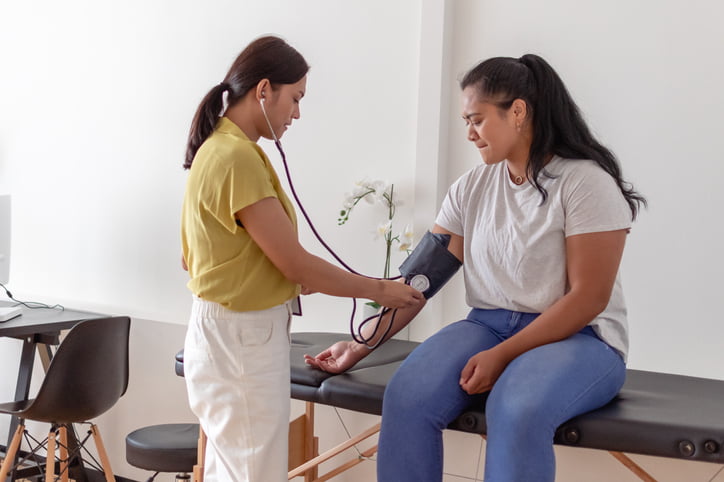
Cultural barriers may stand in the way of newcomers to Australia receiving the health care they need. Medical professionals who understand and address the challenges involved can significantly improve patient outcomes and build stronger communities.
Funded by Darling Downs and West Moreton Primary Health Network, our Multicultural Access Program provides refugees and migrants in the Ipswich region with support in accessing and navigating health services. The service aims to improve health literacy and reduce barriers to ongoing health care, with major benefits for participants.
How we help
Get in touch
The Multicultural Access Program operates via the West Moreton Health Outreach Program in Queensland.
E: acsl.refugeehealth@ssi.org.au
P: 07 3412 9999
About Child Health Pathways
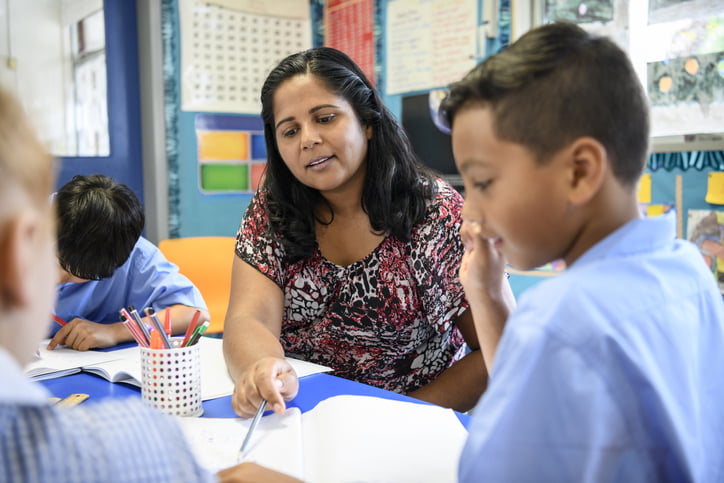
When families can’t access the health services they need, children often suffer the most. The Child Health Pathway project aims to support vulnerable children by empowering their families to navigate the health system successfully.
Funded through the Brisbane South Primary Health Network (BS-PHN) and delivered in partnership with The Salvation Army, the project supports the families of children who attend the Logan Community Hubs. A key focus is on families from CALD backgrounds or with communication difficulties.
How we help


Get in touch
SSI runs the Child Health Pathways program in Logan, Queensland.
SSI Gateway
91 Wembley Road Logan Central, QLD
Monday to Friday from 8.30 am to 4.30 pm
P: 07 3412 8222
E: acsl.gatewayofficer@ssi.org.au
About Maternity Hubs
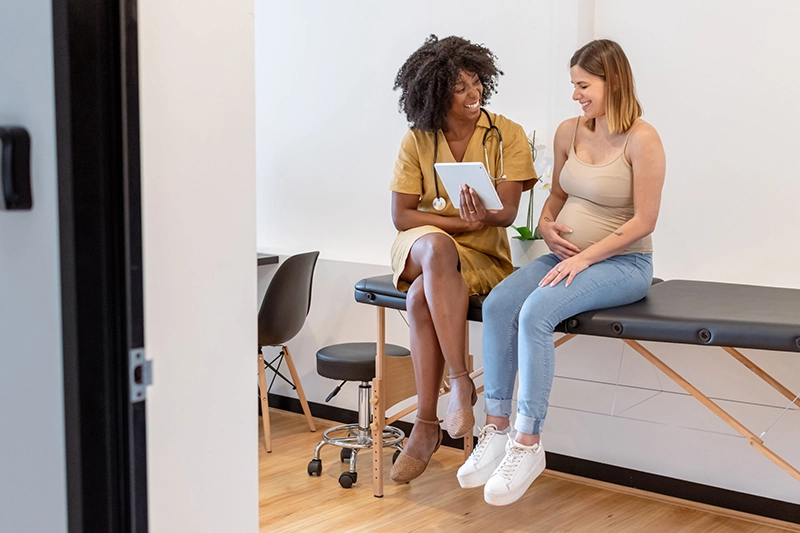
We are proud to partner with Metro South Health to deliver a community-based antenatal service for eligible newly arrived, refugee, and migrant women living in Logan.
The service is facilitated from the SSI Gateway and aims to improve birthing outcomes for babies born in Logan. Evidence shows that a woman who receives care from a Midwife throughout the duration of pregnancy and birth is more likely to have a normal birth of a healthy baby at term, have a more positive experience of labour and birth, be more satisfied with her care, and successfully breastfeed.
We work closely with Midwives to provide wrap-around support to women and families by linking them with internal and external services for housing, employment, health and financial well-being support.
How we help

Get in touch
If you would like more information, please speak with your GP about a Maternity Hub referral or email acsl.gatewayofficer@ssi.org.au.
Maternity Hub is co-located at the SSI Gateway.
SSI Gateway
91 Wembley Road, Logan Central, QLD
Monday to Friday from 8.30am to 4.30pm
P: 07 3412 8222
E: acsl.gatewayofficer@ssi.org.au
About SSI Gateway
In 2016, we heard the voices of the community and introduced a Gateway community space for locals to drop in and receive information, advice or referral.
The Gateway continues to coordinate from an integrated response model, whereby local services outreach from the centre and collaborate on strategies around local community issues. We facilitate a number of internal programs for improving the economic and social participation of newly arrived communities. The SSI Gateway can be booked to run events and other community-focused work.
There are several large training rooms and small interview rooms available to hire via our external booking process.



Get in touch
To find out more about what’s on at SSI Gateway or to enquire about booking space for your next event/workshop/meeting, please either drop in, email or phone us.
SSI Gateway is located at 91 Wembley Road, Logan Central, QLD
E: acsl.gatewayofficer@ssi.org.au
P: 07 3412 8222
Monday – Friday 8.30am – 4.30pm
About 99 Steps program
At 99 Steps our team of domestic and family violence practitioners provides culturally responsive and trauma-informed support to women from culturally and linguistically diverse backgrounds experiencing domestic and family violence in the Logan and Beenleigh area.
99 Steps is a specialised service for women from refugee/asylum seeker backgrounds or women living in community on a temporary visa. We understand the unique barriers faced by women in diverse communities, and our mission is to empower and support them on their journey towards safety and healing.
How we can help
99 Steps can provide tailored support to meet the specific cultural and linguistic needs of women experiencing domestic and family violence:
Emotional Support
- Building awareness of domestic and family violence
- Education around healthy relationships
- Empowering women to self-advocate
- Fostering resilience through trauma informed practice
Practical Support
- Safety/Exit planning
- Referrals to crisis services and emergency shelters
- Referrals to legal support services
- Referrals to housing services
- Referrals to case management services
- Referrals to health and counselling services
Get in touch
To make an appointment:
P: (07) 3412 8282
E: acsl.99Steps@ssi.org.au
Monday to Friday 8.30am – 4.30pm
If you need urgent assistance, please phone 000. If you are in need of immediate safe accommodation, please phone DV Connect on 1800 811 811.